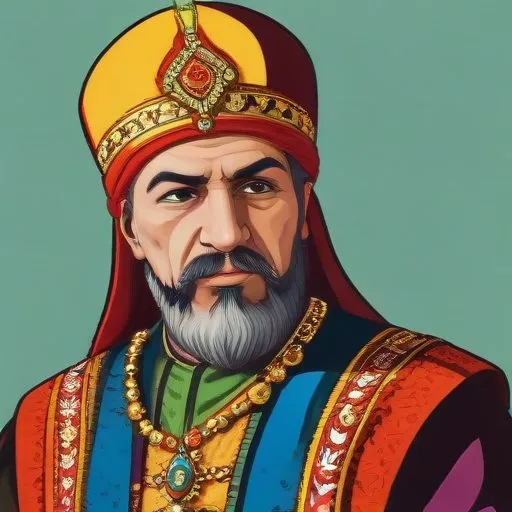
Selim III: The Enlightened Sultan of Ottoman Empire
A Visionary Leader and Champion of Reform
Selim III, the 28th Sultan of the Ottoman Empire, is best known for his progressive reforms, military modernization, and cultural achievements. During his reign from 1789 to 1807, he implemented significant changes that aimed to strengthen the empire and bring it in line with European powers.
Early Life and Education
Born on December 24, 1761, Selim III was the son of Sultan
Mustafa III and his wife Mihriah Sultan. His mother, of Georgian origin, played a significant role in his education and upbringing, instilling in him the importance of knowledge and innovation. Selim's father, a well-educated and enlightened ruler, recognized the need for reforms and modernization, which would later influence Selim's own policies.
Accession to the Throne
After the death of his uncle
Abdul Hamid I, Selim III ascended to the throne on April 7, 1789, at the age of 27. His accession marked the beginning of a new era of reform and modernization in the Ottoman Empire.
Military Reforms and Modernization
Selim III's primary focus was on military reform, recognizing the need for a modern and professional army to counter the growing threat of European powers. He introduced new military regulations, established maritime and artillery academies, and encouraged the adoption of European military tactics and technology. These reforms aimed to transform the Ottoman army into a more efficient and effective fighting force.
Cultural Achievements and Literary Pursuits
Selim III was a patron of the arts and literature, and his own works adorned the walls of mosques and convents. He wrote poetry, particularly about the occupation of Crimea by Russia, and was fluent in Arabic, Persian, Turkish, and Old Bulgarian. His love for literature and calligraphy reflected his commitment to promoting culture and education in the empire.
Philosophical Contributions and Beliefs
Influenced by mysticism, Selim III believed in the importance of spirituality and the role of the sultan as a champion of Islamic values. He saw himself as a just and fair ruler, committed to promoting the welfare of his people and maintaining the integrity of the empire.
Downfall and Legacy
Selim III's reforms and modernization efforts ultimately led to his downfall. The Janissaries, a powerful and conservative military corps, opposed his reforms and saw him as a threat to their privileges. In 1807, they deposed Selim III and placed his cousin
Mustafa IV on the throne. Selim was imprisoned and eventually assassinated on July 28, 1808.
Historical Context and Legacy
Selim III's reign marked a significant turning point in Ottoman history, as he attempted to bring the empire in line with European powers. Although his reforms were ultimately unsuccessful, they paved the way for future modernization efforts and demonstrated the importance of innovation and progress in maintaining the empire's power and influence.
Interesting Facts and Trivia
- Selim III was known for his fondness for patriotic and religious poetry.
- He was the first Ottoman sultan to establish a naval academy.
- His mother, Mihriah Sultan, played a significant role in shaping his education and worldview.
Conclusion
Selim III remains an important figure in Ottoman history, remembered for his visionary leadership, military modernization, and cultural achievements. His legacy serves as a testament to the importance of innovation, education, and progress in maintaining the power and influence of a great empire.
FAQ
Who was Selim III?
Selim III was the Sultan of the Ottoman Empire from 1789 to 1807. He is known for his attempts to modernize and reform the empire, which faced significant challenges during his reign.
What were Selim IIIs reforms?
Selim III introduced a range of reforms, including the creation of a new army, the modernization of the administrative system, and the promotion of trade and commerce. His reforms aimed to strengthen the empire and respond to the challenges posed by European powers.
What was Selim IIIs relationship like with European powers?
Selim III sought to maintain good relations with European powers, including France and Britain. He signed several treaties and alliances in an effort to secure the empires borders and promote trade and diplomacy.
What were the challenges faced by Selim III?
Selim III faced numerous challenges during his reign, including the rise of nationalist movements in the Balkans, the expansion of European powers, and internal conflicts within the empire. His reforms were often met with resistance from conservative elements within the empire.
What is Selim IIIs legacy in Ottoman history?
Selim IIIs legacy in Ottoman history is one of reform and modernization. While his efforts were not always successful, he paved the way for future reformers and helped to lay the foundations for the empires transformation into a modern state.