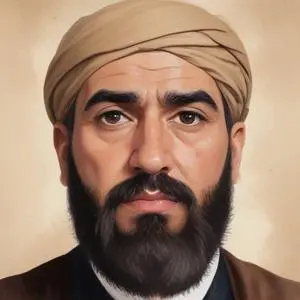
Abu Bakr al-Baghdadi: The Enigmatic Caliph of the Islamic State
The Rise of a Terrorist Mastermind
Abu Bakr al-Baghdadi, the notorious leader of the Islamic State (IS), was the architect of a brutal reign of terror that ravaged the Middle East and sent shockwaves around the world. Born Ibrahim Awad Ibrahim Ali al-Badri in 1971, in Samarra, Iraq, al-Baghdadi would go on to earn a Ph.D. in Islamic theology, but it was his militant ideology that would define his legacy.
A Life of Militancy
Al-Baghdadi's journey into extremism began in the late 1990s, when he obtained a graduate degree in Islamic theology. Following the American invasion of Iraq in 2003, he emerged as a key figure in the Jamaat Jaysh Ahl al-Sunna wal-Jamaah insurgent group. His group would later join the Mujahideen Shura Council (MSC) coalition in 2006, fighting alongside Al-Qaeda in Iraq. Upon the dissolution of the MSC, al-Baghdadi rose through the ranks of the Islamic State of Iraq (ISI), becoming its emir in 2010.
The Birth of the Islamic State
In 2013, ISI rebranded itself as the Islamic State of Iraq and the Levant (ISIL), announcing its intention to expand into Syria and forcibly assimilate the al-Nusra Front. This move sparked a conflict with Al-Qaeda's general command, but al-Baghdadi remained undeterred. In June 2014, ISIL rebranded once more as the Islamic State, declaring itself a caliphate with al-Baghdadi as its caliph.
A Caliphate of Terror
As the self-proclaimed caliph, al-Baghdadi oversaw a campaign of violence and terror that would claim tens of thousands of lives. His caliphate was marked by horrific atrocities, including mass executions, sexual slavery, and the destruction of cultural heritage sites. The international community responded by designating IS as a terrorist organization, with al-Baghdadi himself being considered a terrorist by the United States and many other countries.
Philosophical Contributions and Beliefs
Despite his brutal methods, al-Baghdadi's ideology was rooted in a twisted interpretation of Islamic theology. He claimed to be a descendant of the Prophet Muhammad and believed that the establishment of a caliphate was a necessary step towards the reinstatement of Islamic rule. His beliefs were shaped by a combination of Salafist and jihadist ideologies, which emphasized the importance of armed jihad and the purification of Islam through violence.
Personal Milestones and Key Life Events
- 1971: Born Ibrahim Awad Ibrahim Ali al-Badri in Samarra, Iraq
- Late 1990s: Obtained graduate degree in Islamic theology
- 2003: Emerged as a key figure in the Jamaat Jaysh Ahl al-Sunna wal-Jamaah insurgent group
- 2006: Joined the Mujahideen Shura Council (MSC) coalition
- 2010: Became the emir of the Islamic State of Iraq (ISI)
- 2013: ISI rebranded as the Islamic State of Iraq and the Levant (ISIL)
- 2014: ISIL rebranded as the Islamic State, with al-Baghdadi as its caliph
- 2019: Killed in a raid by US special forces in Syria
Influence on Modern Society
Al-Baghdadi's actions had far-reaching consequences for modern society. His caliphate sparked a global wave of terror, with IS-inspired attacks occurring in countries as diverse as France, Tunisia, and Indonesia. The war against IS also led to a massive humanitarian crisis, with millions displaced and entire communities devastated.
Historical Context and Legacy
Al-Baghdadi's rise to power was facilitated by the power vacuum created by the US invasion of Iraq and the subsequent destabilization of the region. His caliphate was a symptom of deeper issues, including sectarianism, political instability, and the exploitation of religious grievances. As the world moves forward, it is essential to acknowledge the complex historical context that allowed al-Baghdadi to thrive and to work towards addressing the underlying causes of extremism.
Final Thoughts
Abu Bakr al-Baghdadi's reign of terror may have ended, but the impact of his ideology will be felt for generations to come. As we reflect on his life and deeds, we must also acknowledge the responsibility that lies with us to create a world where such extremism cannot flourish.
FAQ
Who is Abu Bakr al-Baghdadi?
Abu Bakr al-Baghdadi was the leader of the Islamic State of Iraq and the Levant (ISIL), a Sunni Islamist extremist group that controlled large swaths of territory in Iraq and Syria from 2014 to 2019. He was born in 1971 in Samarra, Iraq, and was killed in a US military operation in 2019.
What is Abu Bakr al-Baghdadis early life like?
Abu Bakr al-Baghdadi was born into a religious family in Iraq. He studied Islamic law and theology in Baghdad and later worked as a preacher and teacher. He became involved in the Iraqi insurgency against the US occupation of Iraq and eventually rose to lead ISIL.
What role did Abu Bakr al-Baghdadi play in the rise of ISIL?
Abu Bakr al-Baghdadi played a key role in the rise of ISIL, leading the groups military campaigns in Iraq and Syria and implementing its brutal policies. He was responsible for numerous human rights abuses, including mass killings and sex slavery.
What was Abu Bakr al-Baghdadis relationship with other extremist groups?
Abu Bakr al-Baghdadis ISIL clashed with other extremist groups, including al-Qaeda, due to disagreements over tactics and territory. However, he maintained relationships with other extremist groups and inspired lone-wolf attacks in the West.
How was Abu Bakr al-Baghdadi killed?
Abu Bakr al-Baghdadi was killed in a US military operation in October 2019 in Barisha, Syria. He detonated a suicide vest as US special forces closed in on his hiding place in a compound.