


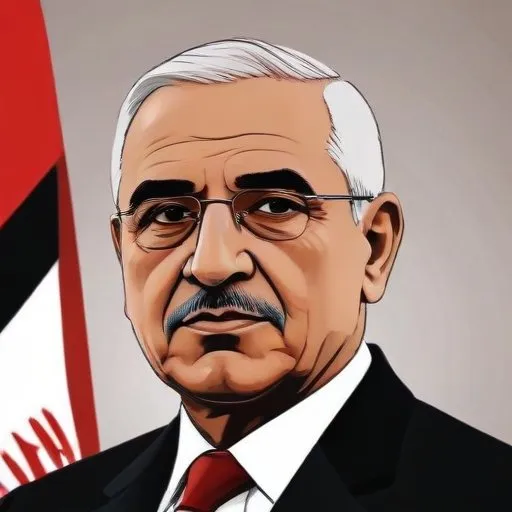
Iraqi Minister of Foreign Affairs who played a key role in shaping the country's foreign policy and was a prominent figure in Middle Eastern politics. He was also a skilled diplomat and negotiator.
Adnan Pachachi is renowned as a veteran Iraqi and Emirati politician and diplomat, whose illustrious career has left an indelible mark on the Middle East's political landscape. As Iraq's Permanent Representative to the United Nations, Minister of Foreign Affairs, and advisor to the President of the United Arab Emirates, Pachachi's diplomatic prowess has been instrumental in shaping regional politics for over five decades.
Born in Baghdad on May 14, 1923, Pachachi hails from a Sunni Arab nationalist family with a rich tradition in Iraqi politics. His father, Muzahim al-Pachachi, and cousin, Nadim al-Pachachi, were prominent figures in the country's political sphere. Pachachi's educational background includes a degree in political science from the American University of Beirut in 1943, where he was influenced by the Arab Nationalist Movement.
Pachachi's diplomatic career began in 1950 as the assistant director of the Political Department in the Iraqi Ministry of Foreign Affairs. Over the next eight years, he worked his way up the ranks, eventually becoming Iraq's Permanent Representative to the United Nations from 1959 to 1965. During this period, he played a crucial role in navigating Iraq's foreign policy during the Six-Day War with Israel. He reprised his role as Permanent Representative to the UN from 1967 to 1969.
In 1971, Pachachi went into exile and began his association with the United Arab Emirates. He became an Emirati Minister of State and political advisor to President Sheikh Zayed bin Sultan Al Nahyan. This period marked a significant shift in Pachachi's career, as he continued to wield significant influence in regional politics from his new base.
Following the 2003 U.S. invasion of Iraq, Pachachi returned to the forefront of Iraqi politics. Often referred to as Iraq's elder statesman, he declined the role of president in the Iraqi Interim Government. Instead, he continued to play a key advisory role, drawing on his wealth of experience to guide the country's transition.
Adnan Pachachi's legacy is that of a consummate diplomat and statesman. His commitment to Arab nationalism and his ability to navigate complex regional politics have earned him respect across the Middle East. As a symbol of Iraq's rich political heritage, Pachachi's life and work serve as a testament to the power of diplomacy in shaping the course of nations.
Through his remarkable journey, Adnan Pachachi has cemented his place in the annals of Middle Eastern politics, leaving behind a legacy that will continue to inspire generations to come.
89 Years Old
The authoritarian leader who ruled Iraq with an iron fist, notorious for his brutal suppression of dissent and invasion of neighboring countries.
90 Years Old
Iraq's long-serving Foreign Minister who played a key role in Saddam Hussein's government, known for his diplomatic efforts and controversial ties to the regime.
82 Years Old
An Iraqi exile who played a key role in convincing the US to invade Iraq in 2003, claiming Saddam had WMDs, which were later found to be nonexistent. He was a controversial figure with a complex legacy.
76 Years Old
The 76th Prime Minister of Iraq, a Shia Islamist politician who served from 2006 to 2014, is known for his role in shaping Iraq's post-Saddam Hussein government and his controversial policies. He's infamous for his sectarian agenda, which exacerbated Sunni-Shia tensions and contributed to the rise of ISIS.
80 Years Old
The President of Iraqi Kurdistan, a key figure in the Kurdish independence movement, known for leading the region through times of war and political turmoil. He's a unifying force for the Kurdish people, seeking autonomy and self-determination.
