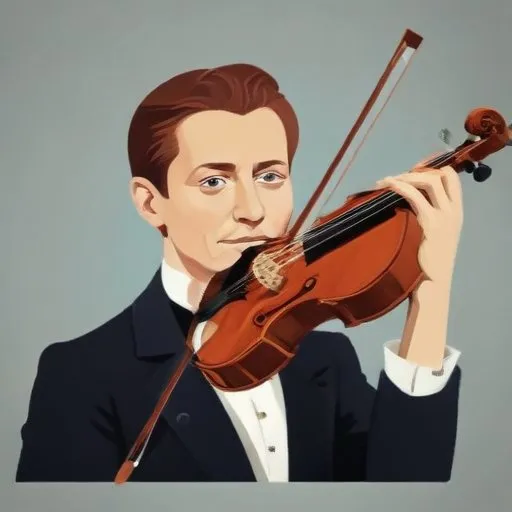
Adolf Busch: A Violinist, Conductor, and Composer of Unwavering Integrity
A Passionate Advocate of Classical Music
Adolf Busch was a renowned German-Swiss violinist, conductor, and composer, celebrated for his unwavering commitment to classical music and his unshakeable opposition to the Nazi regime. Born on August 8, 1891, in Siegen, Westphalia, Busch left an indelible mark on the world of classical music, earning him a reputation as one of the most distinguished musicians of the 20th century.
Early Life and Training
Busch's fascination with music began at a young age, and he went on to study at the Cologne Conservatory under the tutelage of
Willy Hess and Bram Eldering. His composition teacher, Fritz Steinbach, played a significant role in shaping his musical vision. Additionally, he learned valuable lessons from his future father-in-law, Hugo Gruters, in Bonn. These formative years laid the foundation for Busch's subsequent success as a musician.
The Busch Quartet: A Legacy of Excellence
In 1912, Busch founded the Vienna Konzertverein Quartet, which debuted at the 1913 Salzburg Festival. After World War I, he established the Busch Quartet, comprising Gsta Andreasson (violin), Karl Doktor (viola), and Paul Grummer (cello). The quartet, with varying personnel, remained active until 1951. This ensemble became the nucleus of the Busch Chamber Players, founded in Basel, precursing modern chamber orchestras.
A Life of Principle: Opposing Nazism and Embracing Switzerland
As the Nazi Party rose to power in 1927, Busch, despite being popular in Germany, refused to compromise his values and emigrated to Basel, Switzerland. He became a Swiss citizen of Riehen, Basel, in 1935. Busch's unwavering opposition to Nazism led him to repudiate Germany altogether in 1933 and boycott Italy in 1938. When the Nazis attempted to lure him back to Germany, he famously declared that he would return only when Hitler, Goebbels, and Goring were "publicly hanged."
Philosophical Contributions and Beliefs
Throughout his life, Busch remained committed to promoting classical music as a symbol of cultural heritage and humanity. He believed that music had the power to transcend borders and bring people together. His values of integrity, tolerance, and artistic excellence continue to inspire generations of musicians and music lovers.
Personal Milestones and Key Life Events
- In 1938, Busch co-founded the Lucerne Festival with Arturo Toscanini and his brother, Fritz Busch.
- He taught many students in Basel, including the legendary violinist Yehudi Menuhin.
- In 1939, Busch emigrated to the United States, where he continued to perform and teach.
Legacy and Impact on Modern Society
Adolf Busch's remarkable life and career serve as a testament to the power of artistic expression and the importance of standing by one's principles. His contributions to classical music, his commitment to promoting cultural heritage, and his unwavering opposition to Nazism have left an enduring impact on modern society. As a violinist, conductor, and composer, Busch's legacy continues to inspire and enrich the world of classical music.
Quotes and Memorable Sayings
- "I will return to Germany with joy on the day that Hitler, Goebbels, and Goring are publicly hanged."
FAQ
What made Adolf Busch a renowned violinist?
Adolf Busch was a highly acclaimed German violinist known for his expressive and nuanced playing style. He was particularly recognized for his interpretations of classical and romantic repertoire.
What compositions did Adolf Busch create?
Adolf Busch was also a prolific composer, creating over 100 works during his lifetime. His compositions include violin concertos, string quartets, and chamber music, showcasing his skill as a composer.
How did Adolf Busch contribute to the development of chamber music?
Adolf Busch was a dedicated chamber musician, performing and recording with many renowned artists. His commitment to chamber music helped elevate the genre and promote its popularity.
What was Adolf Buschs teaching legacy?
Adolf Busch taught at the Musikhochschule in Basel, Switzerland, and later at the Marlboro Music Festival in Vermont, USA. He inspired generations of violinists and chamber musicians, passing on his expertise and passion.
What is Adolf Buschs legacy in classical music?
Adolf Buschs legacy in classical music is that of a master violinist, composer, and teacher who left an indelible mark on the world of chamber music and violin playing.