


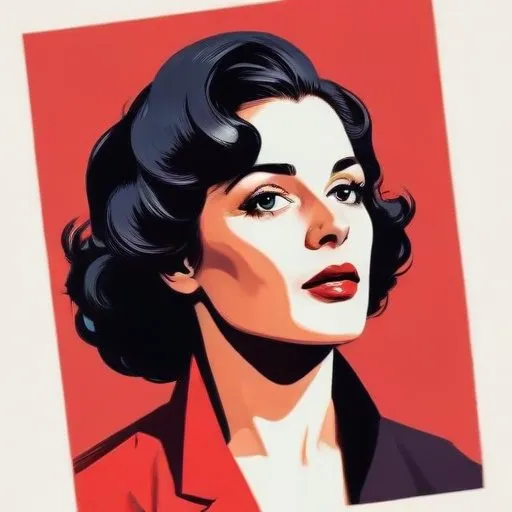
A renowned 18th-century French actress celebrated for her captivating performances in tragic roles, particularly in plays by Racine and Voltaire. She was a pioneer in bringing emotional authenticity to the stage.
Adrienne Lecouvreur, considered by many as the greatest French actress of her time, left an indelible mark on the world of theater with her natural, less stylized, and innovative acting style. Born Adrienne Couvreur in 1692, she captivated audiences with her performances on the French stage, earning her a place among the pantheon of literary and theatrical legends.
Lecouvreur was born in Damery, a small village in the province of Champagne, to a hat maker father, Robert Couvreur, and his wife, Marie Couvreur. After her mother's untimely death, her father's frequenting of taverns left Adrienne and her sister Marie Marguerite to fend for themselves. It was during this tumultuous period that young Adrienne found solace in watching rehearsals at the Comédie-Française, where she was discovered by Marc-Antoine Legrand, a socitaire of the Comédie-Française. Legrand, impressed by her talent, took her under his wing and advised her to add the nobiliary particle "le" to her name, thus becoming Adrienne Lecouvreur.
Lecouvreur's professional debut in Lille marked the beginning of her meteoric rise to fame. Her Paris debut at the Comédie-Française in 1717 further solidified her reputation as a talented and daring actress. Alongside Michel Baron, she pioneered a more natural, less stylized, type of acting, revolutionizing the French stage. Her unique approach resonated with audiences, earning her immense popularity and critical acclaim.
Lecouvreur's personal life was as dramatic as her performances. Her romantic affair with Maurice de Saxe, a renowned military leader, added to her allure and mystique. Tragically, her life was cut short when she died suddenly in 1730, at the tender age of 37. Rumors of poison and murder, allegedly orchestrated by her rival, the Duchess of Bouillon, have persisted, though they remain unconfirmed.
Lecouvreur's extraordinary life and untimely demise have inspired countless artists, writers, and musicians. Her story has been immortalized in works by playwrights, composers, and poets. Voltaire, her friend and admirer, penned a poignant poem lamenting the Catholic Church's refusal to grant her a Christian burial.
In conclusion, Adrienne Lecouvreur's remarkable life, illustrious career, and untimely demise have cemented her place as one of the most beloved and revered actresses in French history. Her pioneering spirit, innovative acting style, and enduring legacy continue to inspire and captivate audiences to this day.
"...the art of acting is not to make people laugh or cry, but to make them feel..." - Adrienne Lecouvreur
Born in 1622
A 17th-century master of comedy, he penned witty plays that satirized the French aristocracy, leaving a lasting impact on Western theater. His works remain widely performed and adapted today.
Born in 1639
A 17th-century master of French tragedy, crafting intricate, psychologically complex dramas that probed the human condition, influencing the development of Western theatre.
Born in 1694
A witty and insightful 18th-century writer and philosopher who used satire to critique societal norms and advocate for reason, tolerance, and human rights.
Born in 1721
The influential royal mistress who dominated the French court with her beauty, wit, and politics, shaping the country's art, fashion, and culture. She was a patron of the arts and a trendsetter in 18th-century Europe.
Born in 1683
A prominent figure in the Baroque period, this composer and theorist revolutionized Western classical music with innovative harmonies and treatises on music theory, shaping the course of classical music.
Born in 1668
A renowned Baroque composer and organist, known for his intricate and expressive harpsichord music that showcased his mastery of counterpoint and ornamentation. His works continue to inspire and influence classical music today.
