


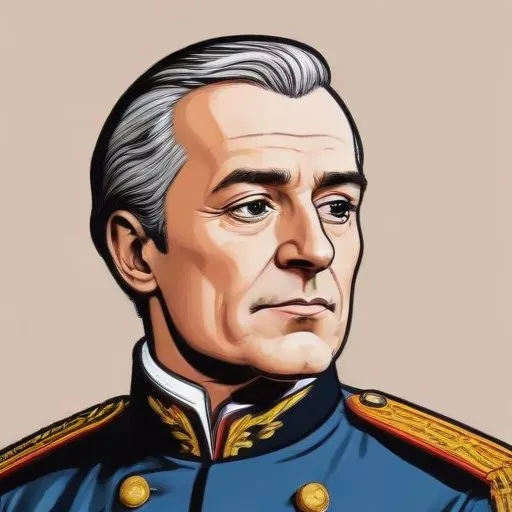
A brilliant military strategist and Marshal of France, he revolutionized warfare with his innovative tactics and wrote influential books on military theory.
Maurice de Saxe, a renowned military commander of the 18th century, is best known for his exceptional prowess on the battlefield, earning him the esteemed title of Marshal General of France. His most notable triumph was the Battle of Fontenoy during the War of the Austrian Succession, a victory that solidified his reputation as a brilliant strategist.
Born on October 28, 1696, in Goslar, Maurice was the illegitimate son of Augustus II the Strong, King of Poland and Elector of Saxony, and Countess Maria Aurora of Knigsmarck. As the first of eight acknowledged extramarital children, Maurice's early life was shaped by his separation from his father, which would later influence his independent nature and future career.
At the tender age of twelve, Maurice began his military career in the Imperial Army under Prince Eugene of Savoy, participating in the sieges of Tournai and Mons, as well as the Battle of Malplaquet during the War of the Spanish Succession. This early exposure to battle instilled in him a sense of courage and valour, albeit with a hint of rashness, which Prince Eugene wisely cautioned him about.
Maurice's military prowess soon caught the attention of prominent leaders, and he went on to serve under Peter the Great in the Great Northern War against the Swedes. In 1711, his father formally recognized him, granting him the rank of Count and cementing his position in the world of military politics.
In 1741, Maurice entered French service and rose through the ranks, eventually becoming Marshal and then Marshal General of France in 1747. This prestigious appointment signified his status as one of the most respected and skilled military commanders of his time.
The Battle of Fontenoy, fought on May 11, 1745, was Maurice's crowning achievement. Leading the French army to victory against the British and their allies, he demonstrated his exceptional tactical prowess, earning praise from his contemporaries and etching his name in the annals of military history.
Maurice de Saxe's military legacy extends far beyond his impressive battle record. He was a pioneer in the field of military strategy, and his writings on the subject continue to influence military thinkers to this day. His impact on French military history is undeniable, and he remains one of the most celebrated commanders in French military history.
Despite his illustrious career, Maurice's personal life was marked by turmoil. He had several relationships with women, including the actress Adrienne Lecouvreur, with whom he had a daughter. However, his relationships were often tumultuous, and he was known for his hot temper and reckless behaviour.
Maurice de Saxe's witty remarks and insightful quotes offer a glimpse into his character: "A general must be acquainted with the character of those who serve under him, and know how to make the best of them." These words, penned in his memoirs, reflect his emphasis on strong leadership and effective teamwork.
Maurice de Saxe's remarkable life serves as a testament to his unwavering dedication to his craft, his bravery in the face of adversity, and his unrelenting passion for military strategy. As one of the most celebrated commanders in French military history, his legacy continues to inspire and influence military leaders to this day.
Born in 1710
The monarch who ruled France from 1715 to 1774, known as the "Sun King's" great-grandson, and remembered for his extravagance, absolutism, and the decline of the French monarchy.
Born in 1721
The influential royal mistress who dominated the French court with her beauty, wit, and politics, shaping the country's art, fashion, and culture. She was a patron of the arts and a trendsetter in 18th-century Europe.
Born in 1694
A witty and insightful 18th-century writer and philosopher who used satire to critique societal norms and advocate for reason, tolerance, and human rights.
Born in 1663
A 17th-century French bishop who preached eloquent sermons that emphasized the importance of moral living and was known for his powerful oratory skills, influencing many with his words.
Born in 1712
A pioneering thinker who shaped modern democracy and education with his ideas on social contracts, general will, and the importance of early childhood education. His writings influenced the French Revolution and modern political thought.
