


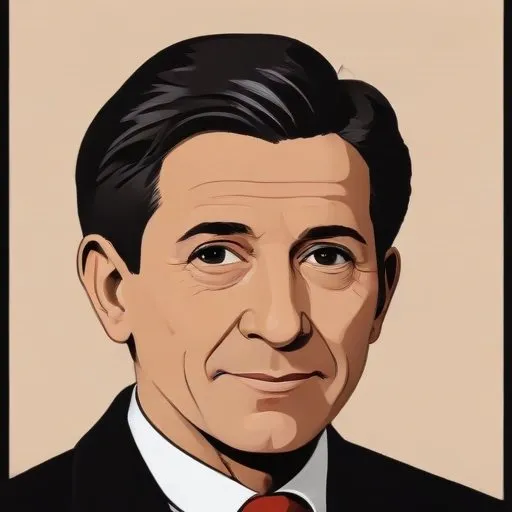
This Italian entomologist and author discovered the parasitic fungus that causes muscardine disease in silkworms, leading to significant improvements in the silk industry. He's also known for his work on the germ theory of disease.
In the realm of entomology, few names shine as bright as Agostino Bassi, the Italian pioneer who dared to defy the conventional wisdom of his time. He is renowned for his groundbreaking discovery that microorganisms can be the root cause of disease, laying the foundation for the germ theory of disease, a concept that would later be built upon by the likes of Louis Pasteur.
Bassi was born on September 25, 1773, to a wealthy farmer and a lawyer with a passion for biology. Despite his father's wishes for him to pursue a career in civil service, Bassi's fascination with the natural world ultimately prevailed, thanks in part to the influence of his relative, Lazzaro Spallanzani, a prominent biologist.
Bassi's most significant contribution to the scientific community began with his research on the muscardine disease, a lethal affliction affecting domestic silkworms. This disease, also known as mal de segno, had devastating effects on the silk industry, causing widespread abandonment of silk farms by 1849. Bassi's 25-year quest to uncover the cause of this disease culminated in the publication of his seminal paper, Del mal del segno, calcinaccio o moscardino, in 1835.
In this landmark paper, Bassi revealed that the muscardine disease was caused by a living, parasitic organism – a fungus that would later be named Beauveria bassiana in his honor. This discovery not only rescued the silk industry but also paved the way for a fundamental shift in our understanding of disease causation.
In 1844, Bassi took his theory a step further, proposing that not only diseases affecting animals and insects but also human diseases could be caused by microorganisms. This bold assertion, though initially met with skepticism, would later be vindicated by the work of Louis Pasteur and others.
Bassi's pioneering work has had a profound impact on the fields of entomology, microbiology, and medicine. His discovery of the germ theory of disease has saved countless lives and has led to significant advances in disease prevention and treatment. Today, Bassi is recognized as a trailblazer in the scientific community, and his work continues to inspire new generations of researchers and scientists.
Agostino Bassi's remarkable journey, marked by unwavering curiosity and unrelenting passion, serves as a powerful reminder of the transformative power of scientific inquiry. As we continue to navigate the complexities of the microbial world, we would do well to remember the pioneering spirit of this Italian entomologist, whose groundbreaking work has left an indelible mark on the history of science.
Born in 1809
Developed the theory of evolution through natural selection, revolutionizing our understanding of life on Earth. This groundbreaking idea transformed the fields of biology, ecology, and beyond.
Born in 1647
A pioneering female naturalist and artist who traveled to Suriname to study and illustrate the region's exotic insects and plants, producing groundbreaking work that merged art and science.
Born in 1637
Pioneering microscopist who discovered and described red blood cells, and made significant contributions to the field of entomology, particularly in the study of insects.
Born in 1743
Father of modern chemistry, discovered oxygen, and developed a systematic method of chemical nomenclature. He laid the foundation for modern chemistry and paved the way for future scientific discoveries.
Born in 1762
A French zoologist who classified and described numerous crustaceans and insects, laying the foundation for modern entomology. He's also credited with establishing the field of arachnology.
82 Years Old
A German-Canadian singer-songwriter, guitarist, and producer, known for his eclectic style blending rock, folk, and blues, and as the frontman of the rock band Steppenwolf. He's famous for hits like "Born to Be Wild" and "Magic Carpet Ride".
Born in 1707
Developed the system of binomial nomenclature, which is still used today to classify and name living organisms. This system has had a profound impact on the fields of biology, ecology, and conservation.
