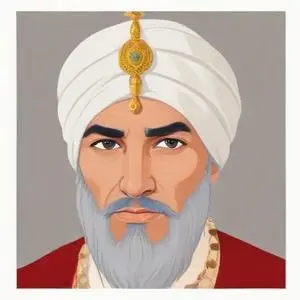
Ahmed I: The Sultan Who Broke with Tradition
The Architect of the Blue Mosque
Ahmed I is renowned for his groundbreaking decision to abolish the Ottoman tradition of royal fratricide, setting a new precedent for future rulers. He is also celebrated for his iconic architectural achievement, the construction of the Blue Mosque, one of the most revered mosques in Turkey.
Early Life and Accession
Born on April 18, 1590, at the Manisa Palace, Ahmed was the son of
Mehmed III and Handan Sultan. His early life was marked by tragedy, as his father ordered the execution of nineteen half-brothers upon ascending to the throne in 1595. Ahmed's elder brother, Şehzade Mahmud, was also executed by their father in 1603, just before Mehmed's own death.
A New Era Begins
At the age of thirteen, Ahmed ascended to the throne, marking the beginning of a new era in Ottoman history. His powerful grandmother, Safiye Sultan, who had wielded considerable influence during his father's reign, was still alive, and a power struggle ensued between her and Ahmed's mother, Handan Sultan. With Ahmed's support, his mother ultimately emerged victorious.
A Departure from Tradition
In a bold move, Ahmed deviated from the traditional practice of executing his brothers upon ascending to the throne. Instead, he spared his brother Mustafa's life, sending him to live at the old palace at Bayezit along with their grandmother, Safiye Sultan. This marked a significant departure from the Ottoman tradition of royal fratricide, which had been practiced for centuries.
The Blue Mosque: A Testament to Ahmed's Vision
One of Ahmed's most enduring legacies is the construction of the Blue Mosque, a majestic architectural masterpiece that has become a symbol of Istanbul. Completed in 1616, the mosque was designed to surpass the grandeur of the Hagia Sophia, and its six minarets and intricate tile work continue to inspire wonder in visitors from around the world.
A Lasting Legacy
Ahmed I's reign, which lasted from 1603 to 1617, was marked by significant reform and innovation. By abandoning the practice of royal fratricide, he paved the way for a more humane and stable Ottoman Empire. His architectural achievements, particularly the Blue Mosque, have left an indelible mark on Turkish history and culture.
Key Dates
- April 18, 1590: Ahmed I was born at the Manisa Palace
- 1603: Ahmed ascended to the throne at the age of thirteen
- 1616: The Blue Mosque was completed
- November 22, 1617: Ahmed I died at the age of twenty-seven
A Lasting Impact
Ahmed I's decision to break with tradition and spare his brother's life sent a powerful message about the value of human life and the importance of mercy. His architectural achievements continue to inspire wonder and awe, while his legacy serves as a testament to the power of innovation and reform.
FAQ
What were Ahmed Is major accomplishments as Ottoman Emperor?
Ahmed I was a significant Ottoman Emperor, and his major accomplishments include the construction of the Blue Mosque, the suppression of the Janissary corps, and the implementation of several administrative reforms.
What was Ahmed Is relationship with the Byzantine Empire?
Ahmed Is relationship with the Byzantine Empire was marked by conflict and conquest. He oversaw the final conquest of the Byzantine Empire and the absorption of its territories into the Ottoman Empire.
What was Ahmed Is role in Ottoman architecture?
Ahmed I was a major patron of architecture, and his reign saw the construction of several iconic buildings, including the Blue Mosque, which is considered one of the greatest architectural achievements of the Ottoman Empire.
What was Ahmed Is legacy in Ottoman history?
Ahmed Is legacy in Ottoman history is significant, and he is remembered as a wise and just ruler who implemented several important reforms and oversaw a period of significant cultural and architectural achievement.
What was Ahmed Is relationship with European powers?
Ahmed Is relationship with European powers was marked by diplomacy and conflict. He oversaw the signing of several treaties with European powers, but also engaged in several wars, including the Long War with Austria.