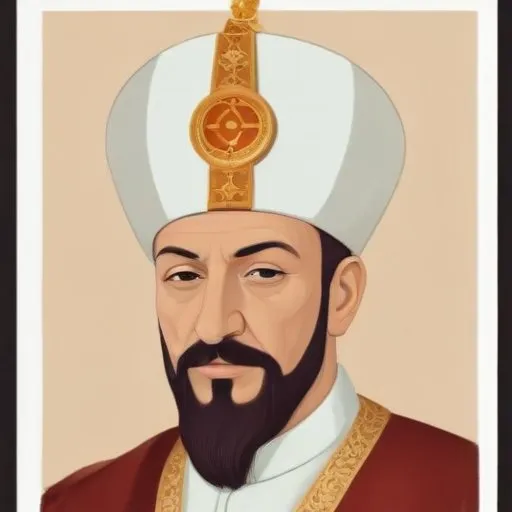
Suleiman II: The Sultan Who Turned the Tide of the Ottoman Empire
A Leader of Reforms and Reconquests
Suleiman II is most notably remembered for being the Sultan of the Ottoman Empire from 1687 to 1691, a period marked by significant military and fiscal reforms that led to the reconquest of crucial territories, including Belgrade in 1690. His leadership, along with that of his Grand Vizier Fazl Mustafa Pasha, successfully turned the tide of the War of the Holy League, earning him a prestigious place in Ottoman history.
Early Life and Rise to Power
Born on April 15, 1642, at Topkapi Palace in Constantinople, Suleiman II was the son of Sultan Ibrahim and Saliha Dilaub Sultan, a Serb woman originally named Katarina. His early life was marked by turmoil, with his father being deposed and executed in 1648. Suleiman's half-brother
Mehmed IV subsequently took the throne, and Suleiman was confined to the Kafes, a luxurious prison for royal princes within Topkapi Palace, to prevent a rebellion.
Reign and Achievements
After 36 years of confinement, Suleiman II ascended to the throne in 1687. His reign was marked by a series of reforms aimed at strengthening the Ottoman Empire. He worked tirelessly to revamp the military and fiscal systems, which had suffered greatly due to the previous regime's mismanagement. His efforts paid off, as he successfully reconquered Belgrade in 1690, a crucial victory that boosted the morale of the Ottoman army.
Leadership and Decisions
During his reign, Suleiman II made several key decisions that had a lasting impact on the Ottoman Empire. He appointed Kprl Fazl Mustafa Pasha as his Grand Vizier in 1689, a move that proved instrumental in the reconquest of Belgrade. He also revitalized the ban on alcohol, which had been publicly flouted in Istanbul and Galata, by demolishing several alcohol shops.
Legacy and Impact
Suleiman II's legacy is that of a reformer and a leader who successfully turned the tide of the Ottoman Empire's fortunes. His military and fiscal reforms strengthened the empire, and his reconquest of Belgrade demonstrated his commitment to reclaiming lost territories. Although his reign was marked by challenges, Suleiman II's determination and leadership ensured that the Ottoman Empire emerged stronger and more resilient.
Additional Facts andTrivia
- Suleiman II was only three months younger than his half-brother Mehmed IV, who was born on January 2, 1642.
- In 1651, Suleiman was circumcised along with his brothers Mehmed and Ahmed.
- During his reign, Suleiman II requested assistance from the Mughal Emperor Aurangzeb against the rapidly advancing Austrians, but his request was ignored.
By understanding Suleiman II's remarkable rise to power, his military reforms, and his determination to reclaim lost territories, we can appreciate the significant impact he had on the Ottoman Empire and its people. His legacy serves as a testament to the power of strong leadership and determination in the face of adversity.
FAQ
What were Suleiman IIs achievements as the Ottoman sultan?
Suleiman II was a prominent Ottoman sultan who ruled from 1687 to 1691. During his reign, he oversaw significant military campaigns, administrative reforms, and architectural projects, including the construction of the Yeni Cami mosque in Istanbul.
How did Suleiman IIs military campaigns shape the Ottoman Empire?
Suleiman IIs military campaigns expanded Ottoman territory, securing key victories against the Habsburgs and Polish-Lithuanian Commonwealth. His conquests secured critical trade routes and resources, strengthening the empires economy.
What was Suleiman IIs approach to governance?
Suleiman II was a skilled administrator who introduced reforms to improve the efficiency of the Ottoman administration. He strengthened the central government, reduced corruption, and promoted the development of education and infrastructure.
How did Suleiman IIs cultural projects impact Ottoman society?
Suleiman IIs cultural projects, including the construction of the Yeni Cami mosque, promoted Islamic architecture and art. His patronage of scholars, poets, and artists fostered a cultural renaissance, enriching Ottoman society.
What is Suleiman IIs legacy in Ottoman history?
Suleiman IIs legacy lies in his significant military, administrative, and cultural achievements, which strengthened the Ottoman Empire and promoted Islamic culture. His reign marked a period of stability and growth, shaping the empires trajectory for generations to come.