


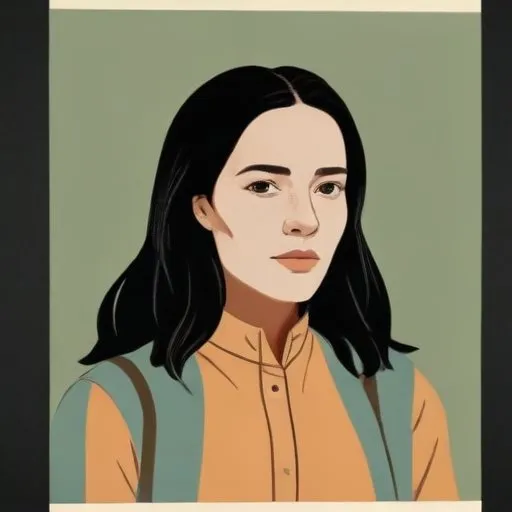
French botanist and explorer who traveled with Alexander von Humboldt, discovering and documenting thousands of plant species in South America, and contributing significantly to the field of botany.
Aimé Bonpland, a French explorer and botanist, left an indelible mark on the scientific community by charting the uncharted regions of Latin America alongside Alexander von Humboldt from 1799 to 1804. Together, they co-authored volumes of the scientific results of their expedition, which would later become a cornerstone of modern botanical knowledge.
Born as Aim-Jacques-Alexandre Goujaud in La Rochelle, France, on August 22, 1773, Bonpland's fascination with the natural world began at a young age. His father, a physician, encouraged his curiosity, and by 1790, Bonpland joined his brother Michael in Paris to study medicine.
Under the tutelage of esteemed professors, including Jean-Baptiste Lamarck, Antoine Laurent de Jussieu, and René Louiche Desfontaines, Bonpland's passion for botany grew. He further honed his skills by attending classes given by Pierre-Joseph Desault at the Hôtel-Dieu.
The tumultuous backdrop of the French Revolution and Revolutionary Wars did not deter Bonpland from pursuing his dreams. Having befriended Alexander von Humboldt, he joined the esteemed explorer on a five-year journey to Tenerife and the Spanish colonial empire in the Americas.
Together, they traveled to what would later become the independent states of Venezuela, Cuba, Colombia, Ecuador, Peru, and Mexico, as well as the Orinoco and Amazon basins, with a final stop in the United States. During this epic journey, Bonpland collected and classified around 6,000 plants, many of which were unknown in Europe at the time.
Upon his return to Paris, Bonpland's remarkable findings were published as a series of volumes from 1808 to 1816, entitled Plantes équinoxiales. This monumental work not only showcased his expertise as a botanist but also immortalized his name in the annals of scientific history.
In recognition of his contributions, Napoleon granted Bonpland a pension of 3,000 francs per year, and the Empress Josephine, fond of the young botanist, installed him at the Museum of Natural History.
Bonpland's work embodied the spirit of the Enlightenment, underscoring the importance of empirical observation, classification, and the pursuit of knowledge. His collaboration with Humboldt exemplified the power of interdisciplinary approaches to scientific inquiry.
Bonpland's pioneering work laid the groundwork for future generations of botanists, naturalists, and explorers. His discoveries not only enriched our understanding of the natural world but also inspired new areas of research, from ecology to conservation.
Today, the standard author abbreviation "Bonpl." is used to indicate Bonpland as the author when citing a botanical name, a testament to his enduring legacy in the scientific community.
Aimé Bonpland's life and work represent a fascinating chapter in the history of scientific exploration. As we continue to navigate the complexities of the natural world, his contributions serve as a poignant reminder of the importance of curiosity, perseverance, and collaboration.
In the words of Bonpland himself, "The universe is a vast and wondrous machine, and we are but small parts of it. Our task is to understand and to marvel at its beauty."
Bonpland's remarkable story is a testament to the power of human ingenuity and the boundless potential of the human spirit. As we look to the future, his legacy inspires us to continue exploring, discovering, and charting the uncharted.
Born in 1769
A pioneering geographer and explorer who mapped much of South America and discovered the Caspian Sea's connection to the Black Sea, greatly advancing our understanding of the natural world.
Born in 1783
Led the Latin American wars of independence against Spanish rule, unifying several countries under the Gran Colombia republic. He's revered as a national hero and symbol of freedom.
Born in 1809
Developed the theory of evolution through natural selection, revolutionizing our understanding of life on Earth. This groundbreaking idea transformed the fields of biology, ecology, and beyond.
Born in 1744
A French soldier, biologist, and academic who developed a theory of inheritance of acquired characteristics, proposing that organisms adapt to their environment and pass on those traits to their offspring.
Born in 1769
Founded the field of comparative anatomy, establishing extinction as a fact and creating a framework for understanding the natural world through fossil records.
Born in 1828
A visionary writer who pioneered the science fiction genre, crafting timeless tales of adventure and exploration that continue to inspire generations.
