


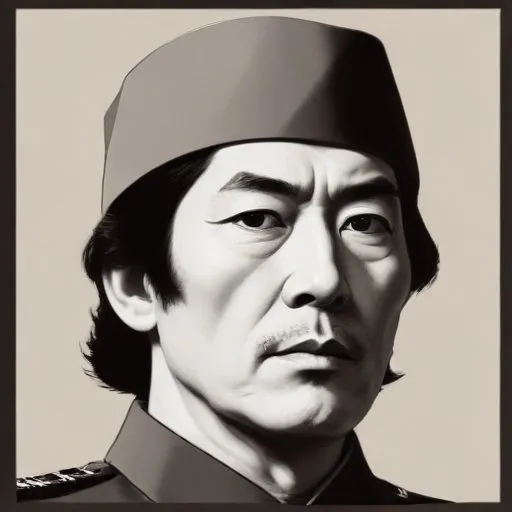
A pioneering military leader who modernized Japan's cavalry and played a key role in the country's early 20th-century wars, earning him the nickname "Father of Japanese Cavalry."
Akiyama Yoshifuru, a Japanese general, is renowned as the father of modern Japanese cavalry. His remarkable contributions to the Imperial Japanese Army's cavalry division have earned him a permanent place in the annals of Japanese military history.
Born on February 9, 1859, in the Matsuyama Domain, Iyo Province (now Ehime Prefecture), Akiyama was the third son of a bankrupt samurai. Despite humble beginnings, he went on to attend the Rikugun Shikan Gakkō, the precursor to the Imperial Japanese Army Academy, in 1877.
His thirst for knowledge led him to enroll in the Army Staff College, where he studied cavalry tactics and techniques. What set him apart was his opportunity to study abroad in France, specifically at the École Spéciale Militaire de Saint-Cyr, making him the only Japanese officer to receive such training.
Akiyama's military career spanned several significant conflicts, including the First Sino-Japanese War, the Boxer Rebellion, and the Russo-Japanese War. In these battles, he showcased his exceptional leadership skills, earning recognition as a cavalry regimental commander in the IJA 1st Division.
One of his most notable military achievements was during the Russo-Japanese War, where he led his troops to victory in the Battle of Shaho, Battle of Sandepu, and the Battle of Mukden against the formidable Cossack cavalry divisions of the Imperial Russian Army.
In April 1906, Akiyama was awarded the prestigious Order of the Golden Kite, 2nd class, in recognition of his outstanding military service.
Akiyama Yoshifuru's impact on modern Japanese cavalry is undeniable. His commitment to adapting European cavalry tactics to suit Japanese military needs revolutionized the Imperial Japanese Army's approach to warfare.
As a commander, Akiyama was known for his simplicity, often having a humble meal of rice with pickles. However, his love for sake was legendary, earning him a reputation as a heavy drinker.
In conclusion, Akiyama Yoshifuru's remarkable military career, dedication to modernizing Japanese cavalry, and his enduring legacy have cemented his position as one of the most influential figures in Japanese military history.
Born in 1901
The Japanese emperor who ruled from 1926 to 1989, leading the country through World War II and its post-war reconstruction, and is known for his symbolic role in Japanese politics and culture. He is also remembered for his rare public apology for Japan's wartime atrocities.
Born in 1884
Led the Imperial Japanese Navy during World War II, masterminding the surprise attack on Pearl Harbor, and later became a symbol of Japanese military power and strategy.
Born in 1868
A Japanese admiral-turned-politician who served as Prime Minister of Japan, known for his efforts to modernize the country's military and economy. He played a key role in Japan's early 20th-century development.
Born in 1891
A Japanese politician who served as Prime Minister during World War II, known for his role in leading Japan into the war and his attempts to negotiate a peace settlement. He is also infamous for his involvement in the Nanjing Massacre.
