


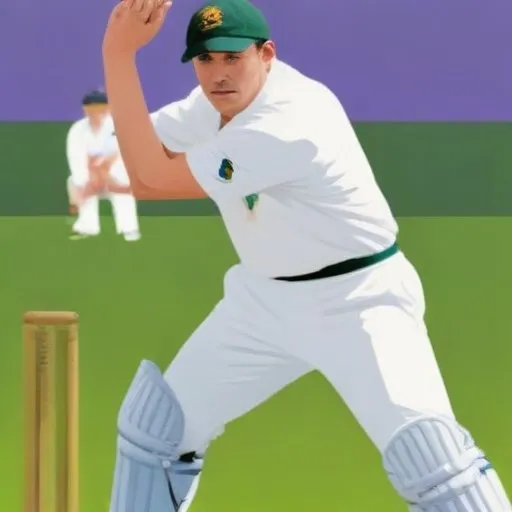
A stylish and dominant batsman who played for Australia in the early 20th century, known for his elegant strokeplay and impressive Test averages.
Regarded as one of the greatest stylists of Australian cricket between the two World Wars, Alan Kippax was a middle-order batsman who mesmerized cricket enthusiasts with his impeccable technique and elegant style. His career, spanning from the late 1920s to the early 1930s, was marked by brilliant performances, including a world record last-wicket partnership in a Sheffield Shield match.
Born on May 25, 1897, in Paddington, Sydney, Kippax was the third son of Arthur Percival Howell Kippax and Sophie Estelle (née Craigie). He developed a passion for cricket at a young age, joining Waverley (now Eastern Suburbs) Cricket Club at 14. Kippax's early years were marked by dedication and hard work, which earned him a spot in the New South Wales (NSW) team.
Kippax's career took off in the 1920s, with his performance in the 1928-29 season earning him a spot in the Australian team. He toured England twice, impressing spectators with his elegant style and technique. His maiden Test century, scored against England in 1930, cemented his position as a regular in the Australian team.
In addition to his impressive batting skills, Kippax was an accomplished leader, captaining NSW for eight years. His leadership skills were evident in his ability to motivate his team, which earned him great respect from his peers and opponents alike.
Kippax's career was not without its challenges. He was a vocal critic of the Bodyline tactics employed by England during their 1932-33 tour of Australia. He wrote a book denouncing the tactics, which sparked controversy and debate in the cricketing community. Despite this, Kippax remained committed to the sport, and his dedication earned him a place in cricketing history.
Alan Kippax's legacy extends beyond his impressive cricketing career. He is remembered for his unwavering commitment to the sport, his stylish batting, and his leadership skills. His contributions to Australian cricket have inspired generations of cricketers, earning him a place among the all-time greats of the sport.
"He pleased the eye of the connoisseur all the time." - Neville Cardus, commenting on Kippax's batting style
Kippax's legacy extends beyond the cricketing world. He inspired a generation of Australians, promoting the values of dedication, hard work, and sportsmanship. His commitment to the sport has encouraged countless young cricketers to pursue their dreams, making him a true icon of Australian cricket.
Born in 1908
A cricket legend and iconic figure in Australian sports, renowned for his incredible batting skills and unbeaten record, earning him the nickname "The Don".
Born in 1891
A pioneering leg-spinner who took 216 wickets in 37 Tests, known for his unorthodox style and ability to spin the ball both ways. He is considered one of the greatest bowlers in cricket history.
Born in 1900
Australian sports legend who dominated cricket with record-breaking batting averages and also excelled in baseball, earning him a place in the Australian Cricket Hall of Fame.
Born in 1910
A dominant batsman of the 1920s and 1930s, renowned for his fearless and aggressive style, which earned him a reputation as one of the greatest batsmen of all time.
Born in 1877
A pioneering batsman and charismatic figure in early 20th-century cricket, known for his aggressive playing style and iconic photography capturing his dynamic movements.
Born in 1879
A dominant all-rounder and captain of the Australian cricket team, known for his aggressive batting style and innovative tactics that transformed the game. He was also a respected journalist, writing for several newspapers and magazines.
Born in 1886
A talented Australian cricketer and soldier who served in World War I, known for his aggressive batting style and heroic war efforts.
Born in 1882
Australian left-arm spinner who took 74 wickets in 14 Tests, known for his unorthodox bowling action and ability to extract turn from even the most docile pitches.
