


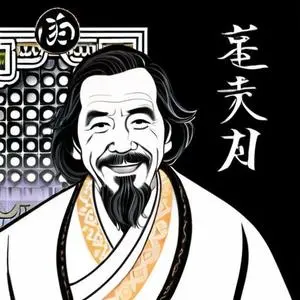
A philosopher and author who interpreted Eastern philosophy for Western audiences, making complex ideas accessible and entertaining through his writings and lectures.
Alan Watts, the renowned British philosopher, writer, and speaker, is best known for interpreting and popularizing Eastern philosophies, such as Buddhism, Taoism, and Hinduism, for a Western audience. Through his prolific writings and captivating lectures, Watts bridged the gap between ancient wisdom and modern sensibilities, leaving an indelible mark on contemporary spirituality.
Born on January 6, 1915, in Chislehurst, Kent, England, Watts grew up in a middle-class family surrounded by nature, which sparked his fascination with the natural world and the human experience. His early interests in storybook fables and romantic tales of the mysterious Far East laid the groundwork for his later explorations into Eastern philosophies.
Watts' philosophical contributions centered around the intersection of Eastern thought and Western psychology. He argued that Buddhism could be seen as a form of psychotherapy, and his writings introduced the concept of the "taboo against knowing who you are" – the idea that humans have an innate desire to understand their true nature, but are often hindered by societal and cultural constraints.
Watts' teachings and writings have had a profound impact on modern society, shaping the counterculture movement of the 1960s and influencing generations of spiritual seekers, artists, and intellectuals. His lectures, recorded in the 1960s and early 1970s, continue to be broadcast on public radio and online platforms, ensuring his ideas remain accessible and relevant to contemporary audiences.
Watts' personal life was marked by a deep commitment to his philosophical pursuits. He worked as a volunteer programmer at KPFA radio station in Berkeley, California, where he gained a following and honed his skills as a public speaker. His later years were spent lecturing, writing, and recording, leaving behind a rich legacy of thought-provoking works.
Alan Watts' legacy extends far beyond his own lifetime. He paved the way for subsequent generations of spiritual leaders, philosophers, and writers, inspiring a wide range of fields, from psychology and anthropology to art and literature. His work continues to foster a deeper understanding and appreciation of cultural diversity, encouraging individuals to adopt a more holistic and encompassing worldview.
Born in 1920
A pioneer in the counterculture movement, he advocated for the therapeutic use of psychedelic drugs and became a symbol of the 1960s rebellion. His ideas continue to influence modern thought on consciousness and personal freedom.
Born in 1894
Author of dystopian classics like Brave New World, exploring the consequences of technological advancements on humanity. Known for prophetic warnings about government control and manipulation.
79 Years Old
A counterculture icon who explored the boundaries of psychedelics, consciousness, and the human experience through writings and lectures. He's famous for his theories on the role of psychoactive substances in shaping human culture and evolution.
95 Years Old
A spiritual teacher and author who wrote about Eastern philosophy and spirituality, helping to popularize meditation and yoga in the West. Known for his book "Be Here Now".
Born in 1922
Pioneering figure of the Beat Generation, known for spontaneous, confessional, and poetic writings that captured the essence of American counterculture in the 1950s and 60s.
Born in 1926
A leading figure of the Beat Generation, known for his poetry that explores themes of nonconformity, free expression, and social justice. His iconic poem "Howl" is a classic of American literature.
