


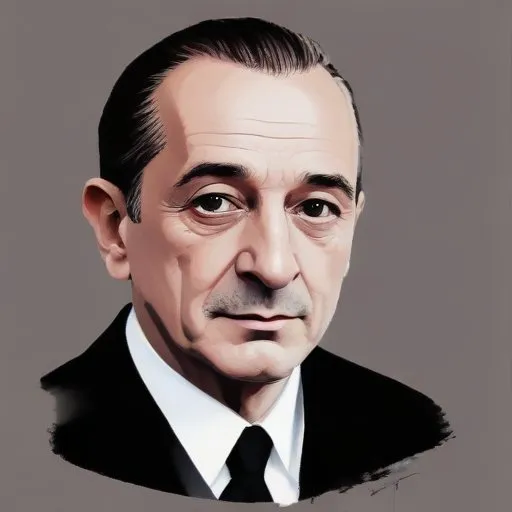
A French actor, director, and screenwriter who made significant contributions to the development of French New Wave cinema, known for his innovative storytelling and cinematography.
Albert Dieudonné, a trailblazing French actor, screenwriter, film director, and novelist, left an indelible mark on the world of cinema. Best known for his iconic portrayal of Napoleon Bonaparte in Abel Gance's epic 1927 film, Dieudonné's contributions to French cinema are still celebrated today.
Born on November 26, 1889, in Paris, France, Dieudonné's fascination with the arts led him to make his acting debut in 1908, starring in the silent film The Assassination of the Duke of Guise, accompanied by Camille Saint-Saëns' musical score.
In 1924, Dieudonné directed the film drama Catherine, in which he also appeared as a major character. This milestone marked the beginning of a fruitful collaboration with Jean Renoir, who acted as his assistant director on the film.
Between 1915 and 1916, Dieudonné acted in five films for director Abel Gance, including the 1915 film La Folie du Docteur Tube and the 1916 film Le priscope. His versatility as an actor and writer earned him key roles in films such as Anguish (1917), The Jackals (1917), and The Crushed Idol (1920).
In 1929, Dieudonné wrote a novel, which was adapted into the 1930 musical comedy film The Sweetness of Loving. He continued to contribute to the world of cinema, penning the script for the 1936 film La Garonne. Dieudonné passed away on March 19, 1976, in Paris, leaving behind a rich legacy in the world of French cinema.
Dieudonné's final wish was to be buried wearing his Napoleon costume, a testament to the enduring impact of his iconic role.
Albert Dieudonné's contributions to French cinema continue to inspire generations of filmmakers and actors. His dedication to his craft and his passion for storytelling have cemented his place as a pioneer in the world of cinema.
Born in 1898
A pioneer of montage editing, he revolutionized filmmaking with his iconic scenes and theories, influencing generations of directors.
Born in 1889
A pioneering filmmaker who revolutionized the cinematic experience with innovative techniques and epic productions, most notably the silent film "Napoleon".
Born in 1898
A pioneering filmmaker who blended wit, satire, and visual innovation in his movies, leaving a lasting mark on the development of comedy and cinematic storytelling.
Born in 1889
A renowned French creative force, celebrated for his innovative and surreal works that blurred the lines between literature, art, and cinema, leaving an indelible mark on 20th-century culture.
Born in 1890
Pioneering filmmaker behind iconic sci-fi and noir classics, influencing generations of directors with his visual style and storytelling. 82
