


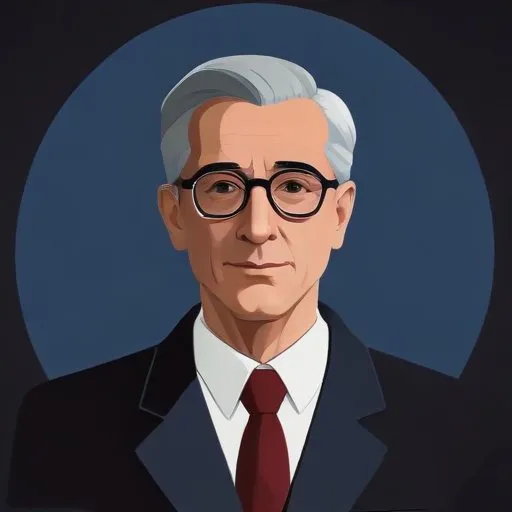
Discoverer of twelve elements, including berkelium, californium, and americium, and a pioneer in the field of nuclear physics.
Albert Ghiorso, an American nuclear scientist, left an indelible mark on the scientific community by codiscovering a record 12 chemical elements on the periodic table. His remarkable research career spanned six decades, from the early 1940s to the late 1990s, revolutionizing our understanding of nuclear physics and chemistry.
Born on July 15, 1915, in Vallejo, California, Ghiorso grew up in Alameda, California, with a strong fascination for airplanes, aeronautics, and technology. His proximity to the Oakland International Airport sparked his interest in building radio circuitry, earning him a reputation for establishing radio contacts at distances that outdid the military.
Ghiorso received his BS in Electrical Engineering from the University of California, Berkeley in 1937. After graduation, he worked for Reginald Tibbets, a prominent amateur radio operator, where he developed and produced radiation detectors for the government. This experience brought him into contact with nuclear scientists at the University of California Radiation Laboratory at Berkeley, including Glenn Seaborg, who would later become a close colleague and friend.
In the early 1940s, Ghiorso joined Seaborg in Chicago to work on the Manhattan Project. During this time, he developed sensitive instruments for detecting radiation associated with nuclear decay, including spontaneous fission. One of his breakthrough instruments was a 48-channel pulse height analyzer, which enabled him to identify the energy, and therefore the source, of the radiation.
Ghiorso's collaborative efforts with Seaborg and other scientists led to the discovery of a record 12 chemical elements, including Astatine (1940), Plutonium (1940), Americium (1944), Curium (1944), Berkelium (1949), Californium (1950), Einsteinium (1952), Fermium (1952), Mendelevium (1953), Nobelium (1958), Lawrencium (1961), and Rutherfordium (1969). These discoveries significantly expanded our understanding of the periodic table and nuclear chemistry.
Ghiorso's contributions to science were recognized with numerous awards and honors, including the Enrico Fermi Award (1961), the Ernest O. Lawrence Award (1961), and the National Medal of Science (1969).
Ghiorso was raised in a devout Christian family but later became an atheist, identifying with Christian ethics. He was married to Wilma Belt for 60 years, and their relationship was marked by a deep mutual respect and support.
Albert Ghiorso's groundbreaking research and discoveries have had a profound impact on modern society, influencing the development of nuclear energy, medicine, and technology. His work continues to inspire future generations of scientists, ensuring a lasting legacy in the world of nuclear physics and chemistry.
Born in 1912
A renowned chemist and academic who discovered and isolated ten transuranic elements, including plutonium, and was a leading figure in the development of nuclear energy. His work had a profound impact on our understanding of the periodic table and the properties of atomic nuclei.
Born in 1901
Invented the cyclotron, a type of particle accelerator, revolutionizing nuclear physics and paving the way for major breakthroughs in medicine, energy, and materials science.
Born in 1901
A pioneer in nuclear physics, known for leading the team that developed the first nuclear reactor and playing a crucial role in the development of the atomic bomb.
Born in 1904
Leading the development of the atomic bomb during World War II, this brilliant mind made groundbreaking contributions to theoretical physics, pushing the boundaries of human understanding.
Born in 1908
Developed the hydrogen bomb and was a key figure in the development of the US nuclear program, known for his advocacy of nuclear energy and his role in the Cold War.
Born in 1913
A pioneer in protein chemistry, he discovered the first amino acid sequence of an enzyme, revolutionizing our understanding of biological processes. His work paved the way for major advancements in biochemistry and medicine.
Born in 1893
A pioneering scientist who discovered deuterium, a heavy isotope of hydrogen, and later contributed to the discovery of many other elements, revolutionizing our understanding of the universe.
Born in 1901
Pioneering chemist and peace activist who won two unshared Nobel Prizes, one for chemistry and one for peace, for his groundbreaking work on the nature of the chemical bond and his tireless efforts to promote nuclear disarmament.
