


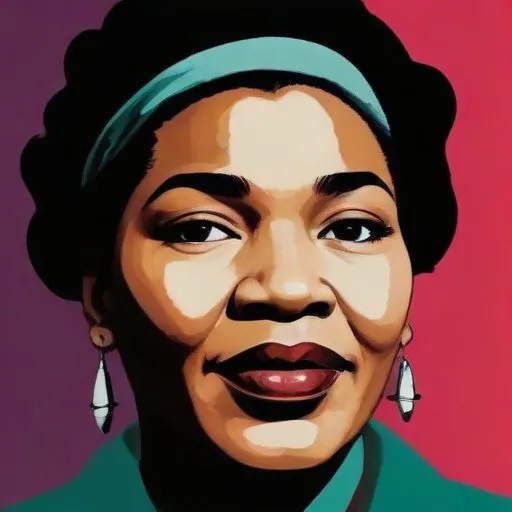
Mother of Martin Luther King Jr., she was a civil rights organizer who played a significant role in the movement, particularly in Atlanta. She was also a musician and choir director.
Alberta Williams King was an American civil rights organizer, celebrated choir director, and devoted mother, best known as the wife of Martin Luther King Sr. and mother of the iconic Martin Luther King Jr. Her life's work was a testament to her unwavering dedication to social justice, education, and family.
Born on September 13, 1904, to Reverend Adam Daniel Williams and Jennie Celeste Parks Williams, Alberta grew up in a household deeply rooted in faith and community service. Her father, a preacher at the Ebenezer Baptist Church in Atlanta, Georgia, instilled in her the values of compassion, empathy, and social responsibility.
After graduating from high school at the Spelman Seminary, Alberta earned a teaching certificate at the Hampton Normal and Industrial Institute (now Hampton University) in 1924. It was during this period that she met her future husband, Martin L. King, whose sister Woodie was boarding with her parents.
As the wife of Martin Luther King Sr. and mother of Martin Luther King Jr., Alberta played a pivotal role in shaping the civil rights movement. Her choir direction at the Ebenezer Baptist Church not only showcased her musical talents but also provided a vital platform for community engagement and social activism.
An advocate for education, Alberta's teaching certificate was a testament to her commitment to empowering future generations. Although she had to quit teaching due to the local school board's prohibition on married women in the profession, her legacy continued through her children, who went on to become prominent figures in the fight for civil rights.
Alberta Williams King's unwavering dedication to her family, community, and the civil rights movement has left an indelible mark on modern society. Her commitment to education, social justice, and faith continues to inspire generations of activists, educators, and community leaders.
Through her children, Alberta's legacy extends far beyond her own remarkable accomplishments. Martin Luther King Jr.'s advocacy for nonviolent civil disobedience, for example, was deeply influenced by his mother's compassion, empathy, and unwavering commitment to social justice.
In the years following Alberta's tragic assassination, her family's home was designated as part of the Martin Luther King Jr. National Historical Park, ensuring the preservation of her legacy and the family's contributions to the civil rights movement.
Today, Alberta Williams King's remarkable life serves as a testament to the power of devotion, compassion, and unwavering commitment to social justice. Her courageous spirit continues to inspire generations, reminding us of the importance of education, family, and community in shaping a better world.
97 Years Old
A prominent leader in the civil rights movement, advocating for racial equality and social justice through nonviolent means, leaving a lasting impact on American history.
99 Years Old
African-American activist and author who played a crucial role in the Civil Rights Movement, advocating for racial and gender equality, and wrote extensively on her experiences and the movement.
Born in 1913
Refused to give up her seat on a Montgomery, Alabama bus to a white person, sparking the Montgomery Bus Boycott, a pivotal event in the Civil Rights Movement.
Born in 1911
A powerful gospel singer known for her soulful, heart-wrenching vocals and iconic performances, including at the 1963 March on Washington.
Born in 1912
A pioneering figure in the struggle for racial and gender equality, she dedicated her life to empowering African American women and promoting education and social justice.
Born in 1880
Led a powerful miners' union, fighting for workers' rights and fair wages, and was a key figure in shaping America's labor movement. Known for his charismatic leadership and militant tactics.
Born in 1926
A prominent leader in the American Civil Rights Movement, he worked closely with Martin Luther King Jr. to advocate for racial equality and social justice through nonviolent means.
Born in 1912
A pioneering civil rights activist who played a key role in organizing the 1963 March on Washington, where Martin Luther King Jr. delivered his iconic "I Have a Dream" speech.
