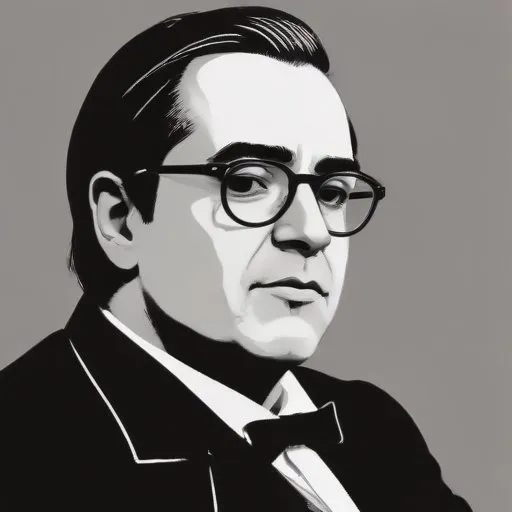
The Vibrant Legacy of Alberto Ginastera: A Maestro of Argentine Classical Music
A Pioneer of Classical Music in the Americas
Renowned for his captivating and innovative compositions, Alberto Ginastera is hailed as one of the most significant 20th-century classical composers of the Americas. His remarkable body of work has left an indelible mark on the music world, earning him a place among the great masters of classical music.
Early Life and Education
Born on April 11, 1916, in Buenos Aires, Argentina, to a Spanish father and an Italian mother, Ginastera's cultural heritage would later influence his distinctive musical style. He graduated from the Williams Conservatory in Buenos Aires in 1938 and went on to teach at the Liceo Militar General San Martín. A significant turning point in his career came when he studied with
Aaron Copland at Tanglewood in the United States from 1945 to 1947.
Teaching and Mentoring
Ginastera's dedication to nurturing young talent is exemplified by his illustrious roster of students, including the legendary
Astor Piazzolla, Alcides Lanza, and Jorge Antunes. His teaching posts spanned across institutions, inspiring a new generation of composers and musicians.
Musical Periods and Style
Ginastera categorized his music into three distinct periods:
- Objective Nationalism (1934-1948): Characterized by the incorporation of traditional Argentine folk themes in a direct and literal manner.
- Subjective Nationalism (1948-1958): Witnessed a shift towards more abstract and subjective interpretations of folk elements.
- Neo-Expressionism (1958-1983): Marked by an increased emphasis on expressive freedom and experimentation.
These periods not only reflect Ginastera's artistic evolution but also his profound connection with Argentine culture.
Inspirations and Legacy
Ginastera's works were deeply rooted in the Gauchesco tradition, which romanticizes the gaucho, or landless native horseman, as a symbol of Argentine identity. His compositions continue to captivate audiences and inspire new generations of musicians, solidifying his position as a maestro of Argentine classical music.
Later Life and International Recognition
In 1968, Ginastera relocated to the United States and later to Europe in 1970. His international recognition grew, earning him accolades and performances worldwide. He passed away on June 25, 1983, at the age of 67, in Geneva, Switzerland, leaving behind a rich cultural heritage.
Ginastera's remarkable legacy extends far beyond his impressive body of work, inspiring a deeper appreciation for Argentine classical music and its rich cultural heritage. As a composer, teacher, and cultural ambassador, Alberto Ginastera's contributions continue to resonate, elevating the world of classical music for generations to come.
FAQ
What was Alberto Ginasteras musical style?
Alberto Ginasteras musical style was characterized by his use of folk influences, complex rhythms, and bold harmonies. He was a true original who drew on his Argentine heritage to create a unique and distinctive sound.
What is Alberto Ginasteras most famous work?
Alberto Ginasteras most famous work is Bomarzo, an opera that premiered in 1967 and is considered one of the most important works of Argentine opera. The opera is based on a true story and features a complex, modernist score.
What was Alberto Ginasteras role in Argentine music?
Alberto Ginastera was a leading figure in Argentine music, serving as a composer, teacher, and promoter of new music. He was a key figure in shaping the countrys musical identity and was widely respected for his contributions.
Did Alberto Ginastera collaborate with other artists?
Yes, Alberto Ginastera collaborated with many other artists, including choreographer Martha Graham and soprano Victoria de los Ángeles. He was known for his ability to work across disciplines and to create music that was both beautiful and challenging.
What is Alberto Ginasteras legacy?
Alberto Ginasteras legacy is that of a true innovator and master of Argentine music. He is remembered for his bold and visionary compositions, his commitment to promoting new music, and his role in shaping the countrys musical heritage.