


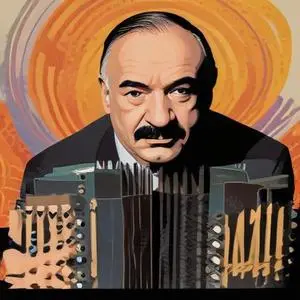
Revolutionized Argentine tango with bold, jazz-infused compositions and virtuosic bandoneon playing, blending traditional and modern styles. His music evokes passion, drama, and sensuality.
Astor Piazzolla, the Argentine composer, bandoneon player, and arranger, revolutionized the traditional tango by infusing it with elements of jazz and classical music, giving birth to the nuevo tango movement.
Born on March 11, 1921, in Mar del Plata, Argentina, Piazzolla was the only child of Italian immigrant parents, Vicente Nonino Piazzolla and Assunta Manetti. His paternal grandfather, a sailor and fisherman, had immigrated to Argentina from Trani, Italy, at the end of the 19th century.
In 1925, Piazzolla moved with his family to Greenwich Village in New York City, where he grew up amidst a volatile mix of gangsters and hardworking immigrants. It was here that he developed a deep love for music, listening to his father's records of Carlos Gardel and Julio de Caro's tango orchestras, as well as jazz and classical music.
It was in New York that Piazzolla discovered the bandoneon, an instrument that would become an integral part of his identity. His father spotted one in a pawn shop in 1929, and Piazzolla was hooked.
In the 1950s and 60s, Piazzolla began to compose and perform his nuevo tango music, which blended traditional tango rhythms with jazz and classical elements. This innovative style earned him both critical acclaim and controversy, as some critics saw it as a departure from traditional tango.
Despite the initial backlash, Piazzolla's nuevo tango gained popularity, and he went on to collaborate with renowned musicians such as Gary Burton and Al Di Meola.
Piazzolla's music transcended borders, influencing not only Argentine culture but also music globally. His nuevo tango style paved the way for future generations of tango performers and composers.
"To play the bandoneon is to confess, to confess is to play the bandoneon."
Astor Piazzolla passed away on July 4, 1992, leaving behind a legacy that continues to inspire and influence musicians worldwide. His nuevo tango style has been recognized as a cultural treasure, and his compositions continue to be celebrated for their beauty, passion, and innovation.
In the words of American music critic Stephen Holden, Piazzolla was "the world's foremost composer of tango music."
Born in 1899
A visionary writer who crafted intricate, philosophical tales that blurred reality and fantasy, influencing generations of authors and thinkers. 82
Born in 1916
A virtuosic pianist and composer who blended folk melodies with modernist techniques, creating a unique sound that resonated with audiences worldwide. His ballet scores, such as "Estancia," remain iconic in the classical music canon.
Born in 1892
A French composer and educator who blended jazz and classical music to create a unique sound, and is best known for his ballet scores and chamber music compositions.
Born in 1866
A pioneering composer of minimalist and avant-garde music, known for his unconventional and humorous approach to classical music, creating a new kind of simplicity and clarity. His music often featured repetitive patterns and witty titles.
Born in 1890
A legendary tango singer-songwriter and actor, known for his smooth, baritone voice and iconic songs that captured the essence of Argentine culture. He's often referred to as the "King of Tango".
Born in 1914
A pioneering figure in magical realism, blending fantastical elements with everyday life in his novels and short stories, exploring the human condition and social commentary.
