


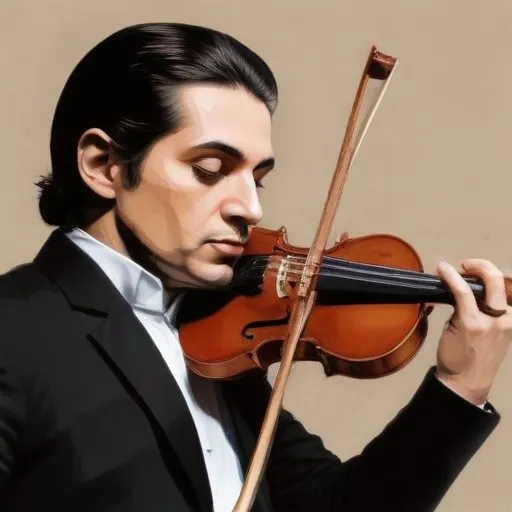
A virtuosic violinist, composer, and conductor who revolutionized Argentine tango music with his innovative and expressive style, blending traditional folk with classical and jazz elements.
Julio de Caro was a renowned Argentine composer, musician, and conductor who left an indelible mark on the Tango genre. With a career spanning over six decades, he is best known for his iconic compositions that have become synonymous with Argentine Tango, catapulting him to the forefront of the genre.
Born on December 11, 1899, in Buenos Aires, Argentina, Julio de Caro was exposed to music from a tender age. His father, a music enthusiast, opened a conservatory in the San Telmo district in 1913, which soon became a hub for music lessons, instruments, and sheet music. Julio, along with his brothers Francisco and Emilio, were taught piano and violin, respectively, although they eventually swapped instruments, with Julio opting for the violin.
Against his father's wishes, Julio joined the Lorea Theatre orchestra as a second violinist in 1915, marking the beginning of his illustrious career. He was drawn to the vibrant Tango scene, frequenting popular recitals and inspired by bandleaders like Eduardo Arolas, Juan Carlos Cobin, and Roberto Firpo. The turning point came in 1917 when, prompted by friends, Julio took the stage at the Palais de Glace, a prestigious venue, and received a standing ovation. This impromptu performance earned him a spot in Arolas' orchestra, where he wrote his first Tango, "Mon beguin."
Despite his father's disapproval, Julio continued to pursue his passion, eventually forcing his father to disown him at the age of 18. This drastic move led his brother Francisco to join him, and together they traveled with Arolas' orchestra, achieving immense success in Argentina and Uruguay. The de Caro brothers made significant contributions to the orchestra, composing numerous Tango standards, including "Mala pinta," "Mi encanto," "Pura labia," and "La caada."
Julio de Caro's legacy extends far beyond his compositions. He played a pivotal role in shaping the Tango genre, elevating it from a regional phenomenon to a global phenomenon. His music transcended borders, captivating audiences worldwide and influencing generations of musicians. As a conductor and composer, he ensured the perpetuation of Tango, shaping its evolution and ensuring its place in the pantheon of Argentine cultural heritage.
These iconic compositions, among many others, have become an integral part of the Tango canon, showcasing Julio de Caro's mastery and innovative spirit.
Julio de Caro's personal life was marked by his dedication to his craft. His passion for Tango led him to sacrifice his relationship with his father, yet this decision paved the way for his remarkable career. He continued to compose and perform until his passing on March 11, 1980, leaving behind a legacy that has inspired and captivated generations of music lovers.
Born in 1921
Revolutionized Argentine tango with bold, jazz-infused compositions and virtuosic bandoneon playing, blending traditional and modern styles. His music evokes passion, drama, and sensuality.
Born in 1899
A visionary writer who crafted intricate, philosophical tales that blurred reality and fantasy, influencing generations of authors and thinkers. 82
Born in 1916
A virtuosic pianist and composer who blended folk melodies with modernist techniques, creating a unique sound that resonated with audiences worldwide. His ballet scores, such as "Estancia," remain iconic in the classical music canon.
Born in 1919
A former actress who used her charisma and influence to advocate for women's suffrage and workers' rights, becoming a beloved and powerful figure in Argentine politics.
Born in 1895
The authoritarian leader who ruled Argentina with his charismatic wife Eva, implementing populist economic policies and promoting nationalism, while suppressing opposition and civil liberties.
Born in 1890
A legendary tango singer-songwriter and actor, known for his smooth, baritone voice and iconic songs that captured the essence of Argentine culture. He's often referred to as the "King of Tango".
