


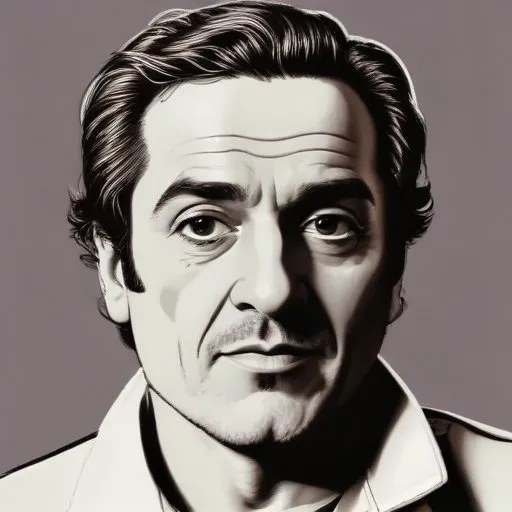
Noted Italian filmmaker behind neorealist classics like "The Mill on the Po" and "Variety Lights", known for his poetic and socially conscious storytelling style.
Renowned Italian film director Alberto Lattuada is best known for his provocative and thought-provoking films that delved into the complexities of human relationships, societal norms, and the intricacies of the human psyche. With a career spanning over four decades, Lattuada's oeuvre is a testament to his innovative storytelling and cinematic mastery.
Born on November 13, 1914, in Vaprio d'Adda, Italy, Lattuada was the son of celebrated composer Felice Lattuada. Growing up in a family steeped in artistic traditions, Lattuada's fascination with literature and cinema was nurtured from a young age. Despite his father's initial reservations, Lattuada's passion for filmmaking eventually won out, leading him to pursue a career behind the lens.
Lattuada's foray into the film industry began as a screenwriter and assistant director on Mario Soldati's Piccolo mondo antico (Old-Fashioned World) in 1940. This early experience laid the groundwork for his future collaborations with esteemed directors, including Federico Fellini, with whom he co-directed Luci del Varietà (Variety Lights) in 1950.
Lattuada's directorial debut, Giacomo l'idealista (1943), marked the beginning of his illustrious career. His films often explored the human condition, delving into themes of love, identity, and social conformity. La steppa (1962), his critically acclaimed film, was entered into the 12th Berlin International Film Festival, cementing his reputation as a visionary filmmaker.
Lattuada's contributions to the film industry were recognized through several accolades, including his role as a member of the jury at the 20th Berlin International Film Festival in 1970. His film, Stay As You Are, was theatrically released in the United States in 1979, further solidifying his international reputation.
Lattuada was married to actress Carla Del Poggio, and together they shared a life filled with love, art, and a deep commitment to their craft. Lattuada passed away on July 3, 2005, at the age of 90, leaving behind a legacy of thought-provoking films that continue to inspire and captivate audiences today. He was laid to rest in his family's chapel in the cemetery of Morimondo, surrounded by the love and adoration of his family and friends.
Alberto Lattuada's life and work serve as a testament to his unwavering passion for storytelling, his innovative approach to filmmaking, and his enduring legacy in the world of cinema. As we reflect on his remarkable journey, we are reminded of the transformative power of art to inspire, to provoke, and to endure.
Born in 1920
Visionary filmmaker behind surreal, poetic, and deeply personal cinematic masterpieces that blur the lines between reality and fantasy.
Born in 1912
A pioneering filmmaker who explored the human condition through visually stunning and psychologically complex movies, often focusing on alienation and social isolation.
Born in 1901
A renowned filmmaker and actor, known for directing poignant, neorealist classics like "Bicycle Thieves" and "Umberto D.", which still influence world cinema today.
Born in 1906
Pioneering filmmaker behind neorealist classics like "Rome, Open City" and "Paisan", known for gritty, socially conscious storytelling that influenced generations of directors.
Born in 1906
Acclaimed Italian filmmaker renowned for lavish, visually stunning productions that often explored themes of social class, morality, and the human condition. His cinematic masterpieces continue to influence filmmakers today.
Born in 1858
A Neapolitan painter of historical and mythological scenes, known for his dramatic and emotionally charged works that often featured intense lighting and vivid colors.
