


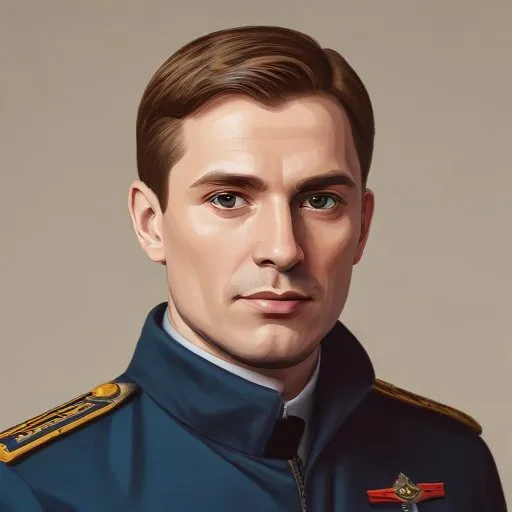
Russian pilot, explorer, and author who wrote about his adventures and experiences, including being one of the first to explore the Arctic by air. His writings are considered classics of Russian literature.
Aleksandr Ivanovich Kuprin, a luminary of Russian literature, is renowned for his poignant and evocative works that capture the essence of the human experience. As a leading figure of the Silver Age of Russian literature, Kuprin's writings are a testament to his profound insight into the intricacies of the human condition, earning him a place alongside literary giants like Tolstoy and Chekhov.
Born on August 26, 1870, in Narovchat, Penza Governorate, Russian Empire, Kuprin's childhood was marked by poverty and hardship. His father, a minor government official, struggled to provide for the family, and Kuprin's early years were spent in a constant struggle for survival. This tumultuous background would later shape his writing, imbuing it with a deep sense of empathy and understanding for the downtrodden.
Kuprin's literary debut came in 1892 with the publication of his first short story, Pomegranate Seeds. The work was met with critical acclaim, and he soon became a prominent figure in Russia's literary circles. His subsequent works, including The Duel (1905) and The Pit (1915), solidified his reputation as a master of psychological realism.
Kuprin's writing was deeply influenced by his philosophical outlook, which emphasized the importance of individual freedom and the human condition. He believed that literature should serve as a reflection of life, rather than a means of escaping it. This philosophy is evident in his works, which often explore themes of morality, spirituality, and the search for meaning.
Some of Kuprin's most notable works include:
Kuprin's influence on modern Russian literature is immeasurable. His works have inspired generations of writers, including esteemed authors like Vladimir Nabokov and Andrei Bely. His commitment to literary realism and his courageous exploration of social issues have made him a benchmark for literary excellence.
Kuprin's life was marked by both triumph and tragedy. He was forced to flee Russia in 1919, following the Bolshevik Revolution, and spent the remainder of his life in exile. Despite this, he continued to write, producing some of his most remarkable works in the twilight of his career.
Aleksandr Kuprin's legacy extends far beyond his own literary achievements. He has left an indelible mark on Russian literature, paving the way for future generations of writers. His commitment to realism, his empathetic portrayal of the human experience, and his tireless advocacy for individual freedom have cemented his place as one of the greatest writers of the 20th century.
Kuprin's story serves as a testament to the transformative power of literature, and his works continue to captivate readers to this day. As we delve into the complexities of his life and works, we are reminded of the profound impact he has had on the world of literature, and the enduring legacy he leaves behind.
Born in 1860
A renowned Russian literary mastermind, celebrated for crafting poignant, psychologically nuanced tales that probe the human condition, and pioneering the modern short story genre.
Born in 1828
A Russian literary giant who penned sweeping novels like "War and Peace" and "Anna Karenina", exploring the human condition with profound insight and masterful storytelling.
Born in 1821
A Russian literary mastermind who penned psychologically complex novels that probed the human condition, exploring themes of morality, philosophy, and the darker aspects of human nature.
Born in 1891
A Russian literary mastermind, famous for blending fantasy and realism in works like "The Master and Margarita", which explores the intersection of politics, philosophy, and the human condition.
Born in 1899
A Russian-born novelist and critic, renowned for crafting intricate, lyrical prose and exploring themes of identity, morality, and the human condition through works like "Lolita" and "Pale Fire".
Born in 1870
A Russian literary master, celebrated for his poignant and evocative short stories that captured the essence of rural Russia, earning him the Nobel Prize in Literature in 1933.
Born in 1880
A Russian literary giant, known for pioneering the avant-garde movement in literature, blending poetry and prose to create innovative, symbolic works that explored the human experience.
