


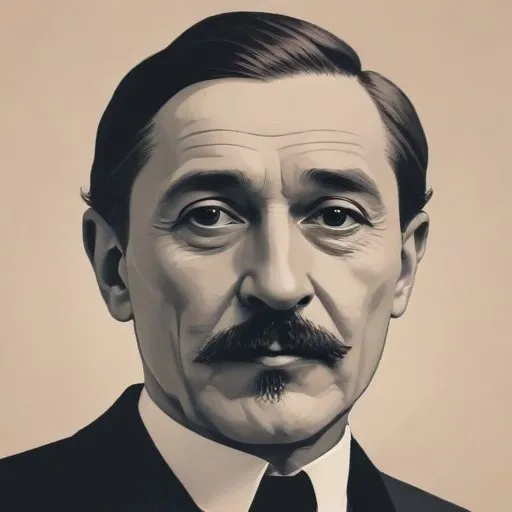
A Russian literary master, celebrated for his poignant and evocative short stories that captured the essence of rural Russia, earning him the Nobel Prize in Literature in 1933.
Ivan Alekseyevich Bunin, renowned Russian poet, novelist, and essayist, made history by becoming the first Russian writer to receive the Nobel Prize in Literature in 1933. His literary mastery, characterized by strict artistry, carried forward the classical Russian traditions in prose and poetry, earning him the esteemed title of a true heir to the tradition of realism in Russian literature established by Tolstoy and Chekhov.
Born on October 22, 1870, in Voronezh province, Bunin was the third and youngest son of Aleksey Nikolayevich Bunin and Lyudmila Aleksandrovna Bunina. He came from a long line of rural gentry, boasting a rich literary heritage, with poets Anna Bunina and Vasily Zhukovsky among his ancestors.
Bunin's literary journey began with his poetry, which was heavily influenced by the Russian Symbolism movement. However, it was his prose that brought him widespread recognition. His notable works include:
The Nobel Committee recognized Bunin's contributions to Russian literature, praising his "strict artistry" and "the rich, epic style" of his works. This prestigious award not only cemented his position as a revered figure among Russian émigrés, European critics, and fellow writers but also solidified his legacy as a master of Russian literature.
Bunin's personal life was marked by turmoil, particularly during the Russian Revolution, which forced him to flee his homeland. He eventually settled in France, where he continued to write until his passing on November 8, 1953. Despite the challenges he faced, Bunin remained dedicated to his craft, leaving behind a rich cultural heritage that continues to inspire writers and readers alike.
Bunin's literary works often reflected his philosophical views on life, humanity, and the role of art in society. He believed in the importance of preserving traditional Russian culture and values, which he saw as essential to the country's identity. His writing also explored the themes of morality, spirituality, and the human condition, earning him a reputation as a profound thinker and literary mastermind.
Bunin's literary legacy extends beyond the realm of Russian literature, influencing writers and artists across the globe. His commitment to preserving cultural heritage and promoting the importance of art in society continues to inspire generations of creatives. His works have been translated into numerous languages, ensuring his message of hope, morality, and artistic excellence reaches a diverse audience.
"The most precious thing in life is the thing that cannot be bought – the beauty of the world, the beauty of life, the beauty of the human soul."
Bunin's life and literary career were intricately linked to the tumultuous events of the early 20th century, including the Russian Revolution and World War I. Despite the challenges he faced, he remained steadfast in his commitment to his craft, leaving behind a body of work that continues to captivate readers and inspire writers. His legacy serves as a testament to the transformative power of art, ensuring his place as one of the most significant literary figures of the 20th century.
Born in 1828
A Russian literary giant who penned sweeping novels like "War and Peace" and "Anna Karenina", exploring the human condition with profound insight and masterful storytelling.
Born in 1821
A Russian literary mastermind who penned psychologically complex novels that probed the human condition, exploring themes of morality, philosophy, and the darker aspects of human nature.
Born in 1860
A renowned Russian literary mastermind, celebrated for crafting poignant, psychologically nuanced tales that probe the human condition, and pioneering the modern short story genre.
Born in 1899
A Russian-born novelist and critic, renowned for crafting intricate, lyrical prose and exploring themes of identity, morality, and the human condition through works like "Lolita" and "Pale Fire".
Born in 1880
A Russian literary giant, known for pioneering the avant-garde movement in literature, blending poetry and prose to create innovative, symbolic works that explored the human experience.
Born in 1892
A Russian poet and author who poured her heart into lyrical verses, exploring themes of love, nature, and the human condition. Her works are a testament to her intense emotional depth and poetic genius.
Born in 1890
A Russian literary giant, renowned for his poetic and novelistic masterpieces, including the epic "Doctor Zhivago", which captured the essence of Soviet Russia. His works are a testament to the power of literature in shaping cultural identity.
Born in 1893
A Russian avant-garde artist who revolutionized poetry and theater with his bold, futuristic style and passionate performances. He's most famous for his vibrant, propaganda-inspired posters and poems that captured the spirit of the Russian Revolution.
