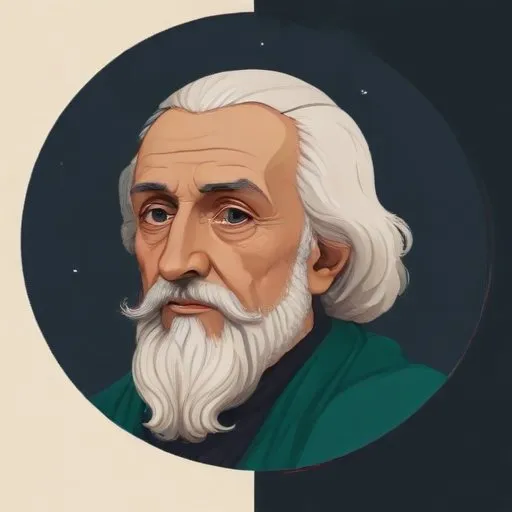
Alessandro Piccolomini: A Renaissance Scholar and Polymath
A Life of Intellectual Pursuits
Alessandro Piccolomini, a luminary of the 16th century, is celebrated for his groundbreaking contributions to the realms of humanism, astronomy, and philosophy. As a prolific writer, translator, and educator, Piccolomini devoted his life to the popularization of Latin and Greek scientific and philosophical treatises, making them accessible to a broader audience through the vernacular.
Literary Production and Translations
Piccolomini's literary output was marked by an impressive array of translations from the Classics. His early endeavors include the rendering of Book XIII of Ovid's Metamorphoses and Book VI of the Aeneid. These translations not only showcased his mastery of ancient languages but also facilitated the dissemination of classical knowledge among the masses.
Poetry and the Petrarchan Tradition
In addition to his translations, Piccolomini was a skilled poet who adhered to the Petrarchan tradition. His poetic works, initially featured in various contemporary collections, were later compiled into a single volume titled Cento sonetti (1549), comprising one hundred sonnets.
Astronomical Contributions and Theories
Piccolomini's most notable contributions to astronomy can be found in his treatises Sfera del mondo e De le stelle fisse (The Sphere of the World and The Fixed Stars) published in 1540. These works exemplify his adherence to Ptolemaic theories and contain what is regarded as the first printed star atlas, comprising charts of 47 of the 48 Ptolemaic constellations.
Challenging Aristotelian and Ptolemaic Views
In his treatise Trattato della grandezza della terra e dell'acqua (1558), Piccolomini boldly opposed the Aristotelian and Ptolemaic notion that water was more extensive than land. This divergent perspective showcases his willingness to question established theories and engage in intellectual debates.
Influence and Legacy
Through his extensive body of work, Piccolomini left an indelible mark on the intellectual landscape of the 16th century. His efforts to popularize classical knowledge and challenge prevailing theories have had a lasting impact on the development of various fields, including astronomy, philosophy, and literature.
Mentorship and Academic Pursuits
Piccolomini's involvement in the Infiammati Academy, which he helped establish in 1540, allowed him to share his knowledge with students and engage in philosophical debates. Although he never taught at the University of Padua, his influence extended beyond the academy, inspiring future generations of scholars.
Personal Life and Later Years
In his later years, Piccolomini retreated to his sister-in-law's Villa of Poggiarello, near Siena, where he dedicated himself to revising his earlier works and composing new treatises. It was during this period that he produced his notable translation of Aristotle's Poetics, accompanied by a learned commentary, published in 1575.
Conclusion
Alessandro Piccolomini's multifaceted persona, characterized by his intellectual curiosity, linguistic prowess, and passion for knowledge, has left an enduring legacy in the annals of Renaissance history. As a true polymath, his contributions continue to inspire scholars and thinkers to this day.
FAQ
What were Alessandro Piccolominis contributions to astronomy?
Alessandro Piccolomini made significant contributions to astronomy, including the discovery of three comets and the observation of a lunar eclipse. He also wrote several books on astronomy and was a strong advocate for the Copernican heliocentric model.
What was Alessandro Piccolominis role in the Counter-Reformation?
Alessandro Piccolomini was a strong supporter of the Counter-Reformation and played a key role in promoting Catholicism in Italy. He was a member of the Jesuit order and served as a bishop and archbishop.
What were Alessandro Piccolominis philosophical views?
Alessandro Piccolomini was a philosopher who wrote extensively on metaphysics, ethics, and politics. He was influenced by Aristotelianism and was critical of the views of Galen and other ancient philosophers.
What was Alessandro Piccolominis relationship like with other intellectuals?
Alessandro Piccolomini was a respected figure among his contemporaries and corresponded with other prominent intellectuals, including Galileo Galilei. He was known for his erudition and his ability to engage in lively debates.
What is Alessandro Piccolominis legacy today?
Alessandro Piccolominis legacy today is as a pioneering astronomer and philosopher who contributed significantly to our understanding of the universe. He is remembered as a dedicated scholar and a strong advocate for the Catholic faith.