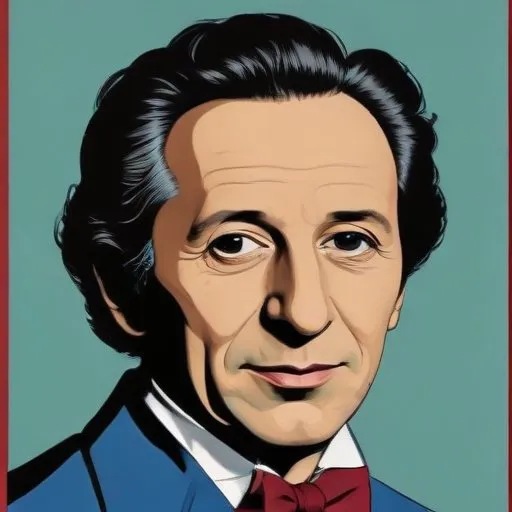
Alexander Goehr: The Maestro of Musical Innovation
A Pioneering Composer and Academic
Alexander Goehr is a renowned English composer and academic, celebrated for his remarkable contributions to the world of classical music. As a central figure in the Manchester School of post-war British composers, Goehr has left an indelible mark on the musical landscape with his innovative and eclectic style.
Early Life and Influences
Born on August 10, 1932, in Berlin, Germany, Goehr was destined to follow in the footsteps of his musical family. His father, Walter Goehr, was a conductor and composer, and a pupil of the illustrious
Arnold Schoenberg. This rich cultural heritage exposed Alexander to the works of some of the most prominent composers of the time, including
Olivier Messiaen, with whom he later studied.
Artistic Journey
Goehr's artistic journey began in the 1950s, when he emerged as a prominent figure in the Manchester School of composers. During this period, he developed a distinct style that blended elements of serialism, minimalism, and tonal music. His early works, such as the Piano Trio (1966) and the opera
Arden Must Die (1966), showcased his unique ability to merge disparate musical traditions.
Messiaen's Influence and the Parisian Connection
In 1955-56, Goehr attended Messiaen's masterclass in Paris, where he was deeply influenced by the French composer's innovative approach to modern classical music. This experience had a profound impact on Goehr's compositional style, which began to exhibit a distinctive blend of serialism and Messiaen's characteristic use of bird calls and melodic motifs.
Major Works and Career Highlights
- Triptych (1968-70): A groundbreaking music-theatre piece that showcased Goehr's ability to merge music, drama, and visual arts.
- Metamorphosis/Dance (1974): An orchestral work that exemplified Goehr's use of serialism and his unique approach to harmony and rhythm.
- String Quartet No. 3 (1975-76): A work that demonstrated Goehr's mastery of chamber music and his ability to balance intellect and emotion.
- Psalm IV (1976): A luminous setting of a biblical psalm, characterized by Goehr's use of white notes and a more traditional approach to composition.
Legacy and Impact
Throughout his career, Goehr has been recognized for his innovative contributions to classical music. His unique approach to composition has inspired a generation of composers, and his influence can be seen in the works of many contemporary musicians. As a teacher and academic, Goehr has also played a significant role in shaping the musical landscape, mentoring students at Cambridge University and other institutions.
Awards and Honors
Goehr's achievements have been acknowledged through numerous awards and honors, including the Hesse Prize (1976), the Royal Philharmonic Society Prize (1988), and an honorary doctorate from the University of Cambridge (1994).
A Lasting Legacy
As a composer, academic, and innovator, Alexander Goehr has left an indelible mark on the world of classical music. His unique blend of traditional and modern elements has inspired generations of musicians, and his influence will continue to be felt for years to come. As we celebrate his remarkable contributions, we are reminded of the power of music to transcend boundaries and touch the human spirit.
FAQ
What kind of music did Alexander Goehr compose?
Alexander Goehr composed a wide range of music, including orchestral works, chamber music, and opera, often incorporating elements of serialism and atonality.
What was Alexander Goehrs educational background?
Alexander Goehr studied composition at the Royal Manchester College of Music and later at the Paris Conservatoire, where he was influenced by prominent composers such as Olivier Messiaen.
How did Alexander Goehrs father influence his music?
Alexander Goehrs father, Walter Goehr, was a composer and conductor, and his influence can be heard in Alexanders early work, which often explored themes of lyricism and tonality.
What awards did Alexander Goehr receive for his music?
Alexander Goehr received several awards for his compositions, including the Royal Philharmonic Society Award and the British Composer Award.
What was Alexander Goehrs teaching career like?
Alexander Goehr taught composition at several institutions, including the Royal College of Music and Cambridge University, where he mentored many prominent composers.