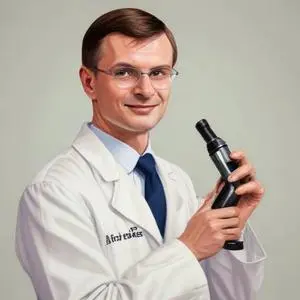
Alexander Prokhorov: The Visionary Physicist Behind the Nobel Prize in Physics
A Trailblazing Career in Laser Research
Alexander Prokhorov is renowned for his groundbreaking research on lasers and masers, which led to the Nobel Prize in Physics in 1964, shared with
Charles Hard Townes and
Nikolay Basov. This Russian physicist's pioneering work in the former Soviet Union revolutionized the field of quantum electronics, paving the way for numerous innovations in modern technology.
Early Life and Education
Born on July 11, 1916, in Queensland, Australia, to Russian revolutionary parents, Mikhail Ivanovich Prokhorov and Maria Ivanovna, Alexander Prokhorov's early life was marked by a strong passion for learning. He attended Butchers Creek State School and later returned to Russia with his family in 1923, following the Russian Civil War. Prokhorov's educational pursuits took him to Saint Petersburg State University, where he graduated with honors in 1939, specializing in physics.
War and Research: A Path to Discovery
During World War II, Prokhorov served in the Red Army, was wounded twice, and received three medals, including the Medal For Courage in 1946. After demobilization in 1944, he resumed his research at the Lebedev Physical Institute in Moscow, where he defended his Ph.D. thesis on the theory of stabilization of frequency of a tube oscillator in 1946.
Breakthroughs in Coherent Radiation and Maser Development
Prokhorov's research took a significant turn in 1947, as he began exploring coherent radiation emitted by electrons orbiting in a cyclic particle accelerator called a synchrotron. His findings, which demonstrated the concentration of emission in the microwave spectral range, laid the foundation for his future work on masers and lasers.
The Nobel Prize and Its Impact
The Nobel Prize in Physics, awarded to Prokhorov in 1964, recognized his outstanding contributions to the development of masers and lasers. This prestigious honor not only acknowledged his research but also highlighted the immense potential of quantum electronics in transforming various fields, from medicine to telecommunications.
Legacy and Influence
Prokhorov's seminal work has inspired generations of physicists, engineers, and researchers, shaping the course of modern technology. His legacy extends beyond the realm of science, as his discoveries have enabled numerous innovations, improving the lives of people worldwide.
Personal Milestones and Key Life Events
- 1916: Born in Queensland, Australia, to Russian revolutionary parents
- 1923: Returned to Russia with his family
- 1939: Graduated with honors from Saint Petersburg State University
- 1944: Demobilized from the Red Army
- 1946: Defended Ph.D. thesis
- 1947: Began researching coherent radiation and maser development
- 1964: Awarded the Nobel Prize in Physics
- 2002: Passed away on January 8
Prokhorov's remarkable life, marked by dedication, perseverance, and groundbreaking research, serves as a testament to the power of human ingenuity and the boundless potential of scientific discovery.
FAQ
What was Alexander Prokhorovs Nobel Prize-winning research?
Alexander Prokhorov was a Russian-Australian physicist and academic who was awarded the Nobel Prize in Physics in 1964 for his pioneering work on masers and lasers.
How did Alexander Prokhorovs research impact the development of lasers?
Prokhorovs work on masers and lasers laid the foundation for the development of modern laser technology, with applications in fields such as medicine, telecommunications, and manufacturing.
What was Alexander Prokhorovs academic background like?
Born in 1916, Prokhorov studied physics at the University of Leningrad and later earned his Ph.D. from the same institution. He taught at several institutions, sharing his knowledge with students.
What were Alexander Prokhorovs most notable scientific contributions?
Throughout his career, Prokhorov made significant contributions to the fields of quantum mechanics, optics, and laser technology, earning recognition for his innovative research.
How is Alexander Prokhorov remembered in the scientific community?
Alexander Prokhorov is remembered as a groundbreaking physicist who revolutionized our understanding of light and its applications. His Nobel Prize-winning research continues to inspire new generations of scientists.