


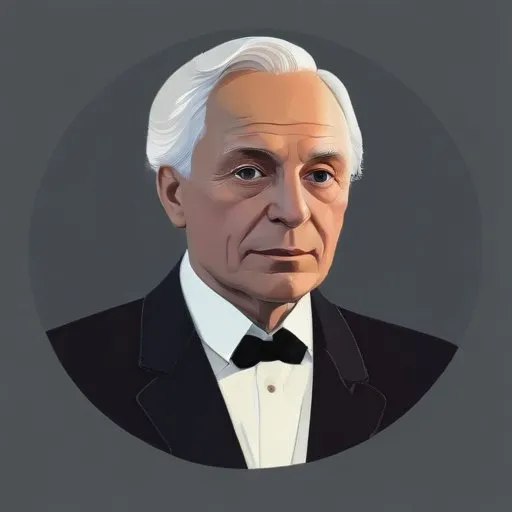
Developed a theory of quantum gravity and made significant contributions to the field of cosmology, including the discovery of dark matter.
Alexander V. Zakharov is a renowned Soviet and Russian chief scientist and astronomer, best known for his leadership in Russia's ambitious Mars exploration projects, including the ill-fated Mars 96 and FobosGrunt missions.
Zakharov's unwavering dedication to space exploration has spanned over five decades. In 1999, he became the project scientist for the feasibility of the FobosGrunt sample return mission, which aimed to retrieve soil samples from Phobos, a moon of Mars. Although the mission ultimately failed, Zakharov's resolve remained unbroken.
Just three days after the Mars 96 mission's demise, Zakharov pinpointed the flaw in the spacecraft's control system, paving the way for future improvements. This unrelenting drive has earned him a reputation as a pioneer in Russia's space research community.
Zakharov's contributions to the field of space exploration have been recognized through his membership in The Planetary Society's Living Interplanetary Flight Experiment team and his involvement in the Asia Oceania Geosciences Society AGU WPGM Joint Assembly.
Zakharov's tireless efforts have propelled Russia's space program forward, inspiring a new generation of scientists and engineers. His work has also fostered international collaboration, as evident in the agreement with the European Space Agency on ExoMars.
Zakharov's passion for exploring the unknown is rooted in his conviction that space research holds the key to unlocking the secrets of the solar system's origins. He believes that by pushing the boundaries of space exploration, humanity can gain a deeper understanding of its place in the universe.
Born on June 1, 1941, Zakharov's journey in space research began at the Russian Space Research Institute IKI, where he has spent most of his career. His remarkable career has been marked by perseverance, innovation, and a relentless pursuit of knowledge.
In the aftermath of the FobosGrunt failure, Zakharov poignantly remarked, "This crash was a tragedy for the Russian scientific community." His words reflect the depth of his commitment to his craft and the significance of his work.
Alexander V. Zakharov's unwavering dedication to space exploration has left an indelible mark on the field. His contributions will continue to inspire future generations of scientists, engineers, and explorers, propelling humanity further into the vast expanse of space.
As we look to the stars, we are reminded of Zakharov's indomitable spirit and his tireless pursuit of the unknown. His legacy serves as a beacon, guiding us towards a future where humanity may one day unlock the secrets of the universe.
Born in 1916
A Soviet physicist who made groundbreaking contributions to the theory of superconductivity and superfluidity, earning him the Nobel Prize in Physics in 2003.
Born in 1921
A Soviet physicist and dissident who advocated for human rights and nuclear disarmament, earning a Nobel Peace Prize in 1975. He's known for his courageous stance against the Soviet regime, promoting peace and democracy.
Born in 1908
A renowned physicist and academic who made groundbreaking contributions to our understanding of quantum mechanics, superfluidity, and particle physics, earning a Nobel Prize in Physics in 1962.
Born in 1894
A Soviet physicist who discovered superfluidity and made significant contributions to the study of low-temperature physics, earning him a Nobel Prize in Physics in 1978.
Born in 1895
A Soviet physicist who developed the concept of the "tokamak," a device used to confine and study plasmas at extremely high temperatures, leading to advancements in nuclear fusion research.
Born in 1909
Developed mathematical methods for quantum field theory and made significant contributions to the development of theoretical physics, particularly in the areas of statistical mechanics and quantum mechanics.
Born in 1907
A pioneering rocket engineer and designer who played a crucial role in the Soviet space program, developing the R-7 rocket that launched Sputnik and sent humans into space.
