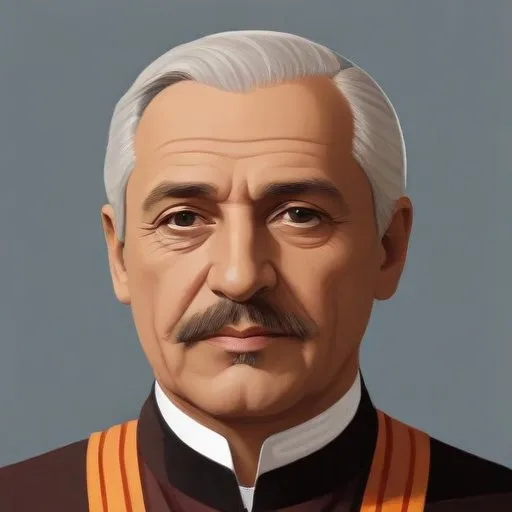
Alexander von Stal-Holstein: Unveiling the Life and Legacy of a Renowned Orientalist
A Trailblazer in the Realm of Sanskrit and Buddhist Studies
Alexander von Stal-Holstein, a Baltic German aristocrat, left an indelible mark on the world of orientalism, sinology, and Sanskritology. As a specialist in Buddhist texts, he delved into the depths of ancient languages, unraveling the mysteries of Prakrit and Sanskrit, and contributing significantly to the understanding of Eastern cultures.
Early Life and Education
Born on January 1, 1877, in Testama Manor, Livonia, Russian Empire (present-day Estonia), Alexander was raised in an aristocratic family with widespread connections in German Baltic provinces, Sweden, and Northern Germany. Home-schooled during his childhood, he later attended a Gymnasium in Pernau (now Pärnu) and pursued higher education at the University of Dorpat (Tartu), where he majored in comparative philology.
Academic Pursuits and Milestones
After graduating, Alexander traveled to Germany to study oriental languages at the University of Berlin. In 1900, he earned his doctorate from the University of Halle-Wittenberg with his dissertation
Der Karmapradipa, II. Prapthaka, a seminal work that demonstrated his expertise in Sanskrit and Buddhist studies. This achievement was followed by a prestigious appointment as an assistant professor of Sanskrit at the University of St. Petersburg in 1909.
Travels and Collaborations
Alexander's thirst for knowledge led him to travel extensively, studying with renowned scholars in Germany, England, and India. He collaborated with prominent orientalists, including Richard Pischel, the leading expert on Prakrit and head of the Deutsche Morgenländische Gesellschaft. These interactions further enriched his understanding of Eastern cultures and languages.
Philosophical Contributions and Legacy
Alexander von Stal-Holstein's work had a profound impact on the study of Buddhist texts, particularly the Karmapradipa, a key Buddhist scripture. His research and translations provided valuable insights into the philosophy and practice of Buddhism, enriching the understanding of Eastern thought and culture. His legacy continues to inspire scholars and researchers in the field of orientalism and Sanskritology.
Personal Milestones and Key Life Events
Alexander's life was marked by several significant events, including his inheritance of the family estate in Testama and the baronage in his second year in Berlin. He was also involved in a duel in Berlin, which he survived, according to Prussian public records of 1898.
Influence on Modern Society
Alexander von Stal-Holstein's contributions to the field of orientalism have had a lasting impact on modern society. His work has facilitated a deeper understanding of Eastern cultures and philosophies, promoting cross-cultural exchange and fostering greater appreciation for the diversity of human experience.
Timeline of Major Works and Events
- 1877: Born on January 1 in Testama Manor, Livonia, Russian Empire (present-day Estonia)
- 1898: Involved in a duel in Berlin, Prussia
- 1900: Earned doctorate from the University of Halle-Wittenberg with dissertation Der Karmapradipa, II. Prapthaka
- 1909: Appointed assistant professor of Sanskrit at the University of St. Petersburg
- 1937: Passed away on March 16 in Beiping, China
Remembering a Scholar and a Gentleman
Alexander von Stal-Holstein's life was a testament to his passion for knowledge, his dedication to his craft, and his contributions to the field of orientalism. As we reflect on his remarkable journey, we are reminded of the importance of cultural exchange, intellectual curiosity, and the pursuit of wisdom.
FAQ
What were Alexander von Staël-Holsteins contributions to sinology?
Alexander von Staël-Holstein was a renowned sinologist and orientalist who made significant contributions to the study of Chinese language, literature, and culture.
What was Alexander von Staël-Holsteins educational background?
Alexander von Staël-Holstein studied at the University of Berlin and later at the University of Leipzig, where he earned his PhD in sinology.
How did Alexander von Staël-Holsteins work impact the field of Oriental studies?
Alexander von Staël-Holsteins research and translations of Chinese texts greatly expanded the understanding of Chinese culture and literature in the West, paving the way for future generations of scholars.
What were Alexander von Staël-Holsteins areas of expertise in sinology?
Alexander von Staël-Holstein was an expert in Chinese poetry, literature, and philology, and made significant contributions to the study of these areas.
What was Alexander von Staël-Holsteins legacy in the field of Oriental studies?
Alexander von Staël-Holsteins legacy in the field of Oriental studies is marked by his dedication to promoting the understanding and appreciation of Chinese culture and language in the West.