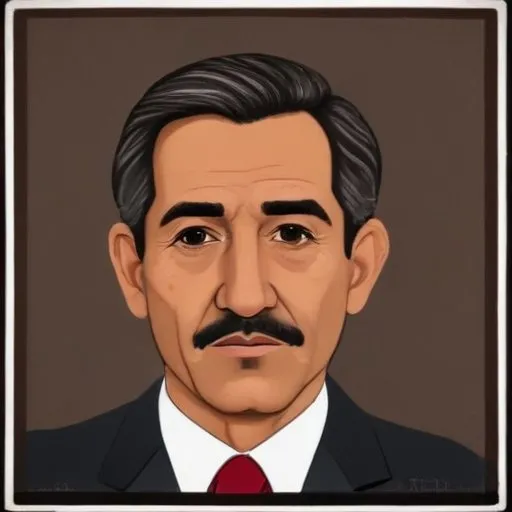
Alfonso Garca Robles: The Visionary Behind Nuclear-Free Zones
Breaking Ground in International Diplomacy
Alfonso Garca Robles, a Mexican diplomat and politician, made history in 1982 by receiving the Nobel Peace Prize, alongside Sweden's
Alva Myrdal. This prestigious honor recognized his tireless efforts in establishing a nuclear-free zone in Latin America and the Caribbean, a groundbreaking achievement that would leave a lasting impact on global politics.
The Early Years and Education
Born on March 20, 1911, in Zamora, Michoacn, Mexico, Garca Robles embarked on an academic journey that would equip him for a lifetime of diplomatic service. He studied law at the National Autonomous University of Mexico (UNAM) and later attended the Institute of Higher International Studies (IHEI) in Paris, France, in 1936. In 1938, he expanded his expertise by attending The Hague Academy of International Law in the Netherlands.
A Career of International Service
Garca Robles' dedication to diplomacy began in 1939, when he joined Mexico's foreign service. His early assignments included serving as a delegate to the 1945 San Francisco Conference, which laid the foundation for the United Nations. This experience set the stage for his future endeavors, as he represented Mexico in various capacities, including ambassador to Brazil from 1962 to 1964 and state secretary to the ministry of foreign affairs from 1964 to 1970.
Shaping International Agreements
As Mexico's permanent representative to the United Nations, Garca Robles played a pivotal role in shaping international agreements. His crowning achievement came in 1967, when he spearheaded the Treaty of Tlatelolco, establishing a nuclear-free zone in Latin America and the Caribbean. This historic agreement, signed by most states in the region, cemented Garca Robles' legacy as a champion of peace and disarmament.
Honors and Legacy
Garca Robles' contributions did not go unnoticed. He was admitted to the prestigious Colegio Nacional of Mexico in 1972 and posthumously honored in 2003, when his name was inscribed on the Wall of Honor of the Palacio Legislativo de San Lzaro, the seat of the Chamber of Deputies. His widow passed away in 2005, at the age of 83.
Awards and Recognition
- Commander of the Order of the Southern Cross (Brazil)
- Grand Cross of the Order of the Aztec Eagle (Mexico)
- Grand Cross of the Order of the Sun of Peru (Peru)
Final Thoughts
Alfonso Garca Robles' unwavering commitment to diplomacy, disarmament, and international cooperation has left an indelible mark on the world stage. As we reflect on his remarkable life, we are reminded of the power of vision, perseverance, and collaboration in shaping a more peaceful and harmonious world.
FAQ
What was Alfonso García Robles contribution to international relations?
Alfonso García Robles was a prominent diplomat and lawyer who made significant contributions to international relations, particularly in the areas of disarmament and international security. He was a key figure in the development of the Treaty on the Prohibition of Nuclear Weapons in Latin America.
How did Alfonso García Robles background influence his work?
Alfonso García Robles background as a Mexican lawyer and diplomat heavily influenced his work, with his experiences in international law and diplomacy shaping his perspective on global affairs.
What was Alfonso García Robles approach to diplomacy?
Alfonso García Robles was known for his collaborative and consensus-driven approach to diplomacy, which emphasized the importance of international cooperation and dialogue in resolving global conflicts.
What was Alfonso García Robles role in the development of the Treaty on the Prohibition of Nuclear Weapons in Latin America?
Alfonso García Robles played a key role in the development of the Treaty on the Prohibition of Nuclear Weapons in Latin America, working closely with governments and international organizations to negotiate and implement the treaty.
What legacy did Alfonso García Robles leave in the field of international relations?
Alfonso García Robles legacy in the field of international relations is that of a pioneering figure who advanced our understanding of international security and disarmament. His work continues to influence international relations and global affairs today.