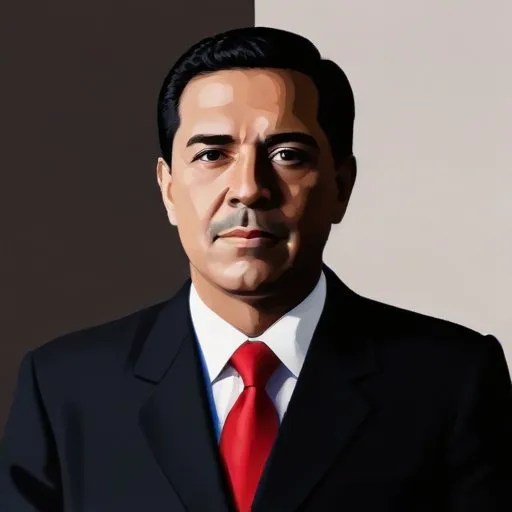
Rafael Caldera: The Architect of Venezuelan Democracy
A Legacy of Peaceful Transitions and Christian Democratic Values
Rafael Caldera, a Venezuelan politician and academician, is renowned for his remarkable presidency, which spanned two five-year terms (1969-1974 and 1994-1999), making him the longest-serving democratically elected leader to govern Venezuela in the 20th century. During his tenure, he orchestrated the first peaceful transfer of power to the opposition in Venezuela's history, establishing him as one of the founders of the country's democratic system.
Youth and Education
Born on January 24, 1916, in San Felipe, Venezuela, Caldera's early life was marked by tragedy when his mother passed away when he was just two and a half years old. He was raised by his maternal aunt and uncle, who instilled in him the values of education and hard work. Caldera attended elementary school in San Felipe and later in Caracas, at the Jesuit-run Catholic school San Ignacio de Loyola, where he completed his secondary education at the age of fifteen. He then began law studies at the Central University of Venezuela, showcasing his intellectual brilliance from a young age.
Early Achievements and Political Rise
As a young university student, Caldera demonstrated a keen interest in politics, and at the age of nineteen, he became involved in the student movement, which eventually led to his involvement in the founding of the Venezuelan Christian Democratic Party (COPEI) in 1946. He played a pivotal role in drafting the 1961 Constitution, which enshrined democratic values and human rights in Venezuela.
Presidential Tenure and Democratic Reforms
Caldera's first presidential term (1969-1974) was marked by significant democratic reforms, including the establishment of a national electoral council, the creation of a constitutional chamber, and the promotion of participatory democracy. His leadership enabled Venezuela to transition from a military-dominated regime to a democratic system, earning him international recognition as a champion of democracy.
Second Presidential Term and Economic Reforms
During his second term (1994-1999), Caldera focused on economic reforms, implementing measures to address hyperinflation, stabilize the economy, and promote foreign investment. He also played a key role in resolving the country's banking crisis, restoring confidence in the financial system, and promoting social welfare programs.
Philosophical Contributions and Beliefs
Caldera's Christian Democratic values were deeply rooted in his philosophy, which emphasized social justice, equality, and human dignity. He believed in the importance of dialogue, consensus-building, and democratic participation, principles that guided his political actions throughout his career.
Awards and Honors
Caldera received numerous awards and honors for his contributions to democracy and human rights, including the Prince of Asturias Award for International Cooperation (1997) and the
Félix Houphouët-Boigny Peace Prize (1995).
Personal Milestones and Key Life Events
- In 1939, Caldera graduated with a degree in law and political science from Central University of Venezuela.
- In 1946, he co-founded the Venezuelan Christian Democratic Party (COPEI).
- In 1969, he became the President of Venezuela for the first time.
- In 1994, he was re-elected as President of Venezuela for his second term.
- On December 24, 2009, Caldera passed away at the age of 93, leaving behind a legacy of democratic values and social justice.
Legacy and Historical Context
Rafael Caldera's remarkable legacy has had a lasting impact on Venezuelan politics, establishing the country as a beacon of democracy in Latin America. His commitment to democratic values, social justice, and human rights has inspired generations of Venezuelans and international leaders alike. As one of the founders of Venezuela's democratic system, Caldera's influence continues to shape the country's politics and society, ensuring his place as one of the most important figures in Venezuelan history.
FAQ
What was Rafael Calderas role in Venezuelan politics?
Rafael Caldera was a Venezuelan lawyer and politician who served as the 65th President of Venezuela, leading the country through a period of significant economic and political change.
What were Rafael Calderas key accomplishments?
During his presidency, Rafael Caldera implemented reforms aimed at stabilizing the Venezuelan economy, restructured the countrys debt, and strengthened democratic institutions.
How did Rafael Caldera respond to the Venezuelan economic crisis?
Rafael Calderas administration implemented austerity measures, introduced economic reforms, and renegotiated foreign debt to address the deepening economic crisis in Venezuela.
What is Rafael Calderas legacy in Venezuelan politics?
Rafael Calderas presidency marked a significant turning point in Venezuelan history, as he worked to consolidate democracy, promote economic stability, and strengthen institutions.
How did Rafael Calderas presidency impact Venezuelan society?
Rafael Calderas commitment to social justice and his efforts to address poverty and inequality helped to shape the course of Venezuelan social policy and left a lasting impact on the countrys development.