


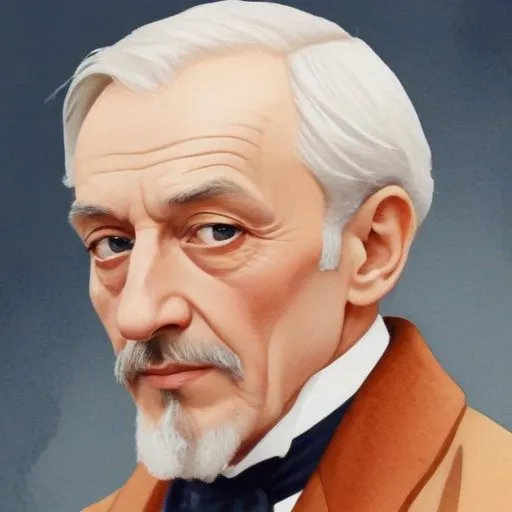
French Romantic writer who penned passionate and introspective works, including plays, poems, and novels that explored the human experience.
Alfred de Musset is renowned for his provocative and philosophical works that embodied the spirit of Romanticism, earning him a reputation as one of the most influential French writers of the 19th century. His seminal novel, La Confession d'un enfant du siècle (The Confession of a Child of the Century), is considered a masterpiece of autobiographical fiction, offering a candid exploration of his tumultuous life and the societal upheavals of his time.
Born on December 11, 1810, in Paris, Musset grew up in an upper-class but impoverished family. His father, a government official, struggled to provide for his family, while his mother's socialite status and lavish parties had a lasting impact on young Alfred. The future writer's early fascination with impromptu theater and romance stories foreshadowed his career as a dramatist, poet, and novelist.
At the age of 17, Musset won the Latin essay prize in the Concours général and began attending the Cénacle, a prestigious literary salon founded by Charles Nodier. Under the guidance of Paul Foucher, Victor Hugo's brother-in-law, Musset's talent flourished, and he published his first collection of poems, Contes d'Espagne et d'Italie (Tales of Spain and Italy), in 1829. By 20, his literary fame was accompanied by a notorious reputation as a dandy and a Romantic writer.
Musset's liberal politics and involvement in polemics during the Rhine crisis solidified his position as a vocal critic of authority. As a librarian for the French Ministry of the Interior under the July Monarchy, he rubbed shoulders with the royal family and maintained good relations with King Louis Philippe's family.
Musset's literary output includes:
His works' focus on the human condition, love, and social critique continues to influence French literature and inspire writers to this day.
Musset's tumultuous relationships, including a scandalous affair with George Sand, contributed to his reputation as a rebellious and passionate individual. His struggles with health and addiction further complicated his life, but he remained committed to his art until his untimely death on May 2, 1857.
"The truth is not always the same for everyone."
"I have tried to write with sincerity and honesty, and to do what I thought was right, without worrying about the consequences."
Alfred de Musset's life and works reflect the upheavals and cultural shifts of 19th-century France. His commitment to Romanticism and his critiques of authority continue to resonate with readers today, solidifying his position as a literary giant.
Born in 1821
A pioneering realist novelist who crafted meticulous, psychologically nuanced portrayals of 19th-century French life, particularly in his iconic novel "Madame Bovary".
Born in 1799
A prolific writer who created a vast array of characters and stories that explored the human condition, particularly in the context of post-Napoleonic France. His works are considered a cornerstone of French literature.
Born in 1798
A Romantic-era master of expressive brushstrokes and vivid color, creating iconic works that captured the drama and emotion of historical and literary scenes.
Born in 1810
A Polish pianist and composer renowned for his delicate, expressive, and technically demanding piano music that evokes deep emotions and continues to inspire generations of musicians and music lovers. His nocturnes, waltzes, and preludes are staples of classical music.
Born in 1811
A virtuosic pianist and composer who revolutionized classical music with his technically demanding and emotionally expressive works, blending Hungarian folk influences with Romantic-era drama.
Born in 1821
A 19th-century literary mastermind who crafted exquisite poetry and art criticism, exploring the beauty and darkness of human experience.
Born in 1823
A 19th-century French poet and critic, known for his lyrical and expressive poetry, as well as his influential literary criticism that shaped the French Symbolist movement.
