


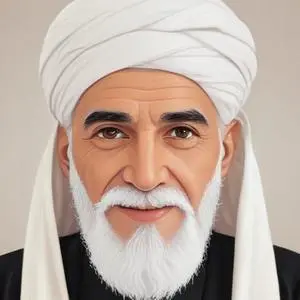
A prominent Shia cleric and scholar who has played a crucial role in shaping Iraq's political landscape, issuing influential fatwas, and promoting peaceful coexistence.
Ayatollah Ali al-Sistani is a revered figure in the Shia Islamic world, known for his unwavering dedication to the principles of Islam and his role as the spiritual leader of Twelver Shia Muslims globally. With a reputation for wisdom, compassion, and integrity, al-Sistani has earned the respect of millions, transcending geographical and cultural boundaries.
Al-Sistani was born in 1930 in Mashhad, Iran, to a family of religious clerics who claim descent from Imam Husayn ibn Ali, the grandson of Prophet Muhammad. His early education began in Mashhad under the guidance of his father, Muhammad Baqir al-Sistani, and later continued in Qom, where he studied under the tutelage of Grand Ayatollah Hossein Borujerdi.
In 1951, al-Sistani traveled to Najaf, Iraq, to study under Grand Ayatollah Abu al-Qasim al-Khoei, where he rose to the rank of mujtahid in 1960 at the age of 31. Following the death of Ayatollah Khoei in 1992, al-Sistani ascended to the rank of Grand Ayatollah through formal peer recognition of his scholarship, cementing his position as the leading marja (spiritual reference) in the Shia world.
As the spiritual leader of Twelver Shia Muslims, al-Sistani's influence extends to millions of followers worldwide. He has been recognized for his efforts in promoting peace, understanding, and reconciliation, earning him a spot on Time magazine's list of the 100 most influential people in the world in 2004 and 2005. Al-Sistani's leadership has also been acknowledged through his inclusion in the top positions of The Muslim 500: The World's Most Influential Muslims from 2004 to 2024.
Al-Sistani's philosophical contributions are rooted in his commitment to the principles of Usuli, a school of thought within Shia Islam that emphasizes the importance of reason and intellectual inquiry. He has been a vocal advocate for the importance of education, tolerance, and social justice, and has encouraged his followers to engage in peaceful coexistence with people of other faiths and backgrounds.
Throughout his career, al-Sistani has faced numerous challenges, including the violent suppression of Shia Muslims during the Baathist regime of Saddam Hussein in Iraq. Despite these challenges, he has remained steadfast in his commitment to promoting peace and understanding, often at great personal risk.
Some notable milestones in al-Sistani's life include:
Ayatollah Ali al-Sistani's legacy extends far beyond his role as a spiritual leader. He has inspired a generation of Shia Muslims, promoting values of tolerance, compassion, and social justice. His commitment to education and intellectual inquiry has encouraged his followers to engage with the world around them, fostering greater understanding and cooperation between people of different faiths and backgrounds.
As a testament to his enduring influence, al-Sistani's name has become synonymous with wisdom, compassion, and leadership, inspiring countless individuals around the world to strive for a more just and peaceful society.
86 Years Old
The current Supreme Leader of Iran, who has been in power since 1989, is known for his conservative and anti-Western views, and for holding significant influence over the country's political and religious affairs.
75 Years Old
The 76th Prime Minister of Iraq, a Shia Islamist politician who served from 2006 to 2014, is known for his role in shaping Iraq's post-Saddam Hussein government and his controversial policies. He's infamous for his sectarian agenda, which exacerbated Sunni-Shia tensions and contributed to the rise of ISIS.
65 Years Old
Leader of the Lebanese political and militant group Hezbollah, known for his strong anti-Israel stance and involvement in regional conflicts.
