


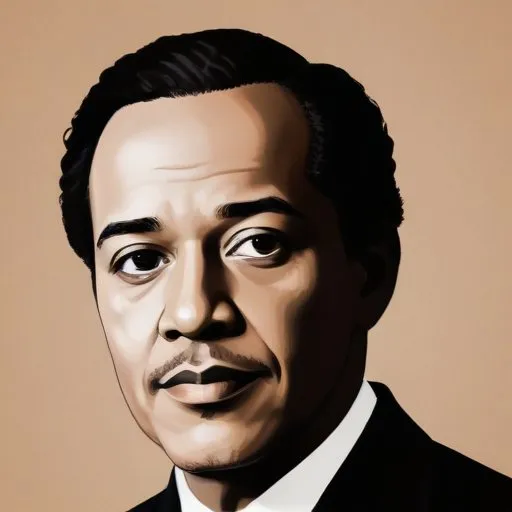
A leading figure of the New Criticism movement, known for his influential poetry and literary criticism that shaped modern American literature.
Allen Tate, one of the most influential American poets of the 20th century, is known for his lyrical and introspective poetry that explored the complexities of human nature and the American South. As the poet laureate of the United States from 1943 to 1944, Tate left an indelible mark on American literature, leaving behind a legacy that continues to inspire and influence writers to this day.
Born on November 19, 1899, near Winchester, Kentucky, Tate grew up in a family with a rich cultural heritage. His mother, Eleanor Parke Custis Varnell, was a distant relative of George Washington, and his father, John Orley Tate, was a Kentucky businessman. Tate's early life was marked by a strong connection to music, and he studied the violin at the Cincinnati Conservatory of Music in 1916 and 1917.
In 1918, Tate entered Vanderbilt University, where he was introduced to a group of men who would later become known as the Fugitives. This group, which included John Crowe Ransom and Donald Davidson, met regularly to read and discuss their poetry, and Tate was the first undergraduate to be invited to join. The Fugitives sought to demonstrate that a group of southerners could produce important work in poetry, devoid of sentimentality and carefully crafted, and they wrote in the formalist tradition that valued the skillful use of meter and rhyme.
In 1922, the Fugitives began publishing a poetry magazine called The Fugitive, which became a platform for their work. Tate's involvement with the magazine helped him develop his unique style, which blended traditional forms with modernist experimentation. His poetry during this period explored themes of identity, morality, and the American South, and his masterpiece, "Ode to the Confederate Dead," was published in 1928.
In the 1930s, Tate became associated with the Southern Agrarians, a group of writers who sought to preserve traditional Southern values and culture. His novel, The Fathers, published in 1938, is a powerful exploration of the decay of the Old South and the rise of industrialization.
In 1943, Tate was appointed poet laureate of the United States, a position he held until 1944. During this period, he continued to write poetry and essays, and his work became increasingly concerned with the role of the artist in society.
Tate's later life was marked by personal struggles and health problems, but he continued to write until his death on February 9, 1979. His legacy as a poet, essayist, and social commentator has endured, and his work remains a testament to the power of literature to explore the human condition.
Allen Tate's work has had a profound impact on American literature, and his influence can be seen in the work of writers such as Robert Lowell, John Berryman, and Sylvia Plath. His poetry and essays continue to be studied and admired, and his legacy as a poet laureate and social commentator remains unparalleled.
Tate's commitment to preserving traditional Southern culture and values has also had a lasting impact on the literary landscape of the American South. His work has inspired generations of writers to explore the complexities of Southern identity and culture, and his influence can be seen in the work of writers such as Flannery O'Connor and Walker Percy.
Today, Allen Tate is remembered as one of the most important American poets of the 20th century, and his work continues to inspire and influence writers around the world.
Born in 1888
A renowned poet, playwright, and critic who reshaped modern poetry with works like "The Waste Land" and "Old Possum's Book of Practical Cats", influencing literature and art with their unique style.
Born in 1885
A pioneering modernist poet and critic who transformed 20th-century literature with innovative styles and provocative ideas, shaping the course of modern poetry.
Born in 1897
A Nobel Prize-winning author of complex, psychologically rich novels and short stories that explore the American South's troubled history and human nature. His writing style, blending stream-of-consciousness and non-linear narrative, has influenced generations of writers.
Born in 1905
A Pulitzer Prize-winning novelist, poet, and literary critic, best known for his novel "All the King's Men", a classic of American literature.
Born in 1888
A prominent figure in the New Criticism movement, known for his poetry and literary criticism that emphasized close reading and analysis of texts. He was also a founder of the Kenyon Review literary magazine.
Born in 1917
Developed influential theories on meaning, truth, and the nature of language, challenging traditional notions of reference and interpretation. His work has had a significant impact on the development of analytic philosophy.
