


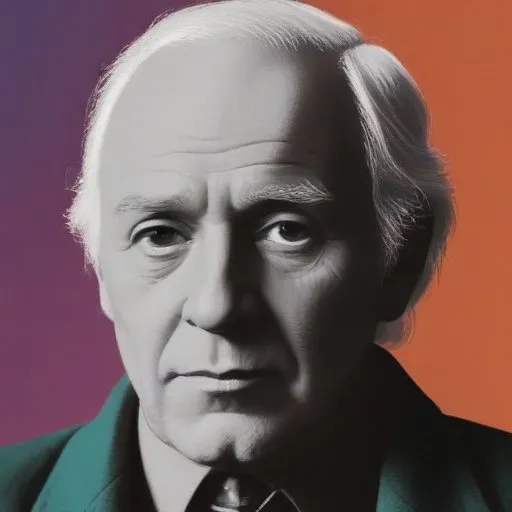
A prominent figure in the New Criticism movement, known for his poetry and literary criticism that emphasized close reading and analysis of texts. He was also a founder of the Kenyon Review literary magazine.
John Crowe Ransom, a literary critic, poet, essayist, and editor, is widely regarded as the founder of the New Criticism school of literary criticism. As the first editor of the esteemed Kenyon Review, Ransom's influence on modern literary theory and criticism is still felt today.
Ransom was born on April 30, 1888, in Pulaski, Tennessee, to John James Ransom, a Methodist minister, and Sara Ella Crowe Ransom. He was the eldest of four siblings and grew up in various towns in Tennessee, where he was home-schooled until the age of ten. Ransom then attended the Bowen School and later graduated first in his class from Vanderbilt University in 1909.
Ransom's New Criticism emphasized close readings of texts, focusing on the literary work as a self-contained unit rather than exploring its historical or biographical context. This approach revolutionized literary criticism and paved the way for later critical theories.
Ransom's influential essays, such as "Criticism as Pure Speculation" (1941) and "Wanted: An Ontological Critic" (1943), showcased his commitment to a rigorous, analytical approach to literary analysis.
Ransom married Robb Reavill in 1910, and they had three sons together. He passed away on July 3, 1974, leaving behind a legacy as a pioneering literary critic, poet, and educator.
Ransom's philosophical views were shaped by his Christian upbringing and his fascination with classical philosophy. He believed that literature should be evaluated on its own terms, rather than through external factors such as authorial intent or historical context.
Ransom's New Criticism has had a lasting impact on literary theory and criticism, shaping the way scholars approach texts and influencing a generation of literary critics and theorists.
Ransom's work can be seen alongside that of other prominent literary critics of his time, such as T.S. Eliot and I.A. Richards. While they shared some similarities, Ransom's unique approach to literary analysis set him apart from his contemporaries.
Ransom's legacy extends beyond his own writing to the generations of scholars and critics he influenced. His work continues to be studied and debated, ensuring his place as a central figure in the development of modern literary theory and criticism.
Born in 1888
A renowned poet, playwright, and critic who reshaped modern poetry with works like "The Waste Land" and "Old Possum's Book of Practical Cats", influencing literature and art with their unique style.
Born in 1874
Pulitzer Prize-winning poet and playwright celebrated for rural New England-inspired works that explore human nature, morality, and the American experience.
Born in 1885
A pioneering modernist poet and critic who transformed 20th-century literature with innovative styles and provocative ideas, shaping the course of modern poetry.
Born in 1879
A modernist master of language and imagination, crafting innovative, symbolic poetry that explores the human experience and the relationship between reality and the individual's perception of it.
Born in 1899
A leading figure of the New Criticism movement, known for his influential poetry and literary criticism that shaped modern American literature.
Born in 1917
Developed influential theories on meaning, truth, and the nature of language, challenging traditional notions of reference and interpretation. His work has had a significant impact on the development of analytic philosophy.
Born in 1873
A pioneering modernist writer, credited with influencing 20th-century literature through experimental novels and poetry that explored the human condition. Known for his impressionistic style and complex characters.
