


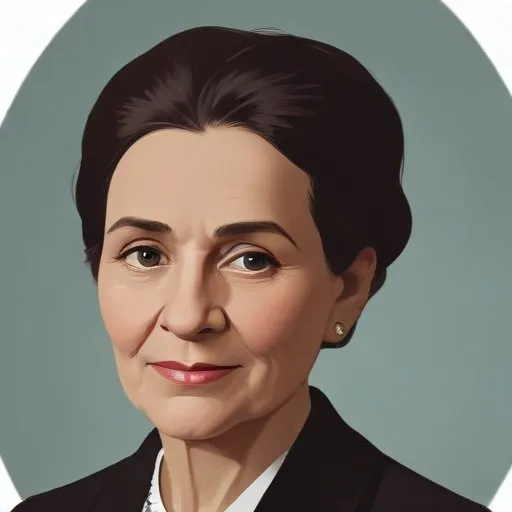
Pioneering educator, author, and editor who championed women's education and wrote influential textbooks on science and literature. Her works helped shape American education in the 19th century.
Almira Hart Lincoln Phelps was a pioneering American educator and botanist, best known for her groundbreaking work in developing educational materials and resources that promoted the inclusion of botany in school curricula. Born on July 15, 1793, in Berlin, Connecticut, Phelps went on to become one of the most influential educators of her time, leaving an indelible mark on the field of botanical education.
Phelps' passion for education and botany was evident from an early age. She began her teaching career in 1814 and went on to work as a teacher and administrator at several schools, including the prestigious Troy Female Seminary in New York. During her tenure, she developed innovative educational materials and curricula that emphasized the importance of botany in everyday life.
Phelps' most notable contribution to botanical education was her publication of Familiar Lectures on Botany, a comprehensive guide to botany that was designed to be accessible to students of all ages. First published in 1829, the book went through numerous editions and became a staple in botanical education. The book's popularity can be attributed to Phelps' engaging writing style, which made complex botanical concepts easy to understand.
Phelps was a firm believer in the importance of education in empowering women and promoting social change. She advocated for equal access to education for women and encouraged them to pursue careers in science and education. Her philosophical contributions to the field of education were centered around the idea that education should be inclusive, accessible, and practical.
Phelps' work had a profound impact on modern society. Her efforts to promote botanical education helped to increase public awareness and appreciation of the natural world. Her legacy continues to inspire educators and botanists around the world, and her work remains a testament to the power of education in shaping society.
Some of Phelps' notable career highlights include:
Phelps' life was marked by several significant events, including:
Almira Hart Lincoln Phelps' legacy continues to inspire educators, botanists, and scientists around the world. Her pioneering work in botanical education has had a lasting impact on the way we approach education and our understanding of the natural world. Her contributions to the field of education serve as a testament to the power of innovative thinking and dedication to social change.
Born in 1925
Pioneering geneticist who discovered X-chromosome inactivation, a crucial mechanism for gene expression in mammals, revolutionizing our understanding of genetics and development.
Born in 1800
Pioneering educator and women's rights advocate who championed equal access to education and advocated for women's roles in society. Known for her influential writings on education and domesticity.
Born in 1811
Wrote influential abolitionist novels, including "Uncle Tom's Cabin", which humanized the horrors of slavery and fueled the anti-slavery movement.
Born in 1815
Pioneering women's rights activist who led the women's suffrage movement, fighting for women's right to vote and own property.
Born in 1820
Pioneering figure in the women's suffrage movement, fighting for women's right to vote and own property. Her tireless efforts led to significant advancements in women's rights.
Born in 1793
A pioneering Quaker minister and women's rights activist who fought for abolition and women's suffrage, playing a key role in the Seneca Falls Convention.
Born in 1818
Pioneering journalist and women's rights advocate who popularized the bloomer costume, a precursor to modern women's clothing, and advocated for women's suffrage and property rights.
