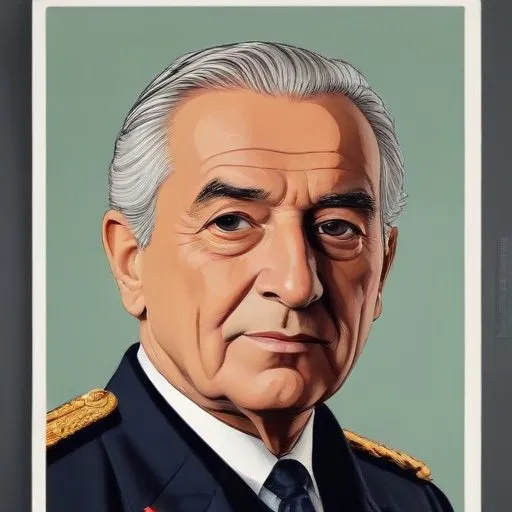
Américo Tomás: The Last President of Portugal's Authoritarian Era
A Legacy of Controversy and Transformation
Américo Tomás, the 13th President of Portugal, is perhaps best known for his role in shaping the country's authoritarian and corporatist Estado Novo regime. His presidency, which spanned from 1958 to 1974, was marked by significant transformations that would have a lasting impact on Portuguese society.
Early Life and Military Career
Born on November 19, 1894, in Lisbon, Américo Tomás was the son of António Rodrigues Tomás and Maria da Assunção Marques. He married Gertrudes Ribeiro da Costa in 1922, with whom he had two daughters, Maria Natália and Maria Madalena. Tomás' early life was marked by a strong sense of duty and service, which led him to pursue a career in the Portuguese Navy.
After completing his secondary education in 1911, Tomás attended the Faculty of Sciences for two years before joining the Naval Academy as a midshipman. He graduated in 1916 and went on to serve in various capacities, including as a lieutenant during World War I. His military career was marked by steady promotions and assignments, including a 16-year stint on the survey vessel 5 de Outubro.
Rise to Power and Presidential Tenure
Tomás' military career laid the foundation for his eventual rise to power. In 1936, he was appointed chief of staff to the Minister of the Navy, followed by a stint as President of the Merchant Marine National Junta from 1940 to 1944. He then served as Minister of the Navy from 1944 to 1958, during which time he oversaw the reconstruction of the Portuguese commercial navy.
In 1958, Tomás succeeded
Francisco Craveiro Lopes as President of Portugal, a position he held until 1974. His presidency was marked by significant economic growth, infrastructure development, and a series of reforms aimed at modernizing Portuguese society. However, his authoritarian style of governance and suppression of opposition voices have been widely criticized.
Controversies and Legacy
Tomás' presidency was marked by several controversies, including his role in suppressing the Portuguese Colonial War and his handling of the 1969 presidential election. His regime was also characterized by censorship, political repression, and human rights abuses. Despite these criticisms, Tomás is also remembered for his role in modernizing Portugal's infrastructure, promoting economic growth, and expanding access to education and healthcare.
Tomás' legacy is complex and multifaceted, reflecting both the positive and negative aspects of his presidency. While his authoritarian style of governance has been widely criticized, his contributions to Portuguese society cannot be denied. As the last president of the Estado Novo regime, Américo Tomás remains a significant figure in Portuguese history, a reminder of the complexities and challenges of building a modern nation.
Personal Milestones and Key Life Events
- November 19, 1894: Born in Lisbon, Portugal
- 1922: Married Gertrudes Ribeiro da Costa
- 1916: Graduated from the Naval Academy
- 1958: Became the 13th President of Portugal
- 1974: Stepped down as President of Portugal
- September 18, 1987: Died at the age of 92
Influence on Modern Society
Américo Tomás' presidency had a profound impact on Portuguese society, shaping the country's development and modernization in the mid-20th century. While his authoritarian style of governance has been widely criticized, his contributions to Portugal's economic growth, infrastructure development, and social progress cannot be denied. As a key figure in Portuguese history, Tomás' legacy continues to shape the country's ongoing development and progress.
FAQ
What was Américo Tomás military career like?
Tomás was a Portuguese admiral and politician who served in the Portuguese Navy and later became the 14th President of Portugal.
What was Américo Tomás presidency like?
Tomás served as president from 1958 to 1974, maintaining a strong anti-communist stance and supporting the Portuguese Empire.
What awards did Américo Tomás receive?
Tomás was awarded the Grand Cross of the Order of the Tower and Sword, among other honors, for his contributions to Portugal and its military.
What is Américo Tomás legacy in Portuguese history?
Tomás is remembered as a significant figure in Portuguese history, with his presidency marking a period of relative stability and authoritarian rule.
What was Américo Tomás stance on colonialism?
Tomás was a strong supporter of Portuguese colonialism, maintaining control over Portugals African colonies and opposing independence movements.