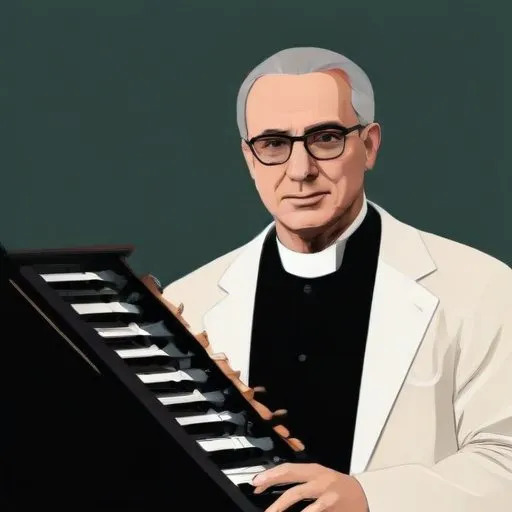
Andrea Luchesi: The Virtuoso Composer Behind the Scenes
A Life of Music and Collaboration
Andrea Luchesi was a renowned Italian composer, known for his exceptional talent as a virtuoso and his collaborations with some of the greatest musical minds of his time, including
Wolfgang Amadeus Mozart and
Ludwig van Beethoven. With a career spanning over four decades, Luchesi left an indelible mark on the world of classical music.
A Humble Beginning
Born on May 23, 1741, in Motta di Livenza, near Treviso, Luchesi was the eleventh child of Pietro Luchese and Caterina Gottardi. His family, descended from noble families who had moved from Lucca to Venice in the 14th century, provided him with a rich cultural heritage that would shape his future.
Rise to Prominence
Luchesi's musical education began under the guidance of his elder brother, Matteo, a priest and public tutor. By 1757, he moved to Venice, where he received the patronage of the nobleman Jseppo Morosini, allowing him to study with renowned musicians such as Gioacchino Cocchi, Padre Paolucci, and
Baldassare Galuppi. His talent and hard work soon paid off, earning him the position of examiner of organists in 1761 and organist at San Salvatore in 1764.
A Life of Collaboration
Luchesi's most notable collaborations were with Mozart and Beethoven. In 1771, while on tour in Italy, Leopold and Wolfgang Mozart met Luchesi, and Wolfgang was so impressed with his concertos for cembalo that he continued to play them for years to come. This encounter marked the beginning of a lifelong admiration for Luchesi's work. Similarly, Luchesi's work influenced Beethoven, who often sought his counsel and opinion on his compositions.
International Recognition
In 1765, Luchesi's opera
L'isola della fortuna premiered at the Hoftheater in Vienna, solidifying his reputation as a composer of international stature. His subsequent travels took him to Bonn, where he served as the composer to the Prince Elector Archbishop of Cologne, Maximilian Friedrich von Knigsegg-Rothen, for three years.
Legacy and Impact
Andrea Luchesi's contributions to classical music are multifaceted. As a composer, he wrote works for organ, cembalo, and orchestral ensembles, as well as sacred and theatrical music. His compositions reflect his mastery of harmony and technique, showcasing his unique style, which blended Germanic and Italian influences. As a virtuoso, he inspired generations of musicians, including Mozart and Beethoven, with his exceptional talent and dedication to his craft.
Personal Milestones and Key Life Events
- 1757: Moved to Venice and began studying with renowned musicians
- 1761: Became examiner of organists
- 1764: Became organist at San Salvatore
- 1765: Premiered L'isola della fortuna at the Hoftheater in Vienna
- 1771: Met Leopold and Wolfgang Mozart, and began a three-year contract in Bonn
- 1801: Passed away on March 21, leaving behind a legacy of music and inspiration
Luchesi's life serves as a testament to the power of collaboration, talent, and dedication. As a composer, virtuoso, and teacher, he left an indelible mark on the world of classical music, inspiring generations of musicians to come.
FAQ
What is Andrea Luchesis most famous work?
Andrea Luchesis most famous work is his Concerti grossi, a collection of orchestral pieces that showcase his mastery of the genre.
How did Andrea Luchesis Italian heritage influence his compositional style?
Andrea Luchesis Italian heritage significantly influenced his compositional style, which was characterized by lyricism, melodic elegance, and a strong sense of rhythmic energy.
What role did Andrea Luchesi play in the development of the classical symphony?
Andrea Luchesi played a significant role in the development of the classical symphony, as his works helped to establish the genre and pave the way for later composers such as Haydn and Mozart.
How did Andrea Luchesis work as an organist influence his compositional style?
Andrea Luchesis work as an organist significantly influenced his compositional style, as his experience with the instrument informed his use of counterpoint and his understanding of harmonic structure.
What is Andrea Luchesis legacy in the history of classical music?
Andrea Luchesis legacy in the history of classical music is that of a talented and influential composer, whose work contributed to the development of the classical symphony and continues to be appreciated by audiences today.