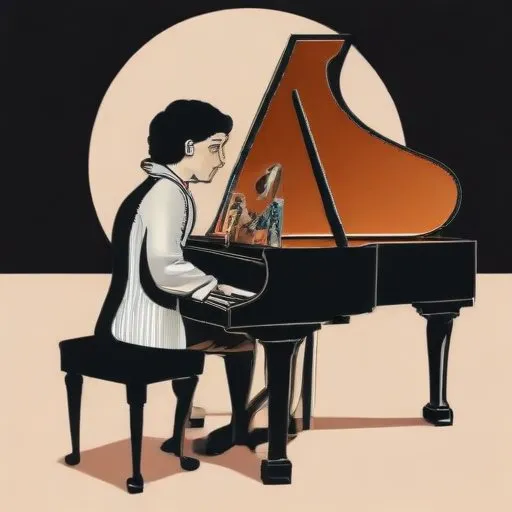
Baldassare Galuppi: The Pioneering Venetian Composer of Opera and Sacred Music
The Father of Comic Opera
Baldassare Galuppi was a renowned Venetian composer who left an indelible mark on the world of opera and sacred music in the 18th century. He is best known for his contributions to the development of comic opera, earning him the title of "father of comic opera."
Early Life and Career
Born on the island of Burano in the Venetian Republic on October 18, 1706, Galuppi belonged to a generation of composers who shaped the galant music style that swept across Europe during that era. His early career saw modest success in opera seria, but it was his collaboration with the playwright and librettist
Carlo Goldoni that catapulted him to international fame. Together, they created comic operas in the new dramma giocoso style, entertaining audiences throughout Europe.
International Acclaim and Prominent Appointments
Galuppi's talent and reputation earned him invitations to work in Vienna, London, and Saint Petersburg, where he spent periods of his career. However, Venice remained his base, and he held a succession of leading appointments in the city, including maestro di cappella at the prestigious Doge's chapel, St. Mark's Basilica. This position allowed him to compose a significant amount of sacred music, showcasing his versatility as a composer.
Virtuoso Performer and Keyboard Innovator
In addition to his compositional prowess, Galuppi was also a highly regarded virtuoso performer on keyboard instruments. He was known for his innovative approach to keyboard music, pushing the boundaries of the instrument and leaving a lasting impact on the development of keyboard repertoire.
Sacred Music and Charitable Contributions
Throughout his career, Galuppi held official positions with charitable and religious institutions in Venice, using his talents to support worthy causes. His sacred music compositions, including masses, oratorios, and hymns, demonstrate his commitment to creating music that uplifted and inspired.
Legacy and Revival
Despite his international fame during his lifetime, Galuppi's music fell into obscurity outside of Italy in the latter half of the 18th century. Napoleon's invasion of Venice in 1797 further scattered his manuscripts, leading to the loss or destruction of many of his works. It wasn't until the late 20th century that Galuppi's compositions were extensively revived, introducing his music to a new generation of audiences.
Trivia and Fun Facts
- Galuppi's music was celebrated in Robert Browning's 1855 poem "A Toccata of Galuppi's."
- He was known for his quick wit and sense of humor, often incorporating comedic elements into his operas.
- Galuppi's keyboard sonatas were widely admired and studied during his lifetime.
Galuppi's contributions to opera, sacred music, and keyboard repertoire have left an lasting impact on the world of classical music. His legacy continues to inspire and delight audiences, solidifying his place as one of the most important composers of the 18th century.
FAQ
What is Baldassare Galuppis most famous composition?
Baldassare Galuppi is best known for his opera Il Filosofo di Campagna, which is considered one of the finest examples of 18th-century opera buffa. The work showcases his mastery of melody and harmony.
What is Baldassare Galuppis contribution to the development of opera?
Galuppi played a significant role in the development of opera, particularly in the field of opera buffa. His compositions helped shape the genre and influenced many other composers of his time.
How did Baldassare Galuppis music reflect the cultural trends of his time?
Galuppis music reflected the cultural trends of the 18th century, particularly the rise of opera buffa and the emphasis on entertainment and popular culture. His works catered to the tastes of the emerging middle class.
What is Baldassare Galuppis legacy in the world of music?
Galuppis legacy in the world of music is one of innovation and creativity. He is remembered as a master composer who helped shape the course of opera and music in the 18th century.
What is Baldassare Galuppis significance in Italian musical history?
Galuppi is a significant figure in Italian musical history, particularly in the development of opera and the evolution of musical styles. His contributions to the countrys rich musical heritage are still celebrated today.