


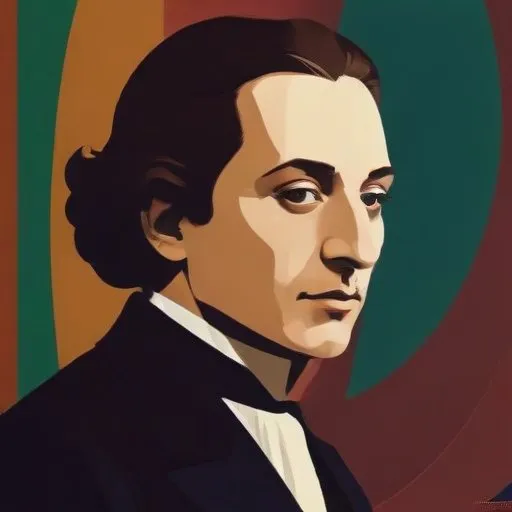
A Baroque composer, violinist, and organist who made significant contributions to the development of opera and sacred music, particularly with his famous "Stabat Mater" composition.
Giovanni Battista Pergolesi was a renowned Italian Baroque composer, violinist, and organist, celebrated for his significant contributions to the operatic and sacred music genres. Despite his short-lived career, Pergolesi left an indelible mark on the world of music, earning him a place among the most important representatives of the Neapolitan school.
Born on January 4, 1710, in Jesi, Italy, Pergolesi was given the nickname "Pergolesi" due to his ancestors' origin from Pergola, Marche. He received his initial music training under Francesco Santi in Jesi and later moved to Naples in 1725 to study under Gaetano Greco and Francesco Feo.
Upon completing his studies at the conservatory in 1731, Pergolesi gained recognition for his oratorio La fenice sul rogo, o vero La morte di San Giuseppe (The Phoenix on the Pyre, or The Death of Saint Joseph) and the dramma sacro Li prodigi della divina grazia nella conversione e morte di san Guglielmo duca d'Aquitania (The Miracles of Divine Grace in the Conversion and Death of Saint William, Duke of Aquitaine).
Pergolesi's compositions have had a profound impact on the world of music, influencing numerous composers and shaping the course of opera and sacred music. His innovative style, which blended Neapolitan and Venetian elements, continues to inspire artists to this day.
Despite his short life, Pergolesi worked tirelessly, composing numerous operas, oratorios, and sacred works. He was patronized by prominent aristocrats, including Ferdinando Colonna, Prince of Stigliano, and Domenico Marzio Carafa, Duke of Maddaloni.
Tragically, Pergolesi's life was cut short when he succumbed to tuberculosis on March 16 or 17, 1736, at the tender age of 26.
Pergolesi's contributions to the Baroque era are immeasurable, and his works continue to be performed and admired by audiences worldwide. His legacy serves as a testament to the power of music, transcending time and leaving an indelible mark on the world of art and culture.
Born in 1714
A prominent composer of the Neapolitan School, he wrote over 80 operas and was a key figure in the transition between the Baroque and Classical periods. His music was known for its dramatic intensity and expressive melodies.
Born in 1727
An 18th-century master of opera, known for his innovative and expressive compositions that blended Italian and French styles, influencing the development of opera seria.
Born in 1714
A pioneering opera composer who revolutionized the art form with his innovative and expressive works, blending music and drama in a way that captivated audiences.
Born in 1678
A virtuosic violinist and prolific composer, he crafted over 400 concertos, including "The Four Seasons," which remains a beloved and iconic masterpiece of classical music.
Born in 1685
A renowned Baroque composer and organist, famous for creating majestic orchestral suites, operas, and oratorios, including the iconic "Messiah" masterpiece.
Born in 1685
A master of Baroque music, he composed over 1,000 works, including orchestral suites, cantatas, and passions, that still inspire and influence musicians today. His innovative use of counterpoint and harmony raised the bar for classical music.
Born in 1685
A virtuosic harpsichordist and composer, renowned for crafting over 550 sonatas that showcased his innovative and expressive style, blending Italian and Portuguese influences. 42
