


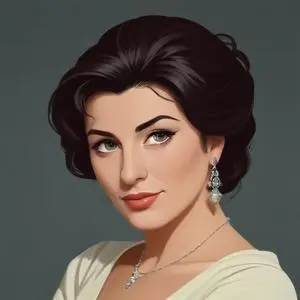
A fiery and passionate actress who brought authenticity and depth to her iconic roles in neorealist films, earning her an Academy Award and a lasting legacy.
Anna Magnani, a legendary Italian actress, is best known for her explosive and earthy portrayals of characters, earning her the nickname "La Lupa" (The She-Wolf) and the title of "the volcanic earth mother of all Italian cinema."
Born on March 7, 1908, in Rome, Italy, Magnani worked her way through the Academy of Dramatic Art by singing at night clubs. Her early life was marked by struggle, including the polio diagnosis of her only child at 18 months old, which left him disabled.
Magnani's breakthrough role came in 1934 with The Blind Woman of Sorrento, directed by Goffredo Alessandrini. However, it was her performance in Roberto Rossellini's Rome, Open City (1945) that launched her international career and cemented her status as a leading lady of Italian neorealism.
Magnani's Oscar win for Best Actress in The Rose Tattoo (1955) made her the first Italian and first non-native English-speaking woman to receive the award. This role was specifically written for her by Tennessee Williams, who became an ardent admirer of her acting style.
Magnani's acting style was deeply rooted in her philosophical beliefs about the role of women in society. She believed in portraying strong, earthy, and realistic characters that reflected the struggles and triumphs of everyday women.
Magnani's personal life was marked by struggles and controversies, including her tumultuous relationships with directors and her determination to balance her career and family life. Despite these challenges, she remained a cultural icon in Italy, earning the respect and admiration of her peers and audiences alike.
Magnani's influence on Italian neorealism and her contributions to the cinematic landscape extend far beyond her own country. Her volcanic energy, fearless portrayal of characters, and unwavering commitment to her craft have inspired generations of actresses and filmmakers worldwide.
Anna Magnani's legacy continues to inspire and captivate audiences today, cementing her place as one of the most iconic and influential actresses of all time.
Born in 1920
Visionary filmmaker behind surreal, poetic, and deeply personal cinematic masterpieces that blur the lines between reality and fantasy.
Born in 1924
A renowned actor and singer, starring in over 150 films, including iconic Italian neorealist classics and international productions, earning him numerous awards and nominations.
Born in 1901
A renowned filmmaker and actor, known for directing poignant, neorealist classics like "Bicycle Thieves" and "Umberto D.", which still influence world cinema today.
91 Years Old
Academy Award-winning actress renowned for her striking beauty and powerful performances in iconic films like "Two Women" and "Marriage Italian Style".
99 Years Old
Italian actress and photographer, iconic beauty and sex symbol of the 1950s and 1960s, starring in films like "Fanfan la Tulipe" and "Buona Sera, Mrs. Campbell".
Born in 1921
Austrian-Italian actress and singer who starred in over 100 films, including Hitchcock's "The Paradine Case" and "The Third Man", with a distinctive, emotive voice and striking features.
88 Years Old
A iconic Italian actress who dazzled audiences with her stunning beauty and captivating performances in over 140 films, including classic spaghetti westerns and critically acclaimed dramas.
94 Years Old
An iconic Italian actress, singer, and screenwriter known for her striking features and captivating performances in 1960s art house films, particularly in Michelangelo Antonioni's classics.
