


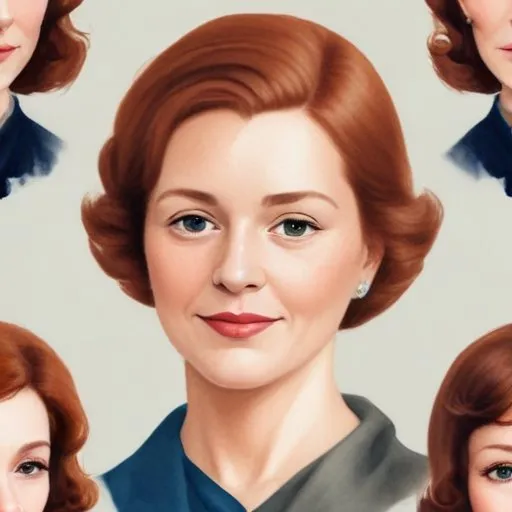
A 17th-century Dutch painter and engraver, known for being one of the first female artists to achieve international recognition and for her detailed and intricate works of art.
Anna Maria van Schurman was a trailblazing Dutch painter, engraver, poet, classical scholar, philosopher, and feminist writer who defied convention and excelled in multiple fields, earning her the reputation as one of the most learned women of her time. She is renowned for her fierce advocacy of female education, her polyglotism in fourteen languages, and her remarkable artistic talents.
Born on November 5, 1607, in Cologne, Holy Roman Empire, to wealthy parents Frederik van Schurman and Eva von Harff de Dreiborn, Anna Maria demonstrated an insatiable thirst for knowledge from a tender age. She could read at four, mastered intricate paper cutouts at six, and learned embroidery in a mere three hours at the age of ten.
Between 1613 and 1615, her family relocated to Utrecht, and later to Franeker in Friesland, where she was taught Latin and other subjects alongside her brothers, a rare privilege for girls from noble families at that time. Her father encouraged her curiosity, providing her with texts like Seneca to read and fostering a strong foundation in classical education.
Van Schurman's artistic talents knew no bounds. She was an accomplished painter, engraver, and poet, with a flair for creating intricate designs and sculptures. Her self-portrait in wax, adorned with a lifelike necklace, was so convincing that her friend, the Princess of Nassau, had to prick it with a pin to ensure it was not real.
Anna Maria's thirst for knowledge led her to engage in correspondence and discussions with prominent scholars, including Andr Rivet and Friedrich Spanheim, professors at Leiden University, and her family's neighbor, Gisbertus Voetius, a professor at the University of Utrecht. These exchanges not only honed her intellect but also helped shape her philosophical contributions.
Van Schurman's philosophical writings reflect her strong advocacy for female education and her conviction that women were capable of intellectual pursuits. Her treatise, "De Ingenii Muliebris ad Doctrinas et Meliores Literas Aptitudine" (On the Aptitude of the Female Mind for the Sciences and Higher Literature), defended women's right to education and challenged the conventional views of her time.
Anna Maria van Schurman's remarkable achievements and unwavering dedication to education have inspired generations of women to pursue higher learning and challenge societal norms. Her legacy extends beyond her own accomplishments, as she paved the way for future generations of women scholars, philosophers, and artists.
Anna Maria van Schurman's life and work serve as a beacon of inspiration, highlighting the importance of education, intellectual curiosity, and perseverance. Her remarkable achievements have secured her place in history as a pioneering figure in the pursuit of knowledge and women's empowerment.
As we reflect on her remarkable life, we are reminded that the boundaries of human potential are limitless, and that with determination and passion, we can overcome even the most formidable obstacles.
Born in 1632
A master of capturing intimate, serene domestic scenes, particularly of women, in exquisite detail and soft, luminous light. His works evoke a sense of quiet contemplation and everyday beauty.
Born in 1622
A Dutch master of light and shadow, known for his innovative use of chiaroscuro and his captivating, intimate portraits.
Born in 1629
A Dutch master of domestic scenes, capturing intimate moments of everyday life in 17th-century Holland with remarkable light and atmosphere. His works offer a glimpse into the lives of ordinary people during the Dutch Golden Age.
Born in 1638
A 17th-century master of Dutch Golden Age landscape painting, capturing serene and intimate scenes of woods, rivers, and villages. His works evoke a sense of tranquility and connection to nature.
