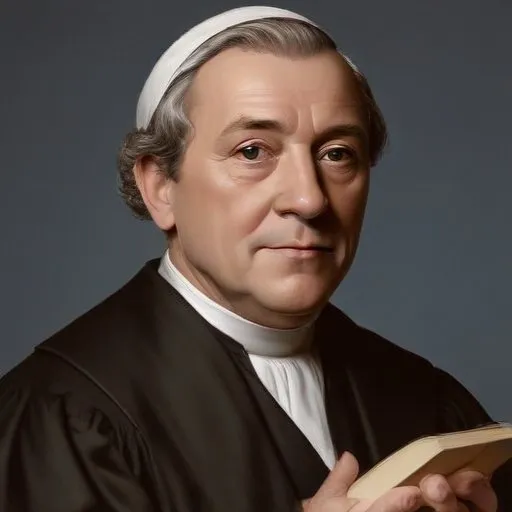
Gisbertus Voetius

Gisbertus Voetius

Gisbertus Voetius was born on March 3rd, 1589

Full Name: Gisbertus Voetius
Birthplace: Heusden, Netherlands
Nationality: Dutch
Occupation: Theologian, minister
Notable Work: Theologia practica
University: University of Leiden
Death Date: November 1, 1676
Influence: Reformed theology

A 17th-century Dutch theologian and academic who contributed significantly to the development of Reformed theology and was a prominent figure in the Synod of Dort. He wrote extensively on theology, philosophy, and biblical studies.

Written by: Jack Thompson Jack Thompson

Gisbertus Voetius: The Calvinist Theologian Who Shaped Dutch Reformation

Gisbertus Voetius, a prominent Dutch Calvinist theologian, is renowned for his influential role in the Synod of Dort (1618-1619) and his advocacy of a strong form of Calvinism, known as Gomarism. His theological contributions and debates with prominent thinkers, such as René Descartes, have left an indelible mark on the religious and intellectual landscape of 17th-century Europe.

Early Life and Education

Born on March 3, 1589, in Heusden, Dutch Republic, Voetius pursued his higher education at Leiden University. His academic pursuits laid the foundation for his subsequent career as a Protestant pastor and theologian.

Theological Contributions and Controversies

Voetius' theological stance was characterized by his unwavering commitment to Gomarism, a strict form of Calvinism. This led to his involvement in several controversies, including the Synod of Dort, where he played a crucial role in shaping the Calvinist doctrine.

One of the most notable controversies surrounding Voetius was his public disagreement with René Descartes, a prominent philosopher and mathematician. In 1642, Voetius, as rector of the University of Utrecht, condemned Cartesian philosophy, deeming it incompatible with traditional Aristotelian philosophy and orthodox theology. Descartes responded with a personal attack on Voetius, prompting the theologian to commission a book-length critique of Descartes' work.

Career Highlights and Major Works

Legacy and Impact

Gisbertus Voetius' unwavering commitment to his theological convictions has left a lasting impact on the development of Calvinism and the broader intellectual landscape of 17th-century Europe. His condemnations of Cartesian philosophy, though controversial, reflect his dedication to upholding traditional Aristotelian philosophy and orthodox theology.

The city of Utrecht has honored Voetius' legacy by naming a street after him, a testament to his enduring influence on the city and its academic institutions.

Personal Milestones and Key Life Events

1595: Voetius' family relocated to Dordrecht, where he received his early education

1611: Ordained as a Protestant pastor

1676: Passed away on November 1, at the age of 87

By examining the life and works of Gisbertus Voetius, we gain insight into the complexities of 17th-century theological debates and the enduring legacy of one of the era's most influential thinkers.
Timeline
1589
Born in Heusden, Netherlands
Gisbertus Voetius was born in Heusden, Netherlands, to a family of modest means. He would go on to become a prominent theologian and academic.
1611
Becomes minister in Vlijmen
Voetius became a minister in Vlijmen, Netherlands, where he developed his skills as a preacher and theologian.
1634
Appointed professor at Utrecht University
Voetius was appointed professor of theology at Utrecht University, where he taught for over 40 years and became a prominent figure in Dutch theological circles.
1651
Publishes Political Theology
Voetius published Political Theology, a comprehensive work that explored the relationship between politics and theology.
1676
Dies in Utrecht, Netherlands
Voetius died in Utrecht, Netherlands, leaving behind a legacy as one of the most influential Dutch theologians of his time.
Gisbertus Voetius

Gisbertus Voetius Quiz

Gisbertus Voetius was a prominent figure in which significant religious gathering?

Score: 0/5
FAQ
What was Gisbertus Voetius role in the Dutch Reformed Church?
Gisbertus Voetius was a prominent theologian and minister in the Dutch Reformed Church, serving as a professor of theology at the University of Utrecht. He played a key role in shaping the churchs doctrine and practice, particularly in the areas of soteriology and ecclesiology.
What is Gisbertus Voetius most notable theological work?
Gisbertus Voetius most notable theological work is his Selectarum Disputationum Theologicarum, a comprehensive treatment of various theological topics. This work is considered a landmark in Dutch Reformed theology, providing a detailed exposition of the churchs core beliefs.
How did Gisbertus Voetius influence the development of Reformed theology?
Gisbertus Voetius had a significant impact on the development of Reformed theology, particularly in the areas of covenant theology and the theology of the sacraments. His works helped to shape the theological trajectory of the Dutch Reformed Church and influence subsequent generations of theologians.
What was Gisbertus Voetius view on the role of the state in religious affairs?
Gisbertus Voetius believed that the state should play a limited role in religious affairs, advocating for the separation of church and state. He argued that this approach would help to promote religious freedom and prevent the abuse of power.
How did Gisbertus Voetius theology impact the development of Dutch politics?
Gisbertus Voetius theology had a significant impact on the development of Dutch politics, particularly in the areas of church-state relations and religious tolerance. His ideas helped to shape the political trajectory of the Netherlands, promoting a more nuanced understanding of the relationship between faith and politics.

Related People:

Herman Bavinck

Born in 1854

A Dutch philosopher, theologian, and academic who developed a comprehensive Reformed theology, influencing Christian thought and education. He's known for his four-volume magnum opus, "Reformed Dogmatics".

John Calvin

Born in 1509

A French pastor and theologian who played a key role in the Protestant Reformation, shaping Christian theology and influencing Western civilization. He's famous for his teachings on predestination and his role in establishing Calvinism.

Martin Luther

Born in 1483

A German monk and priest who sparked the Protestant Reformation, challenging Catholic Church authority and shaping Western Christianity. He's famous for nailing 95 theses to a church door, sparking a religious revolution.

Theodore Beza

Born in 1519

A 16th-century French theologian and scholar who played a key role in shaping Protestantism, particularly Calvinism, through his writings and teachings. He's also known for his Greek New Testament translation.

Franciscus Gomarus

Born in 1563

A Dutch theologian and academic who played a key role in the Synod of Dort, shaping Calvinist theology and contributing to the development of Reformed Christianity. He's also known for his disputes with Arminius, leading to the formation of Arminianism.