


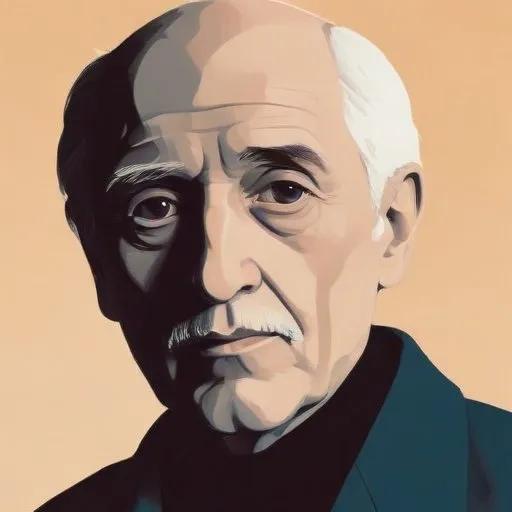
A renowned philosopher and academic who has made significant contributions to the fields of philosophy of mind, action theory, and the history of philosophy, particularly in Aristotelian studies.
Sir Anthony Kenny is a British philosopher recognized for his significant contributions to the philosophy of mind, ancient and scholastic philosophy, philosophy of religion, and philosophy of Wittgenstein. As an executor of Wittgenstein's literary estate, Kenny has played a crucial role in promoting and interpreting Wittgenstein's works.
Kenny was born on March 16, 1931, in Liverpool, England, to John and Margaret Jones Kenny. He initially trained as a Roman Catholic priest at the Venerable English College, Rome, where he received a degree of Licentiate of Sacred Theology (STL). Kenny was ordained in 1955 and served as a curate in Liverpool from 1959 to 1963.
After receiving his DPhil from the University of Oxford's St Benet's Hall in 1961, Kenny worked as an assistant lecturer at the University of Liverpool from 1961 to 1963. He later became a lecturer in philosophy at Exeter and Trinity Colleges, Oxford, and served as University Lecturer from 1965 to 1978.
Kenny's philosophical contributions have significantly impacted the development of analytic Thomism, a movement that aims to present the thought of St. Thomas Aquinas in the style of analytic philosophy. Along with Peter Geach, Kenny has worked tirelessly to promote Aquinas' ideas in modern philosophical discourse.
Kenny's work has had a profound influence on modern society, particularly in the areas of philosophy of mind and philosophy of religion. His writings have encouraged scholars to re-examine the relationships between faith, reason, and ethics.
Kenny has received numerous honors and awards for his contributions to philosophy, including the presidency of the British Academy and the Royal Institute of Philosophy. He has also been awarded honorary degrees from several prestigious universities.
Sir Anthony Kenny's legacy in the world of philosophy is undeniable. His work continues to inspire scholars and philosophers, and his contributions to the development of analytic Thomism remain unparalleled. As a testament to his dedication to philosophy, Kenny's work will continue to shape the intellectual landscape for generations to come.
Kenny's personal journey is marked by significant milestones, including his ordination as a Roman Catholic priest in 1955 and his subsequent questioning of Catholic doctrine, leading to his agnosticism in the late 1960s. He was excommunicated in 1965 after marrying Nancy Gayley.
| 1931 | Born in Liverpool, England |
| 1955 | Ordained as a Roman Catholic priest |
| 1961 | Received DPhil from the University of Oxford |
| 1963 | Returned to the lay state and excommunicated |
| 1965 | Married Nancy Gayley |
| 1978 | Became Master of Balliol College, Oxford |
Sir Anthony Kenny's life and work serve as a testament to the power of intellectual curiosity and dedication. His commitment to philosophy has inspired countless scholars and continues to shape the world of philosophy today.
97 Years Old
A philosopher who challenged modern moral philosophy by arguing that morality is rooted in tradition and community, and that we need to revive the Aristotelian concept of virtues to live a good life.
Born in 1916
A prominent philosopher and logician, known for his work on philosophical logic, ethics, and the philosophy of religion, making significant contributions to the development of analytic philosophy.
Born in 1919
A renowned moral philosopher and writer, she explored the intersection of science, ethics, and human nature, producing influential works on animal rights, environmentalism, and the dangers of unchecked scientific progress.
Born in 1910
A prominent logical positivist, he championed the idea that only verifiable statements are meaningful, and his book "Language, Truth, and Logic" remains a seminal work in 20th-century philosophy.
Born in 1900
A philosopher who challenged traditional views on the mind-body problem, proposing a more holistic approach to understanding human behavior and consciousness. He's known for his concept of "category mistake."
82 Years Old
A renowned philosopher and writer who explored the intersection of aesthetics, politics, and culture, known for his conservative perspectives and influential writings on beauty, morality, and human experience.
79 Years Old
A renowned philosopher and author, known for her work on ethics, politics, and human emotions, particularly in the areas of feminism, liberalism, and animal rights. Her writings have explored the complexities of human experience and the importance of empathy and compassion.
