


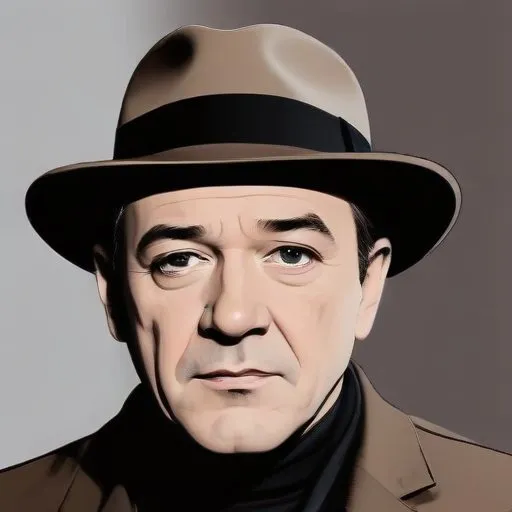
A pioneering filmmaker who directed iconic Westerns and film noirs, known for his visually striking and psychologically complex storytelling. 42
Anthony Mann, a renowned American film director and stage actor, is best known for his exceptional work in the genres of film noir and Westerns, as well as his historical epics. With a career spanning over two decades, Mann left an indelible mark on the film industry, earning critical acclaim and influencing a generation of filmmakers.
Born Emil Anton Bundsmann on June 30, 1906, Mann began his career as a theatre actor, appearing in numerous stage productions. In 1937, he made the transition to Hollywood, where he worked as a talent scout and casting director before becoming an assistant director, most notably for Preston Sturges.
Mann's directorial debut, Dr. Broadway (1942), marked the beginning of his journey to success. His breakthrough film, T-Men (1947), garnered notable recognition for its ability to produce high-quality films on modest budgets and short shooting schedules, cementing Mann's reputation as a skilled director of film noir.
Mann frequently collaborated with cinematographer John Alton, resulting in several critically acclaimed films, including Raw Deal (1948) and Side Street (1950). His partnership with actor James Stewart yielded eight films, including Winchester '73 (1950), The Naked Spur (1953), and The Man from Laramie (1955), which are still regarded as some of the greatest Westerns of all time.
In the 1950s, Mann's Westerns gained immense popularity among French film critics, who would later become influential in the French New Wave movement. Jacques Rivette hailed Mann as one of the four great directors of post-war Hollywood, alongside Nicholas Ray, Richard Brooks, and Robert Aldrich.
In the 1960s, Mann turned to large-scale filmmaking, directing the medieval epic El Cid (1961), starring Charlton Heston and Sophia Loren, and The Fall of the Roman Empire (1964), both produced by Samuel Bronston. These films showcased Mann's ability to handle grand, sweeping narratives with ease.
Anthony Mann's influence on the film industry is undeniable. He inspired a generation of filmmakers, including Martin Scorsese and Steven Spielberg, who have often cited Mann as a major influence. His films continue to be studied and admired by film enthusiasts and scholars alike, ensuring his legacy as one of the greatest directors of all time.
Mann's work was recognized with several awards and nominations, including two Academy Award nominations for Best Director for El Cid (1961) and The Fall of the Roman Empire (1964).
Anthony Mann passed away on April 29, 1967, due to a heart attack in Berlin, where he was filming A Dandy in Aspic (1968). Laurence Harvey, the star of the film, completed the project, albeit uncredited.
Anthony Mann's remarkable career, marked by his versatility, attention to detail, and innovative storytelling, continues to inspire and influence filmmakers to this day, solidifying his place as one of the greatest directors in the history of cinema.
Born in 1908
Iconic leading man of Hollywood's Golden Age, starring in classics like "It's a Wonderful Life" and "Rear Window", bringing everyman charm to cinematic legends.
Born in 1899
Master of suspense, renowned for crafting iconic thrillers that blended psychological complexity with cinematic innovation, leaving an indelible mark on the film industry.
Born in 1901
Iconic star of Hollywood's Golden Age, known for his distinctive drawl and stoic, rugged on-screen presence in classic Westerns and dramas.
Born in 1901
A glamorous and androgynous Hollywood icon, known for her sultry voice, striking features, and trailblazing gender-bending style on screen. She mesmerized audiences with her unique blend of European sophistication and American charm.
Born in 1900
Academy Award-winning star of Hollywood's Golden Age, known for iconic on-screen partnership with Katharine Hepburn and memorable roles in classics like "Inherit the Wind" and "Guess Who's Coming to Dinner".
Born in 1907
A legendary actress who won four Academy Awards and starred in iconic films like "The Philadelphia Story" and "On Golden Pond", known for her fierce independence and spirited on-screen presence.
Born in 1904
Debonair leading man of Hollywood's Golden Age, starring in iconic romantic comedies and dramas, known for suave charm and witty banter.
Born in 1915
A legendary actress who captivated audiences with her natural, emotional performances in films like "Casablanca" and "Autumn Sonata", earning her three Academy Awards.
