


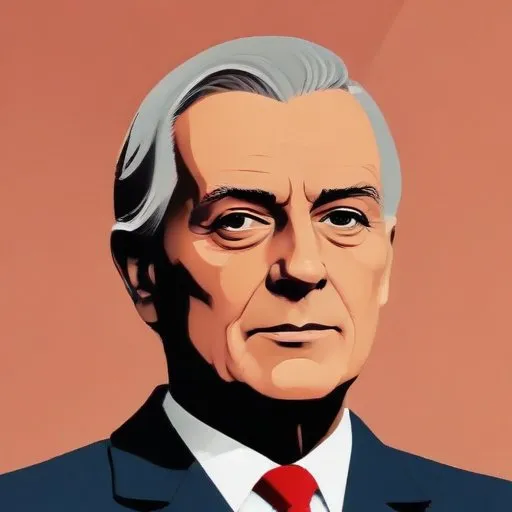
A Portuguese physician and politician who served as the 6th President of Portugal, known for his role in the country's transition from monarchy to republic. He played a key part in shaping Portugal's modern government and politics.
António José de Almeida, a prominent Portuguese politician, is renowned for his instrumental role in shaping the country's First Republic, serving as its sixth president from 1919 to 1923. During his tenure, he oversaw the establishment of two esteemed universities, navigated the nation through a tumultuous period, and left an indelible mark on Portugal's history.
Born on July 27, 1866, in Penacova, Portugal, Almeida was the son of José António de Almeida and Maria Rita das Neves. He pursued a career in medicine, graduating from the University of Coimbra, and later became a medical doctor. His entry into politics was marked by his involvement in the Portuguese Republican Party, where he emerged as a skilled orator and moderate leader.
In 1911, Almeida's political prowess was evident when he founded the University of Lisbon and the University of Porto during his tenure as Minister for the Interior. This achievement cemented his reputation as a visionary and forward-thinking leader. Following the 5 October 1910 revolution, he played a crucial role in the election of Manuel de Arriaga as the first elected President of Portugal.
In 1916, Almeida founded the Evolutionist Party, which aligned with the Republican Union, led by Manuel de Brito Camacho. The two parties eventually merged to form the Republican Liberal Party in 1919, which went on to win the legislative elections. This coalition's success was a testament to Almeida's ability to form alliances and drive positive change.
On August 6, 1919, Almeida was elected as the sixth President of the Republic, a position he held for four years, despite facing significant political instability. One of the highlights of his presidency was his 1922 voyage to Brazil, where he participated in the centennial celebrations of Brazil's independence from Portugal. His exceptional oratory skills earned him recognition as a brilliant speaker.
Almeida married Maria Joana de Morais Perdigo Queiroga on December 14, 1910, and had a fulfilling personal life. His presidency and legacy are remembered for their emphasis on education, political stability, and international cooperation. António José de Almeida's visionary leadership continues to inspire generations of Portuguese citizens, solidifying his place as a pivotal figure in the country's history.
António José de Almeida's remarkable journey serves as a testament to the power of visionary leadership, political acumen, and dedication to the betterment of society. His influence continues to reverberate through the corridors of Portuguese history, inspiring future generations to strive for greatness.
Born in 1889
A dictator who ruled Portugal from 1933 to 1968, implementing a corporatist authoritarian regime and maintaining a neutral stance during World War II. He's known for his economic reforms and nationalist policies.
Born in 1924
A Portuguese historian, lawyer, and politician who served as the 17th President of Portugal, known for leading the country's transition from authoritarianism to democracy. He played a key role in Portugal's decolonization and European integration.
Born in 1872
A Portuguese military officer who seized power in a coup and ruled as a dictator, known for his authoritarian regime and eventual assassination.
77 Years Old
The first Portuguese to lead the United Nations, he's a champion of global cooperation, human rights, and sustainable development. He's a prominent voice on the world stage, advocating for climate action and social justice.
86 Years Old
The 19th President of the Portuguese Republic was a prominent economist and politician who served from 2006 to 2016, known for his economic reforms and leadership during the European sovereign-debt crisis. He is also a published author on economics and politics.
86 Years Old
The 18th President of Portugal, a lawyer and politician, served from 1996 to 2006 and was a key figure in the country's transition to democracy. He's known for his commitment to social justice and human rights.
