


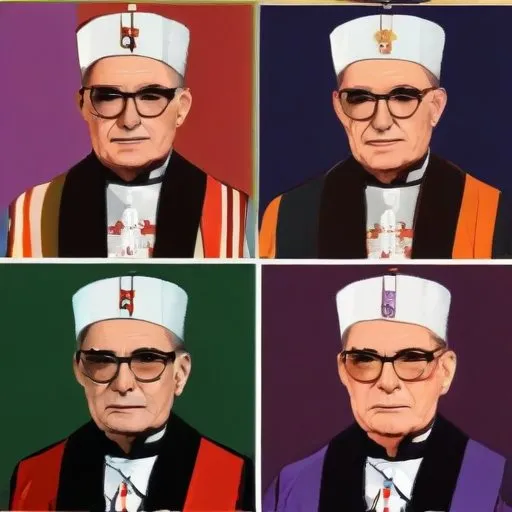
The Grand Master of the Order of Saint John, a powerful and influential leader, oversaw the construction of Mdina and founded the city of Rabat in Malta. He's also known for his military and administrative reforms.
António Manoel de Vilhena, the 66th Prince and Grand Master of the Order of St. John of Jerusalem, left an enduring legacy on the island of Malta, earning himself a revered place in its history. He is most renowned for founding the town of Floriana, building the majestic Fort Manoel, and establishing the iconic Manoel Theatre, in addition to renovating the ancient city of Mdina.
Born on May 28, 1663, in Lisbon, Portugal, Vilhena hailed from an illustrious family. His father, Dom Sancho Manoel de Vilhena, 1st Count de Vila Flor, was a distinguished aristocrat and general who fought in various wars, including the Portuguese Restoration War against the Spanish Crown. Vilhena's lineage also connected him to the noble and royal Castilian House of Manuel de Villena, making him a remote uncle of the Duke of Terceira.
The election of Vilhena as Grand Master on June 19, 1722, marked the beginning of a new era for the Order of St. John of Jerusalem. Following the death of his predecessor MarcAntonio Zondadari, Vilhena took possession of the city of Mdina on September 20, 1722, amidst a grand welcome ceremony. This warm reception inspired him to issue orders for the restoration of the city's fortifications and renovation of the entire city, entrusting the task to the French architect Charles Franois de Mondion.
Vilhena's magistracy was marked by an array of architectural achievements, transforming the landscape of Mdina and its surroundings. His commissions included the construction of the Mdina Gate, the Torre dello Standardo, Palazzo Vilhena, the Banca Giuratale, and the Corte Capitanale. These Baroque structures blended harmoniously with the medieval city, earning Mdina the nickname "Silent City."
In 1723, Vilhena financed the construction of Fort Manoel on the Isolotto (now Manoel Island) in Marsamxett Harbour. Completed ten years later, the fort remained in use until the 20th century, with its chapel dedicated to St. Anthony. Another significant contribution was the establishment of the Manoel Theatre, a testament to his love for the arts and culture.
Vilhena's benevolent nature earned him immense popularity among the Maltese people. He was known for his kindness and generosity, often extending a helping hand to those in need. His commitment to the betterment of society was reflected in his numerous philanthropic endeavors, which continue to inspire admiration and gratitude.
António Manoel de Vilhena's influence on Malta's history and architecture is undeniable. His legacy extends beyond the structures he built, symbolizing a era of cultural and artistic flourishing. As a leader, he demonstrated a unique blend of vision, dedication, and compassion, ensuring his place as one of the most revered Grand Masters of the Order of St. John of Jerusalem.
Vilhena's remarkable story serves as a testament to the power of benevolence, creativity, and determination, inspiring future generations to strive for greatness.
Born in 1729
Empress of Russia from 1762 to 1796, she transformed her country into a major European power, modernizing its culture, politics, and economy through numerous reforms and conquests.
Born in 1777
King of the Two Sicilies from 1825 to 1830, known for his attempts to reform the government and economy, but ultimately failing to modernize the kingdom.
Born in 1767
A flamboyant and daring cavalry commander who played a key role in Napoleon's military conquests, earning the title of King of Naples.
Born in 1504
Leader of the Catholic Church during the Counter-Reformation, he excommunicated Queen Elizabeth I and played a key role in the Council of Trent.
