


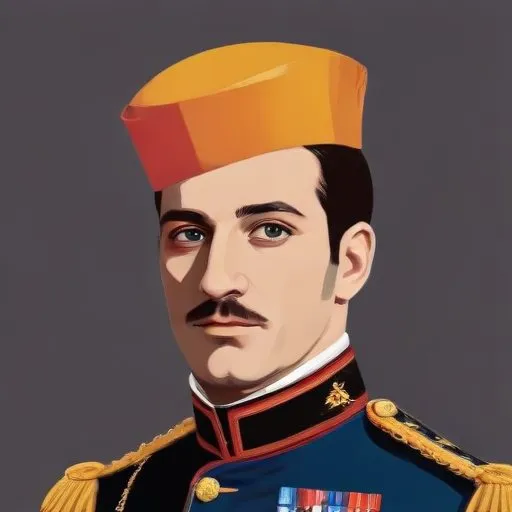
King of the Two Sicilies from 1825 to 1830, known for his attempts to reform the government and economy, but ultimately failing to modernize the kingdom.
Francis I, also known as Francesco Gennaro Giuseppe Saverio Giovanni Battista, was the King of the Two Sicilies from 1825 to 1830 and regent of the Kingdom of Sicily from 1806 to 1814. He is best remembered for his conservative reign, attempts to resurrect the Bourbon dynasty, and his role in the tumultuous history of the Two Sicilies during the early 19th century.
Born on August 19, 1777, in Naples, Francis was the son of Ferdinand I of the Two Sicilies and Archduchess Maria Carolina of Austria, making him the nephew of Marie Antoinette and Louis XVI, the last King and Queen of France before the French Revolution.
When the Bourbon family fled from Naples to Sicily in 1806, Francis was appointed regent by the British resident, Lord William Bentinck, who drafted a new constitution along British and French lines.
In 1812, Ferdinand agreed to abdicate his throne, with Francis being appointed regent. However, upon Napoleon's abdication in 1814, Ferdinand returned to Naples and suppressed the Sicilian constitution, incorporating his two kingdoms into that of the Two Sicilies. Francis then assumed the revived title of Duke of Calabria.
In 1825, Francis succeeded to the throne and pursued a conservative course, attempting to resurrect the Bourbon dynasty and maintain the power of the monarchy.
Francis's reign was marked by attempts to suppress liberal ideas and maintain the absolute power of the monarchy. His conservative policies led to unrest and ultimately contributed to the decline of the Bourbon dynasty.
Despite his conservative stance, Francis played a significant role in the history of the Two Sicilies, and his legacy continues to be felt today. His story serves as a reminder of the complexities and challenges of 19th-century European politics.
"I will not be a king without a crown, nor a prince without a throne."
Francis's words reflect his commitment to maintaining the power and prestige of the monarchy, even in the face of growing liberal ideas and revolutionary fervor.
Francis I's reign occurred during a time of significant turmoil and change in Europe. The French Revolution had overthrown the monarchy, and the Congress of Vienna had redrawn the map of Europe.
In this context, Francis's attempts to maintain the absolute power of the monarchy were ultimately doomed to fail. His legacy serves as a reminder of the complexities and challenges of this tumultuous period in European history.
Born in 1751
King of the Two Sicilies from 1816 to 1825, known for his efforts to unify Italy and his role in the country's struggle for independence.
Born in 1768
The elder brother of Napoleon, he was a king of Naples and Sicily, and later of Spain, known for his brief but significant reigns in these countries.
Born in 1767
A flamboyant and daring cavalry commander who played a key role in Napoleon's military conquests, earning the title of King of Naples.
Born in 1769
A French military leader who rose to prominence during the French Revolution and became Emperor of France, known for his military conquests and reorganization of Europe. He is also famous for his Napoleonic Code, which remains a foundation of modern law.
Born in 1876
The leader of the Catholic Church from 1939 to 1958, known for his controversial role during World War II, particularly in regards to the Holocaust. He is also remembered for his encyclicals on social justice and liturgical reforms.
