


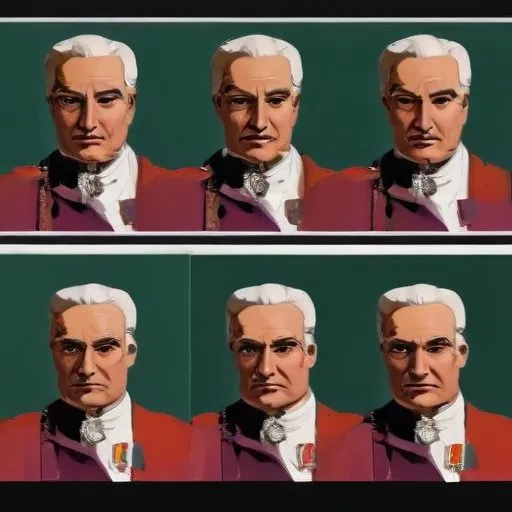
The 14th Governor-General of India, a British general and politician, played a crucial role in abolishing sati, a practice where widows were burned alive on their husband's funeral pyre, and introduced Western-style education in India. He also annexed several Indian states, expanding British rule in the subcontinent.
Lord William Bentinck, a British soldier and statesman, is renowned for his instrumental role in introducing significant social and educational reforms in India during his tenure as the Governor-General of India from 1834 to 1835. He is particularly credited with abolishing the inhumane practice of sati, suppressing female infanticide and human sacrifice, and eliminating thuggee, a notorious criminal organization that had plagued India for over 450 years.
Born on September 14, 1774, in Buckinghamshire, England, Bentinck was the second son of Prime Minister William Bentinck, 3rd Duke of Portland, and Lady Dorothy Cavendish, only daughter of William Cavendish, 4th Duke of Devonshire. He was educated at Westminster School, a prestigious boys' public school in Westminster, London. At the tender age of 9, Bentinck was given the sinecure of Clerk of the Pipe for life, followed by a stint in the Coldstream Guards in 1791. He subsequently purchased an ensign's commission and rose through the ranks, becoming a captain in the 11th Regiment of Light Dragoons in 1793.
Bentinck's governorship of Fort William in Bengal from 1828 to 1834 marked the beginning of a new era in Indian history. He took bold steps to eradicate the heinous practice of sati, which involved the burning of widows on the funeral pyres of their husbands. Bentinck's determination to abolish sati was evident in his statement, "the dreadful responsibility hanging over his head in this world and the next, if he was to consent to the continuance of this practice one moment longer." After consulting with the army and officials, he passed the Bengal Sati Regulation, 1829, which outlawed the practice. Although the Dharma Sabha appealed to the Privy Council, the ban on sati was ultimately upheld.
In addition to abolishing sati, Bentinck also took measures to suppress female infanticide and human sacrifice. He worked tirelessly to eliminate thuggee, a notorious criminal organization that had terrorized India for centuries. With the aid of his chief captain, William Henry Sleeman, Bentinck successfully eradicated thuggee, earning him great acclaim.
Bentinck, along with Thomas Babington Macaulay, introduced English as the language of instruction in India. This significant reform had a profound impact on the Indian education system, paving the way for the country's future growth and development.
Bentinck's contributions to Indian society were recognized and honored during his lifetime. He was appointed as the Governor-General of India in 1834, a position that testified to his exceptional leadership and vision.
Lord William Bentinck's legacy continues to be felt in India today. His courageous efforts to eradicate social evils, introduce educational reforms, and promote development have left an indelible mark on Indian history. As a champion of social justice and human rights, Bentinck remains an inspiration to generations of Indians and people around the world.
Lord William Bentinck's remarkable life and achievements serve as a testament to his unwavering commitment to social justice, education, and human rights. His legacy continues to inspire and influence people to this day, making him an indomitable figure in Indian history.
Born in 1819
The monarch who ruled the British Empire for 63 years, overseeing the Industrial Revolution and expanding the empire's reach, earning the nickname "the Grandmother of Europe".
