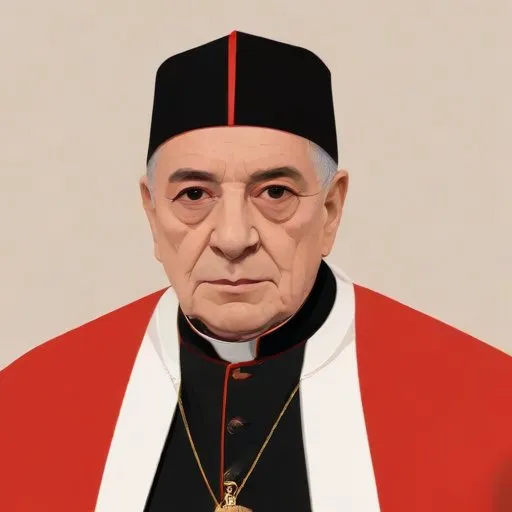
Antoine Perrenot de Granvelle: The Power Broker of 16th-Century Europe
A Cardinal, Statesman, and Art Patron Extraordinaire
Antoine Perrenot de Granvelle was a man of immense influence, straddling the realms of politics, religion, and art. As a cardinal, statesman, and one of the most prominent figures of his time, he left an indelible mark on 16th-century Europe. Granvelle's impressive resume boasted a range of esteemed positions, including serving as a leading minister to the Spanish Habsburgs, a cardinal, and a notable art collector.
Born on August 20, 1517, in the Free Imperial City of Besançon (now in France), Granvelle was the son of Nicholas Perrenot de Granvelle, who would later become the Chancellor of the Empire under Charles V, Holy Roman Emperor. Antoine's upbringing was steeped in the intricacies of politics and diplomacy, with his father holding an influential position in the Netherlands.
Granvelle pursued his studies in law at Padua and divinity at Leuven, laying the groundwork for his future roles in the Church and state. His intellectual and diplomatic prowess earned him a canonry at Besançon, followed by a promotion to the bishopric of Arras with a dispensation due to his tender age of 23.
Granvelle's episcopal capacity saw him attend several diets of the empire and the opening meetings of the Council of Trent, where he addressed the assembly on behalf of Charles V. His father's influence and his own diplomatic acumen led to Granvelle being entrusted with delicate public business, showcasing his talent for diplomacy and providing him with an intimate understanding of European politics.
Granvelle's passion for art was matched only by his influence in the art world. He was a notable patron of the arts, befriending and supporting some of the most renowned artists of his time, including Titian and Leoni. His private collection was considered one of the greatest of its era, earning him a reputation as a connoisseur and aficionado.
Granvelle's impact on modern society cannot be overstated. As a cardinal and statesman, he played a pivotal role in shaping the course of European politics during a tumultuous period. His artistic patronage helped foster a cultural renaissance, leaving an enduring legacy in the world of art.
In conclusion, Antoine Perrenot de Granvelle was a multifaceted figure whose influence extended far beyond the realms of politics and religion. His patronage of the arts and his diplomatic prowess have left an indelible mark on European history, cementing his place as one of the most significant figures of the 16th century.
- 1517: Born in Besançon, Free Imperial City
- 1540: Ordained into the priesthood and promoted to bishopric of Arras
- 1547: Involved in the settlement of the terms of peace after the defeat of the Schmalkaldic League
- 1560s: Served as a leading minister to the Spanish Habsburgs
- 1586: Passed away on September 21
"Posterity will be grateful for the works of art that I have protected and promoted." - Antoine Perrenot de Granvelle
FAQ
What was Antoine Perrenot de Granvelles role in the Catholic Church?
Antoine Perrenot de Granvelle was a French cardinal and a prominent figure in the Catholic Church, serving as a close advisor to King Philip II of Spain. He was known for his diplomatic skills and played a crucial role in the Council of Trent.
What was Antoine Perrenot de Granvelles contribution to art collecting?
Antoine Perrenot de Granvelle was a renowned art collector and patron of the arts. He commissioned works from famous artists, including Titian and Michelangelo, and his collection was considered one of the most impressive in Europe during the 16th century.
Where did Antoine Perrenot de Granvelle study?
Antoine Perrenot de Granvelle studied at the University of Louvain, where he earned a degree in theology. He later went on to study law in Paris.
What was Antoine Perrenot de Granvelles relationship with King Philip II of Spain?
Antoine Perrenot de Granvelle served as a close advisor to King Philip II of Spain, and was instrumental in shaping the kings foreign policy. He was known for his diplomatic skills and played a crucial role in negotiating several important treaties.
What was Antoine Perrenot de Granvelles legacy?
Antoine Perrenot de Granvelles legacy is that of a cultured and intelligent statesman who played a significant role in shaping the Catholic Church and European politics during the 16th century. He is remembered for his diplomatic skills, his patronage of the arts, and his commitment to the Catholic faith.