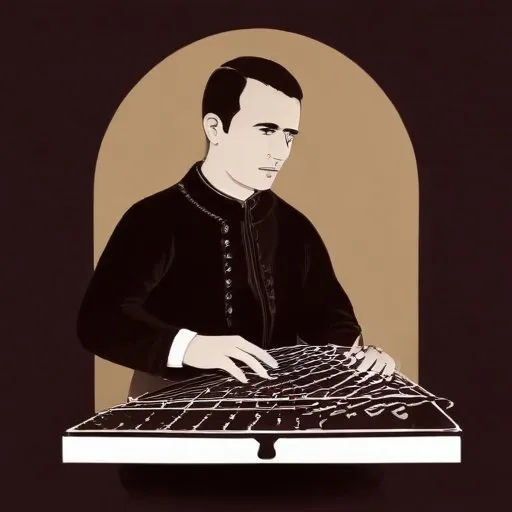
Anton Karas: The Zither Maestro Behind the Iconic Soundtrack of "The Third Man"
A Legendary Composition that Redefined the Cinematic Experience
Anton Karas, an Austrian zither player and composer, is forever etched in the annals of cinematic history for his hauntingly beautiful soundtrack to
Carol Reed's 1948 classic, "The Third Man." This single composition catapulted Karas to international fame, rendering him synonymous with the film's unforgettable theme song.
A Humble Beginnings
Born on July 7, 1906, in Vienna, Austria, Karas was the illegitimate son of Theresia Streckel. He was later legitimized by her marriage to Karl Josef Karas, a factory worker. Growing up in a family of modest means, Karas's love for music was evident from an early age. Despite his family's financial constraints, his father encouraged him to learn an instrument, which ultimately led him to discover the zither at the age of 12.
The Unlikely Path to Musical Success
Karas's journey to becoming a renowned musician was far from conventional. By the age of 14, he was apprenticed to a tool and die maker, while pursuing music lessons in the evening. This duality continued until 1924, when he finished his apprenticeship and began studying at the University of Music and Performing Arts, Vienna. He eventually earned a living by performing in a
Heuriger, a traditional Viennese wine tavern, where his zither playing captivated audiences.
War, Loss, and the Road to "The Third Man"
During World War II, Karas served in the German Wehrmacht's antiaircraft warfare division, stationed in Russia. Despite the turmoil, he managed to keep his zither close, even replacing lost instruments along the way. It was during this period that he began to compose music, laying the groundwork for his future success.
The Chance Encounter that Changed Everything
In the summer of 1948, Karas's life took a dramatic turn when he met Carol Reed, the director of "The Third Man," at the Hotel Sacher in Vienna. Reed was immediately taken by Karas's unique zither style and commissioned him to create the film's soundtrack. This serendipitous meeting resulted in one of the most iconic and enduring film scores in cinematic history.
A Lasting Legacy
Anton Karas's contribution to "The Third Man" not only earned him international acclaim but also cemented his place as a pioneer in the world of film music. His zither-driven soundtrack continues to evoke the haunting atmosphere of post-war Vienna, transporting listeners to a bygone era. Karas's legacy extends beyond his most famous work, as he went on to compose music for numerous films, theater productions, and even opera.
Awards and Honors
- BAFTA Award for Best Film Music (1949)
- Austrian Cross of Honour for Science and Art (1974)
Personal Milestones
- Married in 1930, with the birth of his daughter three months later
- Passed away on January 10, 1985, leaving behind a rich musical legacy
Anton Karas's remarkable journey, marked by serendipity and perseverance, serves as a testament to the power of creativity and the indelible impact of his zither on the world of cinema.
FAQ
What is Anton Karass contribution to music?
Anton Karas was a renowned Austrian zither player and composer, best known for his iconic soundtrack to the film The Third Man.
How did Anton Karas become a zither player?
Anton Karas learned to play the zither from his father, who was also a musician, and went on to study at the Vienna Academy of Music.
What films did Anton Karas compose music for?
Anton Karas composed music for several films, including The Third Man, The African Queen, and The Man Between.
Did Anton Karas win any awards for his music?
Yes, Anton Karas won the Academy Award for Best Original Score for his work on The Third Man.
How did Anton Karass music style evolve over time?
Anton Karass music style evolved from traditional Austrian folk music to a more modern, film-oriented style, characterized by his use of the zither as a solo instrument.