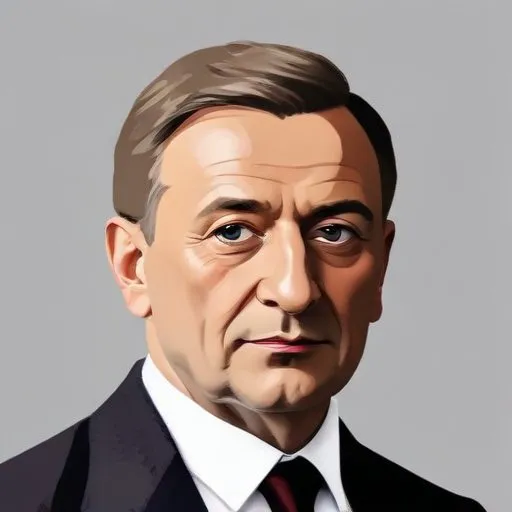
Antoni Radziwi: The Aristocrat-Musician-Politician Who Shaped the Fate of Poland
A Life of Diplomacy and Cultural Pursuits
Antoni Radziwi, a Polish and Prussian noble, musician, and politician, is known for his pivotal role in shaping the course of Poland's history during the tumultuous late 18th and early 19th centuries. As the Duke-Governor of the Grand Duchy of Posen, an autonomous province of the Kingdom of Prussia, Radziwi played a crucial part in mediating between the Poles and the Prussian authorities, working towards the establishment of a renewed Polish kingdom.
Early Life and Education
Born on June 13, 1775, in Vilnius, Radziwi was the scion of the esteemed Radziwi family, whose roots traced back to the 14th century. His parents, Micha Hieronim Radziwi and Helena née Przedziecka, instilled in him a deep love for music, literature, and the arts. Radziwi's education at Göttingen University further refined his cultural pursuits, and in 1796, he married
Princess Louise of Prussia, solidifying his ties with the Prussian royal family.
A Mediator between Poles and Prussians
Radziwi's unique position as a Polish noble with Prussian connections made him an ideal mediator between the two nations. During the War of the Fourth Coalition, he attempted to incite a Polish uprising against Napoleon's army and convince Prince
Józef Poniatowski to abandon his French allies and join the Russian Empire and Prussia. Although his efforts were unsuccessful, Radziwi continued to work towards the establishment of a Polish kingdom, ruled by the Prussian king in personal union.
Philosophical Contributions and Beliefs
Radziwi's philosophical leanings were shaped by his aristocratic upbringing and his experiences as a diplomat. He believed in the importance of cultural exchange and cooperation between nations, and his love for music and the arts reflected his commitment to the preservation of Polish heritage. As a politician, Radziwi was pragmatic, often navigating complex power dynamics to achieve his goals.
Career Highlights and Major Works
- Radziwi's diplomatic efforts led to the establishment of the Grand Duchy of Posen, an autonomous province of the Kingdom of Prussia.
- He played a crucial role in shaping the fate of Poland during the Congress of Vienna (1815) and the subsequent Treaty of Vienna.
- As a patron of the arts, Radziwi supported the work of Polish composers, writers, and artists, contributing to the preservation of Polish culture.
Honors and Legacy
Radziwi's legacy is a testament to his dedication to Poland and his commitment to cultural exchange. He was awarded the title of Reichsgraf (Imperial Count) of the Holy Roman Empire and held numerous honors, including the Order of the Black Eagle and the Order of the Red Eagle.
Influence on Modern Society
Radziwi's diplomatic efforts and cultural pursuits continue to inspire modern-day Poland. His legacy serves as a reminder of the importance of cooperation and cultural exchange in shaping the course of nations. As a champion of Polish heritage, Radziwi's influence extends beyond the realm of politics, inspiring generations of artists, writers, and musicians.
Personal Milestones and Key Life Events
- Radziwi's marriage to Princess Louise of Prussia solidified his ties with the Prussian royal family.
- His diplomatic efforts during the War of the Fourth Coalition shaped the course of Poland's history.
- Radziwi's later years were marked by his continued support for Polish artists and his commitment to preserving Polish culture.
Trivia and Fun Facts
- Radziwi was an accomplished musician and composer, with several musical works to his credit.
- He was known for his exceptional diplomatic skills, earning the respect of both Polish and Prussian leaders.
- Radziwi's love for literature inspired him to collect rare books and manuscripts, which he bequeathed to the University of Warsaw.
In conclusion, Antoni Radziwi's remarkable life and legacy serve as a testament to the power of diplomacy, cultural exchange, and artistic pursuits. As a champion of Polish heritage, Radziwi's influence continues to shape modern-day Poland, inspiring generations to come.
FAQ
What were Antoni Radziwiłłs contributions to Polish music?
Antoni Radziwiłł was a Polish-Lithuanian composer and politician who made significant contributions to Polish music. He was a prolific composer who wrote symphonies, operas, and chamber music.
What was Antoni Radziwiłłs role in Polish politics?
Antoni Radziwiłł was a prominent figure in Polish politics during the late 18th and early 19th centuries. He served as a minister and senator and was a strong advocate for Polish independence.
What were Antoni Radziwiłłs musical influences?
Antoni Radziwiłłs music was influenced by the classical styles of Haydn and Mozart, as well as by Polish folk music. His compositions often featured traditional Polish instruments and melodies.
How did Antoni Radziwiłłs music reflect his Polish heritage?
Antoni Radziwiłłs music often reflected his Polish heritage through the use of folk melodies and rhythms. His compositions also expressed his love for his country and its people.
What is Antoni Radziwiłłs legacy in Polish music?
Antoni Radziwiłłs legacy in Polish music is significant. He is considered one of the most important Polish composers of his time and his music continues to be celebrated and performed today.